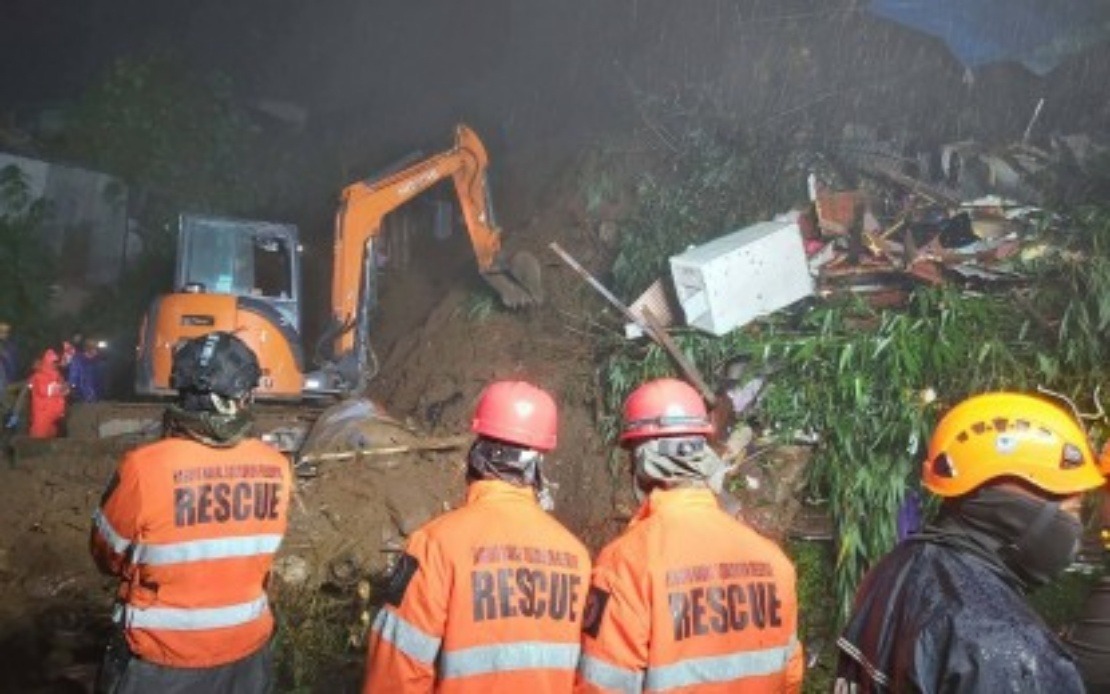
The Philippines faces a mounting humanitarian crisis following the passage of Tropical Depressions Luis and Maymay, compounded by the seasonal southwest monsoon, which have together claimed 19 verified lives and impacted approximately 2.2 million people across the archipelago. Officials from the Office of Civil Defence confirmed the devastating toll on Tuesday, with fatalities concentrated in the country's northern and central regions, particularly in Benguet province where the majority of casualties were recorded.
The confirmed death toll breaks down across three provinces, with Benguet bearing the heaviest burden at 12 fatalities, followed by Rizal with four deaths and Batangas with three. Beyond those killed, the weather disturbances have left four people unaccounted for—three in Benguet and one in Batangas—while 15 individuals sustained injuries requiring medical attention. The concentration of deaths in Benguet, a mountainous region prone to landslides and flooding, reflects the particular vulnerability of upland communities to extreme weather events during the monsoon season.
The geographic spread of affected populations underscores the scale of this disaster across the Philippine archipelago. The Office of Civil Defence documented impact in ten major administrative regions spanning from the Ilocos area in the far north through Central Luzon and the Bicol Region to Western Visayas and the Zamboanga Peninsula in the south, plus the capital region and surrounding areas. This widespread distribution suggests the weather systems delivered moisture and rainfall across thousands of kilometres, a pattern characteristic of monsoon-influenced tropical depressions that can affect multiple island groups simultaneously.
Displacement figures reveal the immediate human toll beyond fatalities. Nearly 920 evacuation centres have opened their doors to accommodate approximately 95,000 individuals drawn from nearly 26,200 families who fled their homes ahead of rising waters or mudslides. This mass movement into temporary shelter facilities places enormous strain on local government resources and raises questions about the adequacy of pre-positioned disaster response infrastructure in regions frequently impacted by seasonal storms. The scale of evacuation operations underscores how quickly extreme weather can overwhelm civilian populations in densely settled areas.
Structural damage assessment paints a picture of widespread destruction across residential areas. Authorities documented 639 houses suffering varying degrees of damage from flooding and wind, while 45 homes were completely destroyed—rendering entire families homeless during a period when reconstruction capacity is stretched thin. These figures exclude damage to commercial establishments, public buildings, and critical infrastructure that would amplify the total destruction count. For rural communities in particular, loss of shelter often means simultaneous loss of stored crops and agricultural assets housed in residential compounds.
Agricultural losses represent a profound economic setback for a nation where farming remains central to rural livelihoods and food security. Preliminary damage assessments placed agricultural losses at 135.33 million Philippine pesos, a figure that likely understates the true impact given the time required for comprehensive crop damage evaluation. For subsistence and smallholder farmers across the affected regions, such losses can erase annual income and force families into debt cycles or distress sales of productive assets to survive the recovery period.
Infrastructure damage tallied at 1.46 million pesos covers repairs to roads, bridges, water systems, and public facilities critical for disaster recovery operations themselves. Damaged transportation links hamper relief supply movement to isolated communities, while compromised water systems create secondary health risks including waterborne disease outbreaks. These cascading effects mean that disaster impact extends well beyond the initial storm period, affecting reconstruction timelines and economic productivity for months afterward.
The simultaneous activation of nearly 920 evacuation centres reflects both the magnitude of the emergency and existing disaster preparedness frameworks, yet also highlights strain on public resources. Managing such large-scale displacement requires coordination across multiple government agencies, NGOs, and local authorities, with demands extending from food provision and sanitation to health services and security. The concentration of displaced persons in temporary facilities creates vulnerability to communicable disease outbreaks, particularly given Manila's tropical climate and the crowded conditions typical of emergency shelters.
From a regional perspective, this disaster illustrates the escalating challenge tropical and subtropical nations face from seasonal weather systems, particularly as climate patterns show signs of intensification. The Philippines experiences multiple typhoon and monsoon seasons annually, yet the scale of impact from relatively modest-intensity tropical depressions suggests that even systems not reaching typhoon strength can generate catastrophic consequences in densely populated and topographically challenging terrain. This pattern is replicated across Southeast Asia, where rapid urbanization and settlement expansion in hazard-prone areas compounds historical vulnerabilities.
For Malaysian observers, the Philippine experience underscores the shared regional vulnerability to monsoon dynamics and tropical weather systems. While Malaysia's geographic position and building standards provide some protective advantages, similar dynamics of rapid rural-to-urban migration, informal settlements in flood-prone areas, and agricultural dependence in regions subject to inundation create parallel risks. The Philippine case demonstrates how quickly emergency response systems become overwhelmed when millions require simultaneous assistance, a scenario that warrants continued investment in early warning systems, evacuation infrastructure, and community-level disaster preparedness across the region.

