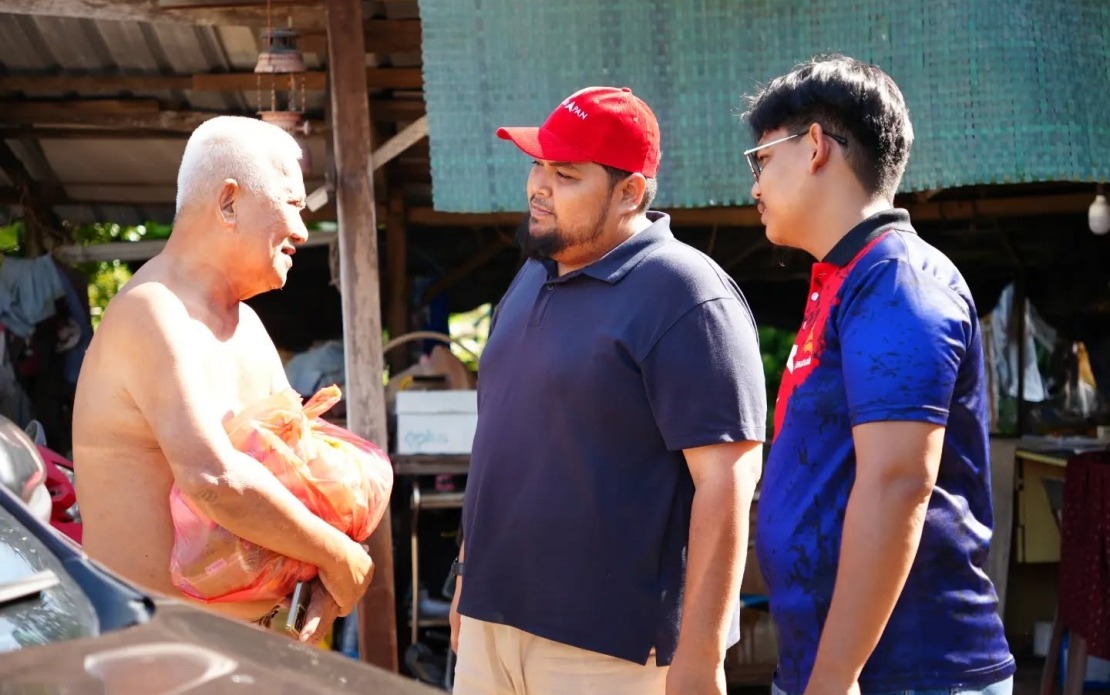
As Johor's 16th State Election draws closer, Pakatan Harapan's Maharani candidate Muhammad Taqiuddin Cheman is sharpening his campaign message to resonate with younger constituents who face mounting pressure to secure stable livelihoods in the district. With just four days remaining before polling day on July 11, the candidate—widely known as Taqi—is intensifying engagement with youth groups across Muar, recognising that employment prospects, entrepreneurial pathways, and professional training have become defining concerns for voters under 40 in the Maharani constituency.
The former Pulai Sebatang state assemblyman from 2018 to 2022 has identified a critical mismatch between ambition and opportunity in the district. During recent interactions with young traders operating from District 84, he encountered a telling constraint: approximately 70 merchants are competing for trading spaces in that commercial hub, forced to operate in rotation due to insufficient attractive retail locations. These entrepreneurs have already scouted alternative premises but lack institutional support to navigate application processes and secure suitable sites within Muar's jurisdiction. For Taqiuddin, this represents exactly the type of bottleneck that political intervention can address, positioning himself as a bridge between grassroots enterprise and municipal administration.
Muar carries an unflattering reputation as a "retirement town," a demographic reality born from decades of youth exodus. Young people departing for better prospects elsewhere, particularly those drawn to the semiconductor industry, represent both a loss of human capital and a commentary on local economic stagnation. This phenomenon reflects a broader Southeast Asian pattern where secondary cities struggle to retain talent against the gravitational pull of major urban centres. Understanding this dynamic, Taqiuddin has framed his campaign not around nostalgia but around reversing the trend through concrete economic initiatives that would anchor younger generations to their home district.
Central to his pitch is the Pakatan Harapan "Johor For All" manifesto, which commits RM500 million toward supporting young entrepreneurs. This financial allocation signals a party-wide commitment to addressing the capital constraints that typically inhibit young Malaysians from establishing or expanding businesses. Taqiuddin's personal background in commerce lends credibility to his advocacy, distinguishing him from purely political operators without entrepreneurial grounding. The fund, if deployed strategically in Maharani, could catalyse a cluster of small and medium enterprises, creating employment while fostering local wealth generation rather than relying on external multinational investment.
The forthcoming completion of the Maharani Energy Gateway (MEG) project offers another tangible foundation for his development narrative. This infrastructure investment is positioned to unlock fresh economic opportunities, though the specifics of anticipated benefits remain somewhat abstract. Taqiuddin's challenge lies in translating MEG's potential into visible employment pathways that resonate with sceptical young voters who have witnessed countless projects promised but inadequately implemented. The project's completion timeline and projected job creation figures will likely dominate subsequent campaign discourse.
Vocational education emerges as another pillar of his youth strategy. Taqiuddin advocates for establishing quality Technical and Vocational Education and Training (TVET) institutions directly within Maharani, rather than forcing students to travel elsewhere. This localized approach to skills development addresses both accessibility and brain drain, ensuring that young people can acquire industry-relevant qualifications without necessitating relocation. For second-generation fishermen and their families dependent on maritime livelihoods, TVET programmes could provide pathways toward higher-value maritime industries or complementary sectors, reducing vulnerability to declining catches and environmental degradation.
The candidate has also flagged infrastructure deficiencies affecting traditional economic sectors. Poor drainage systems afflicting oil palm plantations and the shallow river mouth at Parit Raja Laut constraining fishing vessel movement represent unglamorous but critical issues affecting rural and agricultural constituencies within Maharani. These concerns, often overlooked by politicians fixated on urban development narratives, signal Taqiuddin's attention to the material realities of farmers and fishermen whose votes remain pivotal in semi-rural state constituencies.
Taqiuddin faces a competitive four-cornered contest against Mohamad Anuar Hayan of Perikatan Nasional, Datuk Ashari Md Sarip of Barisan Nasional, and Muhammad Amir Fiqri of Parti Ikatan Demokratik Malaysia. This fragmented field creates opportunities for a well-organised campaign to secure plurality support without necessarily achieving majority consensus. The PH candidate's focus on granular, bread-and-butter issues may prove more persuasive than broader ideological appeals, particularly among pragmatic younger voters prioritising tangible improvements to their economic circumstances over abstract political principles.
Taqiuddin's strategy reflects a broader repositioning within Pakatan Harapan toward youth-centric development narratives. Rather than appealing primarily to urban professionals or ideological constituencies, the campaign recognises that younger Malaysians increasingly evaluate political parties through instrumental criteria: do you understand my challenges, and can you deliver measurable improvements? In Maharani, where demographics have shifted unfavourably and economic dynamism has stalled, this grounded approach targeting employment, entrepreneurship, and skills may prove decisive against opponents relying on traditional partisan loyalties or broader state-level narratives.

