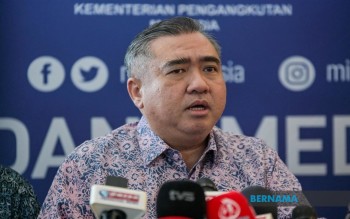
Transport Minister Anthony Loke has announced an ambitious expansion of Penang's air cargo infrastructure that promises to reshape Malaysia's northern region's position in regional logistics. The Penang International Logistics Aeropark (PILA), being developed through a partnership between Malaysia Airports Holdings Bhd (MAHB) and Penang Development Corporation (PDC), represents a substantial commitment to upgrading the country's air freight capabilities beyond the capital. Speaking after the Ministry of Transport's monthly assembly in Putrajaya, Loke outlined how this undertaking would significantly strengthen Penang's role as a critical air logistics centre while broadening the national network's overall capacity.
The project builds upon existing cargo facilities at Penang International Airport by creating what Loke termed a comprehensive air logistics complex. Rather than replacing current infrastructure, PILA will function as an expansion of established operations, enabling the region to handle substantially greater cargo volumes while maintaining competitive service standards. The minister emphasised that the development would be considerably larger than the present facility, with enhanced operational capabilities that extend beyond simple capacity increases to encompass integrated logistics services. This strategic positioning comes amid growing regional competition for air freight traffic, where neighbouring countries have invested heavily in state-of-the-art cargo infrastructure.
Construction on the PILA initiative is already underway, with work commencing on the ground following board approvals by both PDC and MAHB in May. The formal joint venture agreement was formalised on April 13, 2026, establishing PILA Sdn Bhd as the implementing entity. Loke indicated that the project is approaching a formal launch, with invitations extended to the Prime Minister to oversee the ceremonial opening. The timing of this public unveiling underscores the government's intention to signal commitment to private-sector-led infrastructure development, particularly in sectors viewed as essential to Malaysia's economic competitiveness.
The inaugural phase of PILA focuses on constructing a new air cargo warehouse facility classified as free commercial zone-grade infrastructure. This building is projected to become operational by 2029, providing modern storage and handling capabilities aligned with international standards. The warehouse is being engineered to accommodate the specialised requirements of contemporary air freight operations, including temperature-controlled environments for pharmaceutical and perishable goods, security facilities for high-value cargo, and efficient transfer systems for seamless ground-to-aircraft transitions. Such specifications reflect the evolving nature of global supply chains, where speed and cargo integrity are paramount competitive advantages.
Looking further ahead, PILA is designed with expansionist ambitions that extend to 2050. Developers project the complex will eventually accommodate up to 500,000 tonnes of cargo annually, a figure that would position Penang among Southeast Asia's significant air freight hubs. The warehouse component alone will exceed two million square feet, providing ample space for storage, consolidation, and value-added logistics services. For context, this scale of development would represent a quantum leap from current operations and would necessitate corresponding improvements to ground transportation networks, customs facilities, and air service connections to maximise the infrastructure's potential.
Crucially, PILA represents a shift in how Malaysia approaches strategic infrastructure investment. Rather than direct government funding and operation, this project exemplifies a public-private partnership model where MAHB assumes primary financial responsibility while the government facilitates regulatory approval and policy alignment. Loke was explicit on this point, stating that investment in air cargo facilities would be undertaken by MAHB rather than the state, with government support confined to enabling mechanisms. This approach reflects broader fiscal considerations and an ideological preference for private-sector dynamism in driving infrastructure advancement. It also transfers operational and financial risks to entities with commercial incentives to succeed, potentially ensuring more efficient management.
The PILA initiative fits within MAHB's comprehensive modernisation strategy across its portfolio of airports. While Kuala Lumpur International Airport remains the nation's busiest cargo hub, the operator recognises the strategic importance of developing secondary centres that serve regional markets and reduce congestion at the primary facility. Penang's geographic positioning on the Strait of Malacca and its established manufacturing base make it an attractive location for air freight operations targeting Southeast Asian markets. By strengthening Penang's cargo capabilities, MAHB is essentially creating a distributed network that can absorb growth in demand while serving distinct market segments.
For Malaysia's northern states, the implications extend beyond logistics alone. Penang, Kedah, Perlis, and northern Perak have established manufacturing sectors producing electronics, machinery, and processed foods—all products for which air cargo access is commercially valuable. Improved air freight capacity could influence location decisions by companies evaluating regional hubs, potentially catalysing manufacturing expansion in the north. The complex will also generate employment across construction, operations, ground handling, and ancillary services, contributing to economic development in areas experiencing slower growth relative to the Klang Valley. Additionally, enhanced logistics infrastructure can lower supply chain costs for businesses throughout the region, improving their global competitiveness.
The PILA development also positions Malaysia more favourably within Southeast Asia's competitive logistics landscape. Thailand, Singapore, and Vietnam have all invested substantially in air cargo infrastructure, establishing themselves as preferred transhipment points for regional trade. Malaysia's initiative to upgrade facilities, particularly outside the capital, represents a deliberate strategy to capture a greater share of intra-regional and international cargo traffic. By diversifying cargo capabilities geographically, Malaysia reduces dependency on a single congested facility and offers customers operational flexibility and redundancy—characteristics increasingly valued in post-pandemic supply chain management.
From a policy perspective, PILA exemplifies how the government is attempting to balance economic growth ambitions with fiscal constraints. By structuring the project as a private investment anchored by a commercially viable operator, policymakers avoid placing development costs directly on public budgets while still achieving strategic infrastructure objectives. This model has merit in demonstrating to international investors that Malaysia welcomes private capital in infrastructure, potentially encouraging further private-sector participation in other critical sectors. However, success will depend on ensuring that regulatory frameworks and incentive structures remain stable throughout the project's extended timeline.
The 2029 target for the initial warehouse's completion provides a reasonable intermediate milestone that allows phased development and demonstrates early commercial viability. Subsequent expansion phases can be calibrated based on actual demand trajectories and market conditions, reducing the risk of oversupply that occasionally plagues large infrastructure investments. The long-term vision extending to 2050 acknowledges that major logistics infrastructure requires patience and sustained commitment, particularly given the infrastructure's capital-intensive nature and the extended timeframes needed to recoup investments in aviation.
Loke's public endorsement of PILA signals that the transport ministry views cargo logistics as a priority sector meriting senior political attention. This backing is essential for securing support from other government agencies responsible for customs procedures, security protocols, and ground access infrastructure. Coordinated government action across multiple agencies can remove bureaucratic obstacles that sometimes constrain the full potential of new infrastructure. As Malaysia competes regionally for logistics investment and trade flows, such political commitment to supporting cargo infrastructure becomes increasingly consequential for maintaining the nation's relevance in regional supply chains.

