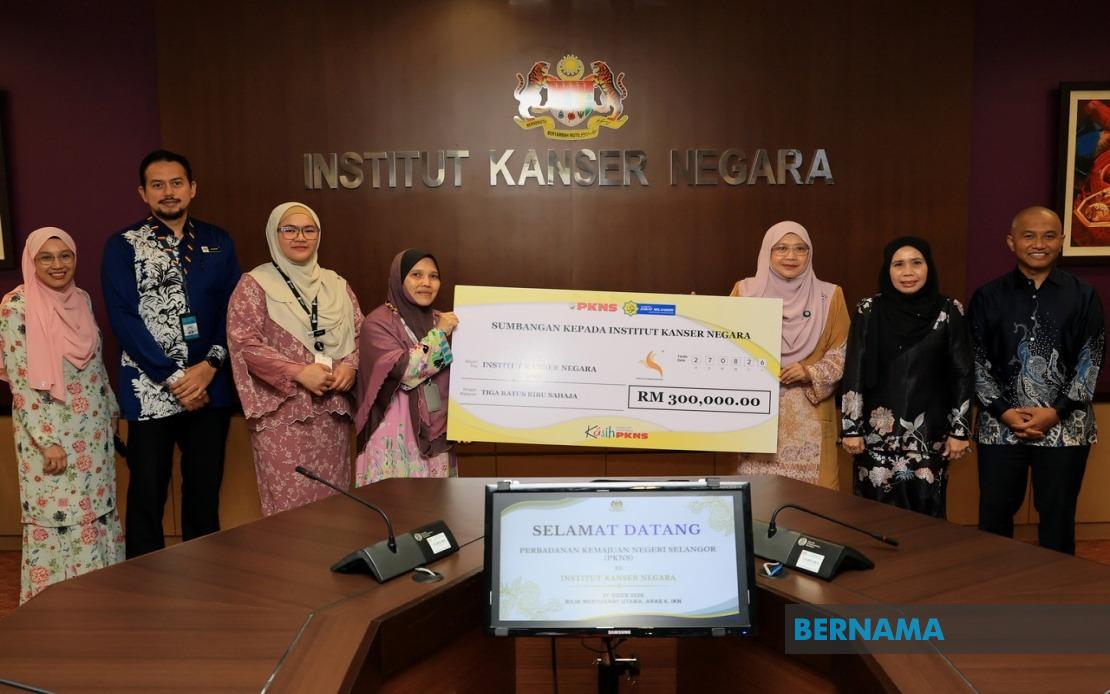
The Selangor State Development Corporation (PKNS) has stepped forward with a RM300,000 donation aimed at easing the financial pressures faced by cancer patients undergoing treatment at the National Cancer Institute (IKN) in Putrajaya. The contribution, presented on August 27, will benefit between 50 and 100 patients who are struggling with the considerable costs associated with their medical journeys, extending support that goes well beyond the confines of hospital walls.
According to PKNS Corporate Services senior general manager Sapna Turmidi, the initiative reflects a holistic understanding of what truly matters when communities extend assistance to vulnerable populations. Rather than limiting support to mere financial transactions, the agency sought to provide emotional reassurance and demonstrate genuine solidarity with those enduring one of life's most taxing ordeals. "We may not fully understand what they are going through, but we want them to know that they are not alone in this struggle," Turmidi conveyed during the cheque presentation ceremony, underscoring the psychological dimension of such corporate gestures.
The decision to contribute arose from personal tragedy within PKNS itself. A staff member diagnosed with glioma in February passed away just four months later, having received treatment at IKN. This profound loss catalysed the organisation's recognition of the multifaceted challenges confronting cancer patients and their families, transforming grief into purposeful action. The experience provided management with intimate understanding of how a diagnosis reshapes not only the patient's life but ripples outward to devastate entire family units.
Structurally, the assistance flows through a corporate social responsibility framework centred on wakalah zakat, executed in partnership with the Selangor Zakat Board (LZS). This arrangement ensures the funds reach eligible Muslim cancer patients classified under the asnaf al-Gharimin category—those burdened by debt or extraordinary expenses. The timing coincided with PKNS's 62nd anniversary on August 1, allowing the agency to mark six decades of operation since its establishment in 1964 by channelling resources toward meaningful social impact rather than internal celebration.
For cancer institutes operating within Malaysia's public healthcare system, such corporate contributions address a critical resource gap. According to IKN director Dr Nur Aslina Bahakodin, the facility requires between RM1 million and RM2 million annually simply to help economically disadvantaged patients navigate their treatment protocols. This substantial figure reflects the genuine scope of non-medical expenses that patients face throughout their cancer journey—expenses hospitals are structurally unprepared to absorb within standard operational budgets.
Beyond direct medical costs, these funds support an ecosystem of ancillary needs that profoundly affect treatment outcomes. Transportation to appointments, specialized dietary requirements, medical equipment, and family welfare support all fall within the assistance framework. When patients cannot afford travel to follow-up consultations, treatment continuity fractures, potentially undermining the clinical progress achieved through initial interventions. Such gaps in support can prove catastrophic in cancer care, where timing and adherence to protocols directly determine survival probabilities.
The Medical Social Work Unit at IKN will administer the PKNS contribution, conducting socio-economic assessments of individual patients and their families to ensure equitable allocation. This targeted approach prevents resources from being distributed without regard to genuine need, maximizing the impact of every ringgit contributed. The involvement of social work professionals ensures that assistance decisions rest upon comprehensive understanding of each patient's circumstances rather than arbitrary criteria.
In the broader context of Malaysian public health, the rising detection of cancer cases reflects encouraging progress in preventive medicine and screening awareness. Dr Nur Aslina attributed increased case numbers partly to improved public engagement with screening programmes and heightened health consciousness among the population. Early detection fundamentally transforms cancer outcomes; patients identified in initial stages possess substantially superior prognosis compared to those diagnosed at advanced stages. Among women, breast cancer remains the most frequently detected malignancy, whilst colorectal cancer leads among men—patterns consistent with demographic and lifestyle factors across Southeast Asia.
For Malaysian stakeholders, this PKNS initiative exemplifies the expanding recognition that cancer support requires multi-sectoral collaboration. Government hospitals provide clinical expertise and treatment infrastructure, but financial constraints limit their capacity to address the ancillary burdens that often determine whether patients complete their prescribed therapies. Corporate bodies, zakat institutions, and non-governmental organisations collectively form a complementary support ecosystem that bridges gaps in government provision, particularly for economically vulnerable populations.
The contribution also signals corporate awareness of social responsibility as integral to institutional identity, rather than peripheral charitable activity. By linking the donation to personal loss within the organisation and framing assistance through established Islamic social finance mechanisms, PKNS demonstrates that corporate giving can authentically integrate with both company culture and religious values. For other Malaysian enterprises, this model offers a replicable framework for channelling resources toward healthcare equity whilst maintaining operational authenticity and community trust.
Moving forward, the RM300,000 allocation provides immediate relief for specific patients, yet underscores the systemic underfunding of supportive care within Malaysia's cancer treatment infrastructure. The gap between annual requirement (RM1-2 million at IKN alone) and available corporate contributions suggests that sustained advocacy for increased healthcare financing at national levels remains essential. Until Malaysia's public health budget expands to encompass comprehensive cancer support services, initiatives like PKNS's donation will remain necessary bridges across a structural divide between clinical capacity and genuine patient welfare.

