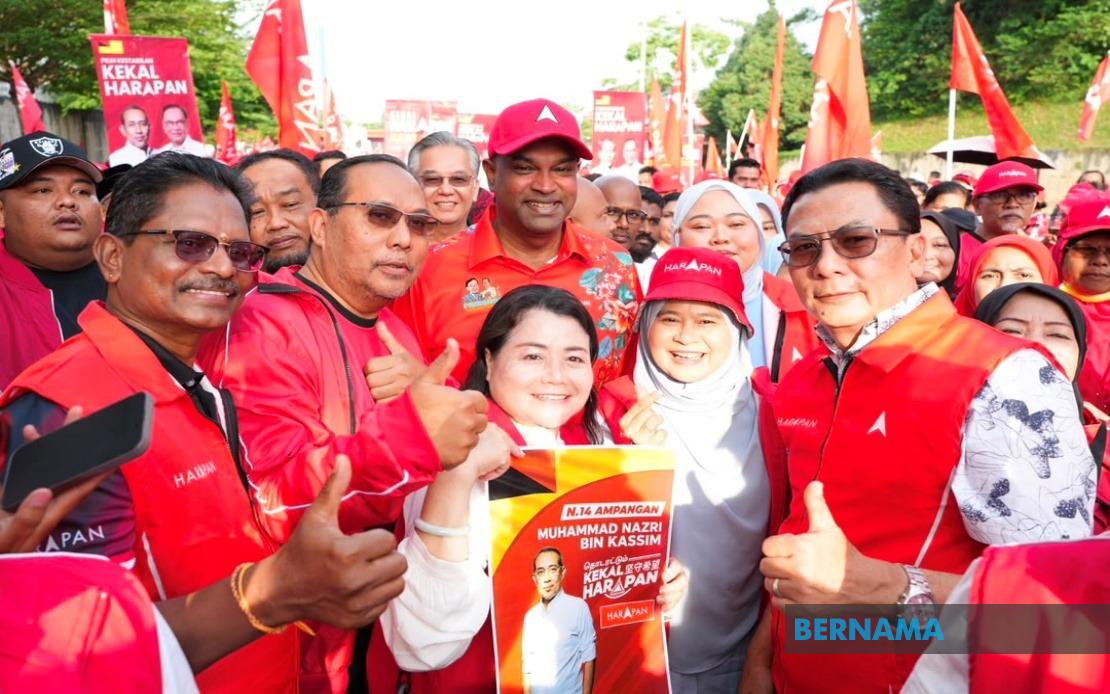
Top leaders from Pakatan Harapan converged in Seremban on July 18 to demonstrate their backing for six coalition candidates entering the 16th Negeri Sembilan state election. The show of force at the nomination centre underscored the ruling coalition's determination to maintain its foothold in the central Malaysian state, where demographic and economic shifts have made several constituencies increasingly competitive ahead of the August 1 polling day.
Among the prominent figures lending their weight to the campaign effort was Datuk Seri R. Ramanan, PKR's vice-president and Sungai Buloh Member of Parliament, who appeared at the Nomination Centre located within the Seremban City Council Building. His presence, alongside senior leaders from partner party DAP, signalled a coordinated push by the coalition to secure victories across multiple state constituencies. The gathering reflected the intensity with which Pakatan Harapan is approaching this contest, particularly given the coalition's recent challenges in state-level politics across Malaysia.
The six candidates receiving backing represented a geographically distributed slate across Negeri Sembilan's state assembly seats. The nominees included Nor Azman Mohamad contesting in Sikamat, Datuk Muhammad Nazri Kassim in Ampangan, Zarinna Abu Zarin in Lenggeng, Chew Seh Yong in Lobak, J. Arul Kumar in Nilai, and Ho Weng Wah in Temiang. This diverse roster reflected the coalition's bid to present candidates capable of appealing to the state's varied constituencies, combining incumbents and fresh faces in an effort to consolidate support across both urban and semi-rural areas.
DAP deputy secretary-general Steven Sim's participation in the nomination centre activity highlighted the component parties' commitment to joint mobilization. For DAP, which has traditionally maintained a strong presence in Negeri Sembilan's more urbanized constituencies, the coordinated appearance with PKR signals an attempt to present a unified front rather than competing for the same voter constituencies. This interparty coordination has become increasingly important as smaller opposition forces in the state seek to capitalize on any openings created by shifts in local political dynamics.
Ramanan's remarks at the nomination centre emphasized the momentum Pakatan Harapan aims to maintain throughout the campaign period. He characterized the substantial turnout of party supporters and organizational representatives as evidence of grassroots enthusiasm and dedication to the electoral contest ahead. Such observations are significant because they suggest the coalition is banking on organizational strength and street-level engagement to overcome any headwinds in its messaging or positioning.
The PKR vice-president linked this mobilization drive explicitly to broader governance objectives, framing the election as consequential for Negeri Sembilan's development trajectory. His statement that party machinery strength would drive stability and continued development represented the standard framing parties employ to connect local election outcomes to tangible policy outcomes. For voters weighing their choices, such arguments resonate when incumbent administrations can point to concrete achievements, yet this advantage can erode if voters perceive governance gaps or unfulfilled promises.
Negeri Sembilan presents particular strategic significance within Pakatan Harapan's broader electoral calculus. The state of 36 assembly seats offers opportunities for the coalition to demonstrate it retains governing capacity at the state level, an important symbolic and practical achievement given the coalition's mixed recent performance in other state elections. A strong showing in Negeri Sembilan would provide momentum for potential future contests, while a disappointing result could invite questions about the coalition's ability to deliver governance at the state level.
The timeline established by the Election Commission provides context for the campaign intensity evident at the nomination centre. The formal campaign period began immediately following the completion of nominations on July 18 and will run through July 31, compressing the general campaign window into a fortnight. Early voting is scheduled for July 28, with the main polling day set for August 1. This compressed timeframe necessitates efficient organizational execution and explains why prominent party figures are actively appearing at nomination events to energize campaign machinery.
The Negeri Sembilan State Legislative Assembly had been dissolved on June 5 at the state government's behest, opening the path to this election. Understanding the political circumstances surrounding the assembly dissolution provides insight into potential underlying tensions or strategic calculations within the state coalition government. Elections called under certain circumstances can carry different implications for incumbent coalitions compared to those prompted by regular term limits or constitutional requirements.
For Malaysian voters following regional political developments, the Negeri Sembilan election offers a meaningful test of current political sentiment in a state with economically diverse constituencies ranging from tin-mining heritage towns to newer industrial estates and established Kuala Lumpur commuter communities. The outcome will likely influence perceptions of Pakatan Harapan's electoral prospects and governing competence heading into any subsequent electoral contests at the federal or other state levels.
The coordination displayed by PKR and DAP at the nomination centre suggests the coalition has settled on a unified campaign message and organizational strategy for Negeri Sembilan, at least publicly. Whether this unity translates into voting booth success depends on whether the six candidates fielded can connect their party's national and state messaging with local constituency concerns that will ultimately determine voter behaviour on August 1.

