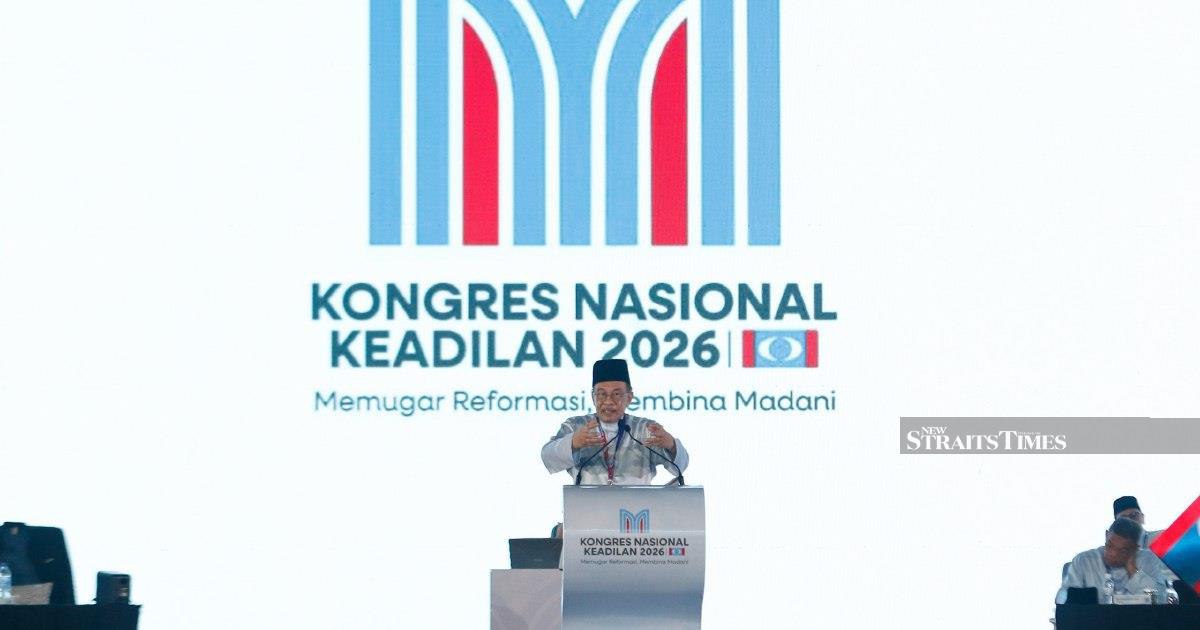
Datuk Seri Anwar Ibrahim, president of the People's Justice Party, publicly acknowledged at a party congress in Ayer Keroh that Tabung Haji had been subject to embezzlement, drawing on conclusions reached by the Royal Commission of Inquiry established to investigate the institution's affairs.
The statement carries particular weight coming from the PKR leadership, given Malaysia's ongoing efforts to restore public confidence in government-linked institutions. Tabung Haji, formally known as Lembaga Tabung Haji, serves as a savings and investment institution specifically designed to assist Malaysian Muslims in preparing financially for the Hajj pilgrimage. The institution holds considerable significance both economically and culturally within Malaysia's Islamic financial ecosystem, managing substantial savings and investments on behalf of over three million members.
The RCI, a formal investigative mechanism established to examine the institution's operations, had compiled a detailed report documenting irregularities within Tabung Haji's management and financial administration. By publicly validating these findings at a party congress, Anwar positioned his administration as willing to confront institutional failures head-on rather than deflect or minimise them. This approach aligns with PKR's broader political messaging around governance reform and accountability, themes that have resonated with portions of the Malaysian electorate seeking greater transparency from state institutions.
The acknowledgment of embezzlement at Tabung Haji reflects broader concerns about governance standards at Malaysian government institutions. Over recent years, numerous statutory bodies and government-linked companies have faced scrutiny regarding financial management and accountability. Tabung Haji's case became emblematic of these systemic challenges when investigations revealed that funds intended for members' pilgrimage savings and investments had been misappropriated or mismanaged. The scale of these irregularities prompted calls for comprehensive reform within the institution's governance structure and oversight mechanisms.
For Malaysian Muslims who depend on Tabung Haji for their Hajj preparation, the confirmation of embezzlement raises legitimate concerns about the safety and proper stewardship of their savings. Members had entrusted the institution with funds specifically earmarked for one of Islam's five pillars, making the breach of that trust particularly consequential both financially and spiritually. Recovery of misappropriated funds and implementation of preventative measures have become pressing priorities for the institution's leadership and the government overseeing it.
Anwar's statement at the PKR congress demonstrated the party's positioning on institutional accountability during a period when Malaysia continues grappling with the aftermath of various governance scandals. By openly discussing the RCI findings rather than obscuring them, the PKR leadership sought to distinguish its approach from previous administrations that faced criticism for perceived opacity regarding institutional malfeasance. This transparent acknowledgment, however, also underscores the scale of challenges facing Malaysia's institutional framework.
The RCI's detailed examination had identified specific instances and patterns of improper financial conduct within Tabung Haji's operations. These findings provided a documented basis for understanding how embezzlement had occurred, who bore responsibility, and what systemic vulnerabilities had permitted such misconduct to take place. The commission's work, while initially controversial in some quarters, ultimately contributed to a clearer public understanding of the institution's problems.
Moving forward, the confirmation of these findings carries implications for how Malaysian statutory bodies implement internal controls, financial auditing, and institutional governance. Tabung Haji's situation has prompted broader discussions about enhancing oversight mechanisms and accountability frameworks across government-linked institutions. Policymakers and institutional leaders now face pressure to demonstrate that lessons have been learned and that safeguards exist to prevent similar occurrences elsewhere.
The embezzlement matter also reflects the intersection of religious obligation and state institutional responsibility in Malaysia. Tabung Haji operates at the nexus of Islamic practice and public finance, making its governance failures particularly visible and consequential within Malaysian society. Restoring institutional credibility requires not only recovering misappropriated funds but also demonstrating comprehensive reform of the institution's operational and oversight structures.
For Southeast Asian observers, Malaysia's handling of the Tabung Haji situation offers insights into how a middle-income democratic nation addresses institutional governance failures. The balance between public accountability, institutional autonomy, and religious sensitivity presents distinctive challenges that reflect Malaysia's particular constitutional and cultural context. How effectively the government and Tabung Haji management address the issues identified in the RCI report will influence public confidence in Malaysian institutions more broadly.

