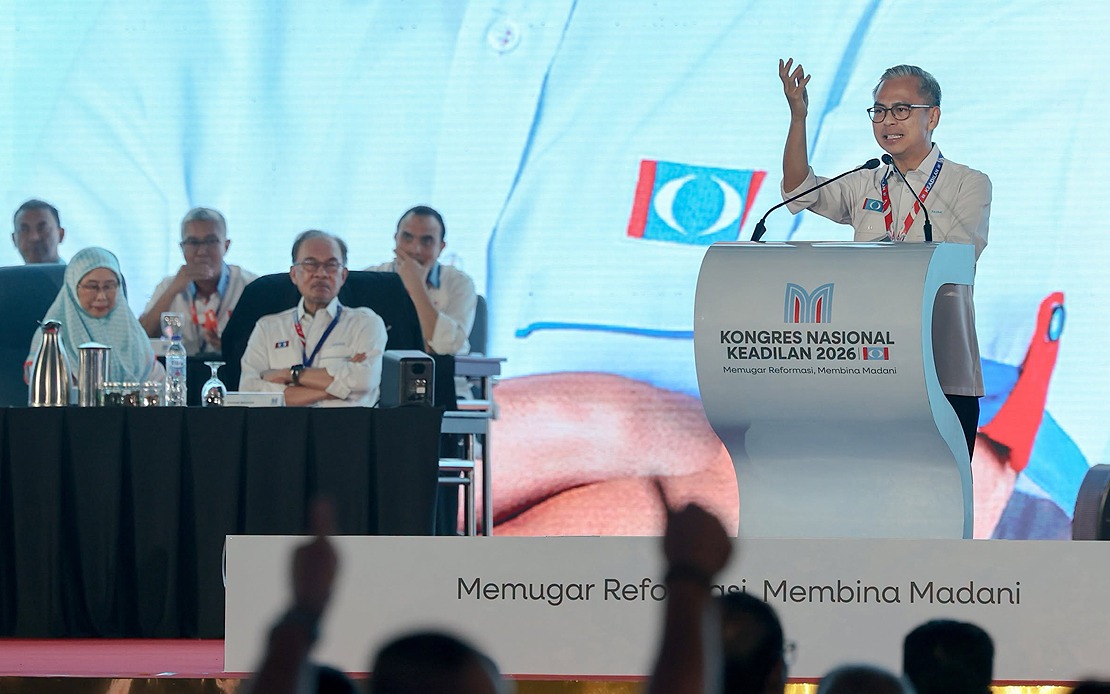
The Parti Keadilan Rakyat held its 2026 National Congress in Kuala Lumpur, concluding on August 16 with party officials declaring the gathering a success in reaffirming the organization's commitment to reform and its broader political agenda benefiting ordinary Malaysians. Rather than serving merely as a ceremonial gathering or a forum for rhetorical flourishes, party leaders characterized the two-day event as an introspective exercise designed to evaluate the party's operational effectiveness and reconnect with its foundational principles.
PKR Information Chief Datuk Seri Fahmi Fadzil highlighted the significance of the congress as more than procedural. He emphasized that the gathering functioned as an opportunity for collective reflection, enabling party members to absorb feedback from the grassroots level and to undertake an honest assessment of organizational strengths alongside persistent weaknesses. This self-critical approach reflects a broader concern within PKR's upper echelons about maintaining relevance and effectiveness as Malaysia's political landscape continues to shift and realign.
The address delivered by PKR President Datuk Seri Anwar Ibrahim during the congress apparently struck a foundational chord with delegates. According to Fahmi's subsequent commentary, Anwar emphasized that the reformasi movement—the decades-long campaign for democratic and institutional renewal that originally catalyzed PKR's formation—must remain the party's north star. His message underscored that the organization's political power and influence should consistently derive from and serve the material interests of the electorate rather than factional or personal considerations.
Fahmi's public remarks, disseminated through social media platforms, outlined a concrete roadmap for party members following the congress's conclusion. He called upon delegates returning to their respective constituencies to undertake systematic engagement with voters, emphasizing the importance of listening to community concerns and identifying localized solutions to problems that affect daily life. This ground-level approach represents an attempt to counteract perceptions that political parties, once in or near power, become disconnected from ordinary citizens' struggles.
The party official stressed that organizational coherence and disciplined action remain essential preconditions for effective political performance. His statement implied an acknowledgment that PKR, as a component of Malaysia's ruling coalition, faces persistent challenges in maintaining internal unity and ensuring that diverse factions within the party operate with sufficient coordination. Political organizations in Malaysia have historically grappled with splits caused by personality conflicts, regional rivalries, and ideological tensions—challenges that PKR has not entirely escaped despite its reform-oriented origins.
Fahmi's framework positioning the congress as a springboard for intensified grassroots work rather than a conclusion reflects a strategic calculation about PKR's political future. With the next general election potentially several years away, the party appears focused on rebuilding and consolidating its organizational infrastructure, particularly in constituencies where voter enthusiasm may have waned since the 2022 election cycle. The emphasis on continuous engagement and problem-solving suggests PKR leadership recognizes that electoral success requires sustained interaction rather than periodic campaigns.
The broader context of PKR's current position in Malaysian politics bears examination. As a major component of the Pakatan Harapan coalition and a participant in the current government, PKR occupies a complex position balancing reform ambitions with the practical compromises inherent in governance. The congress messaging attempts to navigate this tension by insisting that reformist principles need not be abandoned through governmental participation, but rather provide the lens through which policy decisions should be evaluated.
For Malaysian voters and political observers across Southeast Asia, PKR's congress outputs carry implications beyond party mechanics. The party remains symbolically significant as the institutional vehicle most closely associated with democratic reform campaigns dating back to the late 1990s. How effectively PKR translates congressional resolve into tangible policy outcomes and constituency-level improvements will likely influence public perceptions about whether meaningful institutional change remains possible through existing political channels or whether alternative movements and parties merit consideration.
Fahmi's concluding observation that congress adjournment marks not an ending but a transition to intensified party work encapsulates the official framing. Members departed with directives to enhance organizational discipline, deepen voter connections, and perpetually reconnect political activity to the reform agenda's original objectives. Whether this rhetorical commitment translates into substantive changes in how PKR operates and how it delivers benefits to constituents will constitute the real test of the congress's significance in the coming months and years. The party faces the perpetual challenge facing all long-established political organizations in democracy: avoiding ossification while maintaining institutional coherence.

