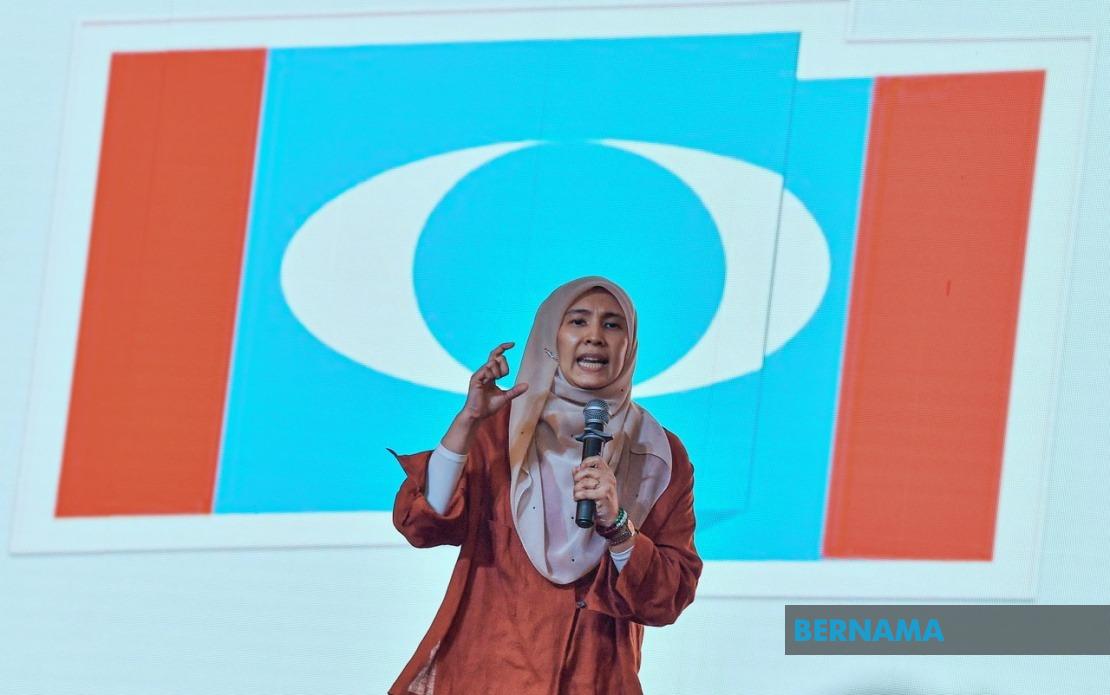
The central leadership of Parti Keadilan Rakyat has approved a temporary leave arrangement for its Deputy President Nurul Izzah Anwar, bringing a significant reshuffle to the party's upper echelons as it moves toward its biennial national gathering next year. The decision, announced on August 6, responds to Nurul Izzah's request and will take effect following the 2026 PKR National Congress, with specific details about her return to be confirmed at a future date.
PKR Information Chief Datuk Seri Fahmi Fadzil, who also holds the Communications portfolio in the federal government, disclosed the outcome during a statement reflecting the Central Leadership Council's deliberations. The meeting, held in Kuala Lumpur, carefully reviewed Nurul Izzah's position within the party hierarchy before endorsing her request and implementing the necessary procedural adjustments to maintain organisational continuity.
With Nurul Izzah stepping back from her formal responsibilities, the party has designated Vice-President Datuk Seri Saifuddin Nasution Ismail to shoulder her duties on an interim basis. This arrangement ensures that the Deputy President portfolio remains effectively staffed throughout the transition period, allowing the party machinery to function without disruption during what promises to be a consequential gathering in 2026.
Before her temporary departure from active duties, Nurul Izzah is scheduled to perform ceremonial functions central to the party's calendar. She will preside over the congresses of PKR's Women and Youth Wings on August 14, providing continuity in leadership visibility ahead of the National Congress. This approach allows her to complete significant engagements before the formal commencement of her leave, maintaining her public profile within the party's grassroots structures.
The National Congress itself, designated to take place in Melaka from August 15 to 16, represents a critical juncture for PKR's strategic direction and internal deliberations. As a major political party within Malaysia's governing coalition, the congress will likely address broader coalition dynamics, policy directions, and party positioning as the nation approaches potential electoral cycles. Nurul Izzah's decision to step back temporarily adds an intriguing dimension to speculation about internal party politics and the distribution of senior roles among the party's prominent figures.
Concurrently, the party's Central Leadership Council expanded its restructuring efforts by formalising the full assumption of the Election Director role by Datuk Seri Amirudin Shari, another Vice-President. This consolidation of responsibilities among senior vice-presidents reflects PKR's strategic positioning as it prepares for electoral engagements across Malaysia's federal and state landscapes. The Election Director portfolio carries substantial weight, particularly given Malaysia's unpredictable political calendar and the likelihood of elections at state or federal levels in coming years.
PKR's acknowledgement of outcomes from recent state elections in Johor and Negeri Sembilan demonstrates the party's pragmatic engagement with electoral realities across the federation. While specific results were not detailed, the party's formal acceptance of these outcomes suggests a measured response to democratic processes, regardless of whether such elections favoured PKR's electoral positioning. This stance reflects the disciplined approach expected of a coalition partner within Malaysia's federal government structure.
The party also extended formal recognition to Datuk Seri Aminuddin Harun, the previous Menteri Besar of Negeri Sembilan, acknowledging his service across two consecutive terms. In Malaysian political culture, such formal recognition carries significance beyond ceremonial courtesy, often signalling the party's appreciation for sustained leadership at state level and establishing protocols for elder statesman status. Aminuddin's tenure would have involved navigating complex state-level politics within the broader coalition framework.
Expanding its membership base, PKR's Central Leadership Council approved the admission of 3,533 newly registered members who completed their online registration between mid-July and early August. This intake reflects the party's ongoing efforts to strengthen grassroots organisation and broaden its membership constituency, providing numerical depth for party activities ranging from congresses to electoral mobilisation. Membership growth remains strategically important for Malaysian political parties seeking to demonstrate organisational vitality and internal democratic participation.
The timing of these administrative arrangements deserves scrutiny within Malaysia's broader political context. PKR functions as a significant component of the ruling Pakatan Harapan coalition, and adjustments to its internal hierarchy carry implications for coalition balance and ministerial positioning. Nurul Izzah's leave, while described as temporary, may reflect shifting priorities or personal circumstances that have prompted reassessment of her intensive role, though the party has not provided detailed reasoning for the decision. Her prominence as the daughter of PKR president Anwar Ibrahim has historically subjected her to close public scrutiny, and this transition may allow her to recalibrate her position within party structures.
The restructuring also reveals PKR's commitment to maintaining operational effectiveness during what appears to be a period of significant internal adjustment. By distributing responsibilities among capable vice-presidents like Saifuddin Nasution and Amirudin Shari, the party demonstrates institutional resilience and succession planning principles that characterise mature political organisations. This approach contrasts with scenarios where key departures or leaves might create operational vacuums affecting party functioning and coalition coordination.
Looking ahead toward the 2026 National Congress and beyond, these changes position PKR for the political challenges anticipated across Malaysia over the coming years. As the party prepares for its biennial gathering, questions remain regarding whether the congress will address leadership succession, policy recalibrations, or strategic repositioning within the coalition framework. The arrangements announced by Fahmi Fadzil provide the structural foundation for these discussions, ensuring that administrative continuity does not impede substantive deliberation on party direction and electoral strategy.

