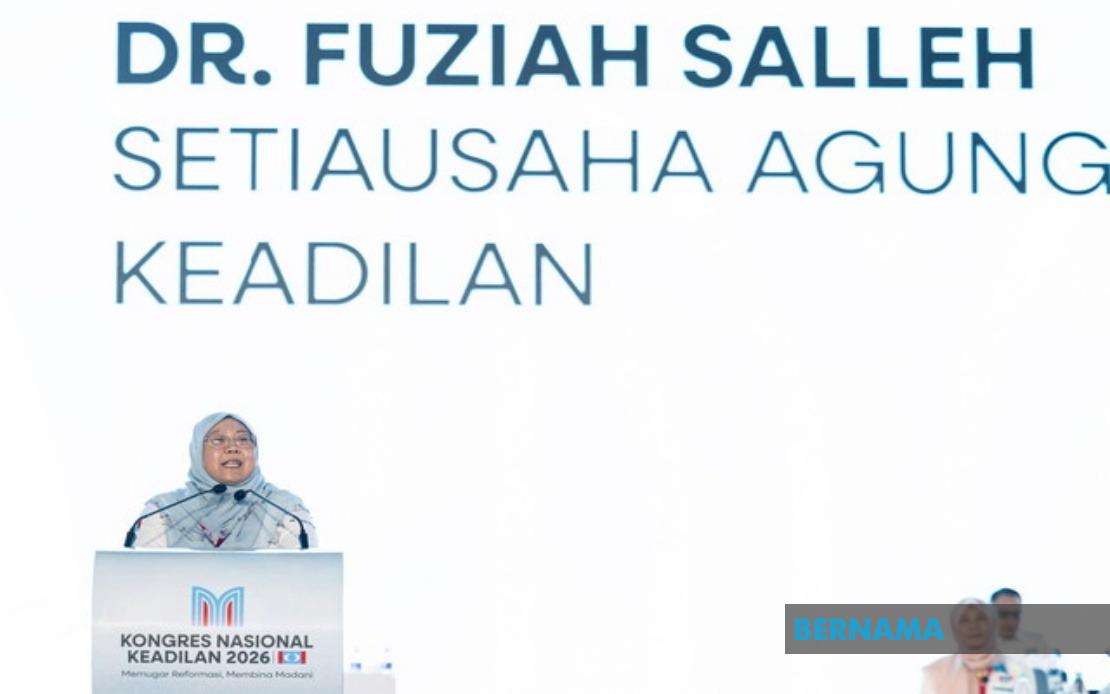
Datuk Dr Fuziah Salleh, secretary-general of Parti Keadilan Rakyat, has urged the party to intensify its intellectual and communicative approach to the MADANI Economy framework, emphasising that political ideology alone will not suffice without rigorous execution and institutional discipline. Speaking at PKR's National Congress 2026 in Melaka, Fuziah stressed that the party must move beyond articulating its reform agenda and instead focus on translating those principles into tangible improvements in people's lives across Malaysia.
The MADANI Economy framework represents a cornerstone of PKR's political thinking and has been central to the party's governance philosophy since its adoption as a national economic blueprint. However, Fuziah's remarks suggest that implementation has lagged behind ambition, requiring renewed vigour from party leadership at every level. She indicated that party delegates and grassroots leaders must become more actively engaged in operationalising the framework rather than merely endorsing it at party assemblies.
Fuziah outlined a three-pronged approach to revitalising PKR's reform push: reshaping how party members conceptualise the MADANI Economy, improving the methods through which the party communicates these ideas, and refining the narratives that resonate with voters and citizens. This multifaceted emphasis suggests that PKR recognises gaps in how its policy platform is perceived and understood, both internally and by the broader electorate. The party leadership appears to believe that clarity and consistency in messaging are prerequisites for translating policy into practice.
The secretary-general underscored that successful institutional reform depends not merely on good intentions but on unwavering commitment and disciplined execution from both the party apparatus and government machinery. She employed military metaphor to illustrate the challenge ahead, noting that winning the ideological battle requires sufficient operational capacity and resources. This candid acknowledgement reflects the complexities PKR faces in balancing its role as both a political party and a component of Malaysia's coalition government, where ambitions must be reconciled with the realities of competing interests and limited resources.
Fuziah's emphasis on discipline speaks to recurring concerns within PKR regarding internal cohesion and implementation capacity. For a party navigating Malaysia's complex political landscape, where governance requires navigating coalitions and managing diverse stakeholder interests, such discipline becomes essential. Without it, the gap between policy announcement and actual delivery widens, potentially eroding public confidence and undermining the party's reform credentials.
Crucially, Fuziah reaffirmed PKR's commitment to inclusivity and its foundational principle of championing marginalised populations regardless of ethnicity or religious background. In a departure from identity-based politics, she articulated the party's view that poverty and socioeconomic disadvantage, rather than communal affiliation, should drive policy prioritisation. This positioning is particularly significant in Malaysia's context, where race-based political appeals have traditionally dominated electoral discourse. PKR's insistence on class-based rather than ethnicity-based advocacy represents a distinctive approach, though one that requires consistent messaging to gain traction.
The party secretary-general's emphasis on reaching all segments of society underscores PKR's ambition to transcend the communal fault lines that have historically structured Malaysian politics. By framing justice through economic inclusion rather than ethnic representation, PKR seeks to build a broader coalition. However, this strategy demands that the party demonstrate concrete results that benefit working-class Malaysians across ethnic lines, lest the approach be dismissed as rhetoric disconnected from reality.
Fuziah stressed that maintaining focus on justice principles and advancing the MADANI Economy agenda would enable PKR to navigate the turbulent waters of contemporary Malaysian politics and governance. This framing positions the party's ideological commitments as stabilising anchors amid shifting political circumstances. As Malaysia faces evolving demographic pressures, climate challenges, and economic transformation, PKR's leadership evidently believes that a coherent reform framework will appeal to voters seeking substantive change beyond electoral cycles.
The call for strengthened narrative and communication carries implications for PKR's electoral prospects and its role within Malaysia's broader political ecosystem. As governance complexity increases and voter expectations rise, political parties must demonstrate that their ideas translate into superior administration and tangible public benefits. Fuziah's emphasis on turning thinking into action reflects an awareness that Malaysian voters increasingly judge parties not by rhetorical flourish but by measurable outcomes in service delivery, economic opportunity, and institutional integrity.
For Southeast Asian observers, PKR's emphasis on inclusive economics and disciplined implementation offers a regional case study in how centre-left parties navigate majoritarian democracies while pursuing progressive agendas. The party's struggle to operationalise its reform vision while managing coalition pressures parallels challenges faced by similar parties across the region, from Thailand's progressive movements to the Philippines' reform-oriented groupings.
Moving forward, PKR faces the challenge of ensuring that its National Congress directives translate into coherent policy execution and effective communication to the electorate. The party's success in strengthening the MADANI Economy narrative will likely determine whether it can consolidate support among working and middle-class voters while maintaining coalition stability. Fuziah's remarks suggest that party leadership recognises this critical juncture and is attempting to reinvigorate organisational discipline and strategic focus as essential preconditions for translating political ideology into sustainable reform.

