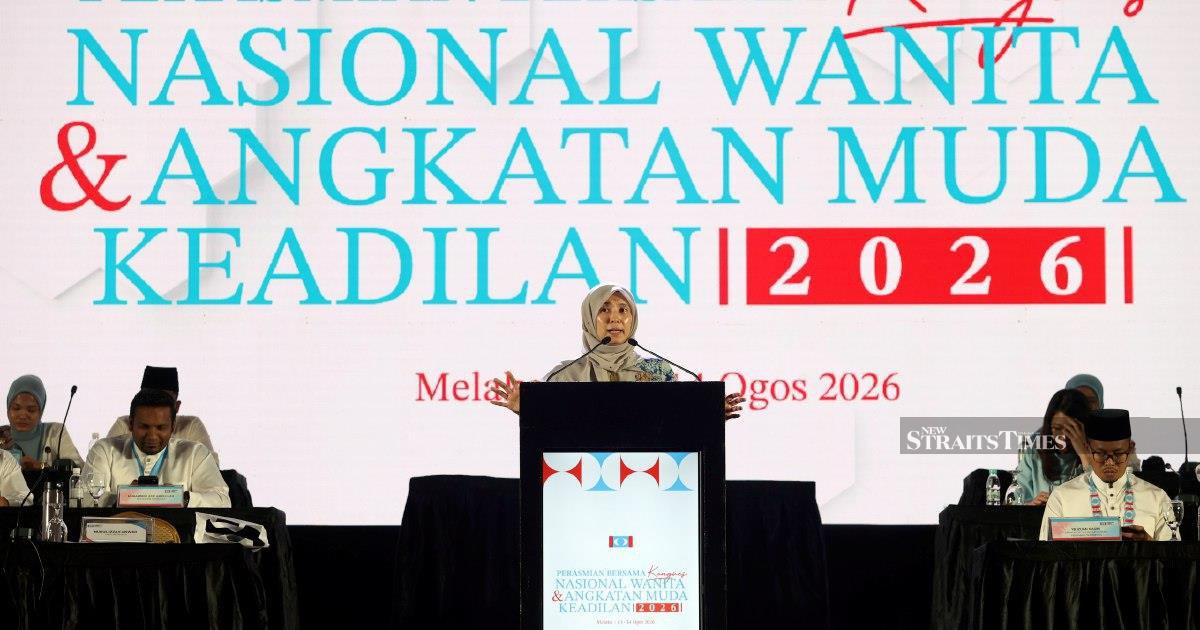
At an event in Ayer Keroh, Nurul Izzah Anwar, deputy president of Parti Keadilan Rakyat, has sounded a warning that her party must articulate explicit ethical parameters—described as "red lines"—that cannot be crossed regardless of political expediency or coalition commitments. Her statement reflects growing concerns within PKR about maintaining institutional integrity while navigating the complex demands of governing alongside other political parties.
The deputy president's remarks carry particular significance given PKR's role as a central figure in Malaysia's ruling coalition. As a reformist party that built its identity on principles of good governance and anti-corruption during its years in opposition, PKR faces ongoing scrutiny about whether those ideals remain intact now that the party holds significant ministerial portfolios and parliamentary influence. Nurul Izzah's intervention suggests internal discussions within PKR about the risks of gradually eroding the party's foundational values through incremental political compromises.
Nurul Izzah specifically warned against allowing political cooperation to become a blanket excuse for tolerating corruption, the misuse of governmental authority, or other forms of misconduct. Her framing indicates concern that coalition partners might pressure PKR into overlooking infractions or questionable decisions in the name of maintaining political stability. This tension between coalitional pragmatism and principled governance has long troubled Malaysia's democratic system, where multiparty alliances often require difficult trade-offs.
The timing of her statement appears deliberate, suggesting that PKR's leadership recognises the need to renew its commitment to transparency and accountability. Over the past five years, Malaysia's political landscape has shifted dramatically, with coalitions fragmenting and reforming in ways that test each party's core convictions. For PKR specifically, there is lingering memory of the party's earlier struggles—including imprisonments, electoral setbacks, and sustained accusations of political persecution—which forged its reform-oriented identity.
Establishing "red lines" would serve multiple purposes for PKR. Internally, it would set clear expectations for party members holding government positions, reducing ambiguity about what behaviour is acceptable. Externally, it would demonstrate to Malaysian voters that PKR maintains genuine policy boundaries rather than operating as a purely transactional political entity. In an environment where public trust in political institutions remains fragile, such clarity would strengthen PKR's differentiation from rival parties.
The challenge for PKR lies in translating such principles into practice. Defining acceptable compromise is inherently difficult—what constitutes a defensible political trade-off versus inappropriate accommodation depends on context, stakeholder interests, and competing moral frameworks. Moreover, coalition partners may resist what they perceive as PKR imposing unilateral ethical standards that constrain collective decision-making. The deputy president's call therefore implies PKR should engage its allies in conversations about shared red lines rather than adopting a unilateralist approach.
For Southeast Asian democracy more broadly, Nurul Izzah's intervention reflects a broader pattern of reform-minded parties confronting the complexities of exercising power. Thailand's move forward movement, Indonesia's various coalitions, and the Philippines' shifting political alliances all demonstrate that maintaining reformist credentials while governing remains perpetually difficult. The gap between opposition rhetoric and governing reality often generates disillusionment, particularly among younger voters who supported parties promising systemic change.
Within Malaysia specifically, Nurul Izzah's position as deputy president gives her statement additional weight. As a second-generation PKR leader, she represents the party's aspiration to deepen institutionalisation beyond dependence on founding figures. Her willingness to publicly challenge her own party on governance standards suggests PKR's leadership recognises that coalitional participation without ethical guardrails could ultimately delegitimise the party and undermine its political viability.
The practical implementation of PKR's red lines will likely become clearer through specific policy decisions and personnel matters in coming months. Issues spanning fiscal accountability, procurement transparency, enforcement against corrupt officials regardless of party affiliation, and protection of institutional independence will serve as testing grounds for whether the deputy president's call translates into actual governance changes. Malaysian civil society organisations and watchdog groups will scrutinise PKR's conduct against the standards Nurul Izzah has articulated.
Ultimately, Nurul Izzah's remarks constitute both an aspiration and a warning—an aspiration that PKR can maintain its reform orientation despite coalitional pressures, and a warning that failure to do so risks squandering the political capital the party accumulated during years of struggle. Whether PKR successfully establishes and adheres to meaningful red lines will significantly influence not just the party's future trajectory but also broader perceptions of Malaysia's democratic trajectory and whether political reform remains compatible with multiparty coalitional governance.

