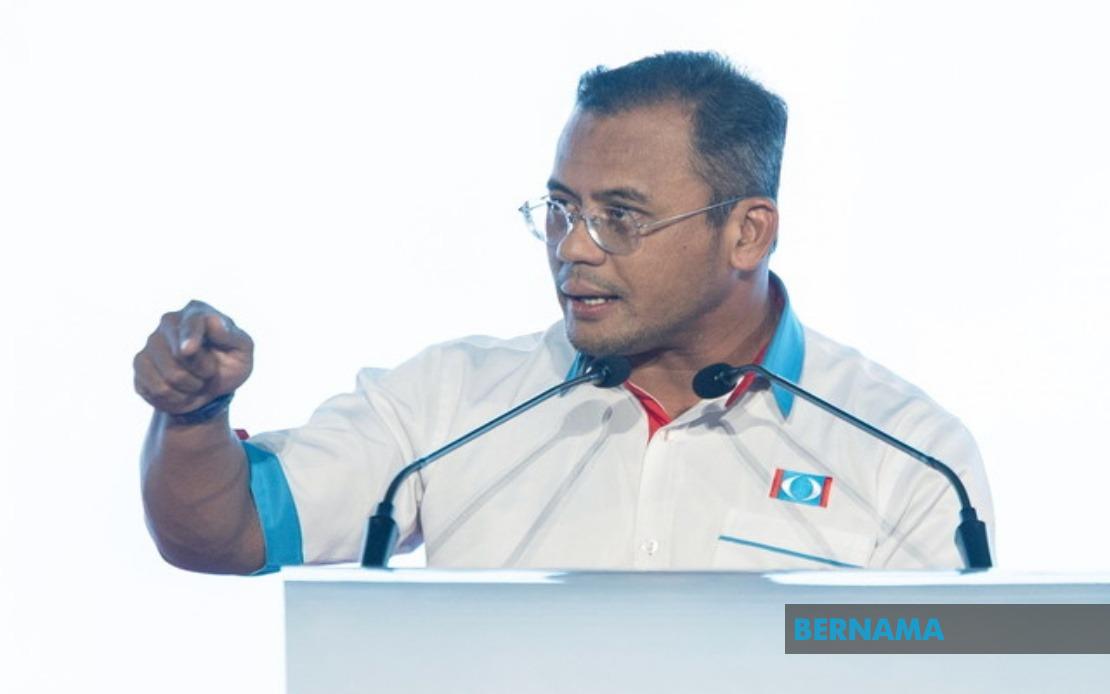
The leadership of Parti Keadilan Rakyat has reinforced the party's commitment to inclusive governance during its national congress in Melaka, stressing the importance of defending plural democratic principles while honouring Malaysia's constitutional framework. Speaking at the two-day gathering held at Melaka International Trade Centre, senior party figures outlined a vision that attempts to navigate the delicate terrain of Malaysian multiethnic politics—respecting constitutional provisions regarding Islam and the Malays whilst simultaneously extending fair treatment to all communities regardless of faith or ethnicity.
Datak Seri Amirudin Shari, the vice president and Selangor Menteri Besar, articulated this position during his closing address, describing constitutional protections for Islam and the Malay-Muslim community as non-negotiable elements of the nation's founding social contract. Yet he simultaneously emphasised that PKR's political project embraces citizens of all backgrounds, including Chinese, Indian, Christian, Buddhist and Hindu Malaysians. This framing reflects an ongoing tension within the party's ideological position—one that attempts to acknowledge legitimate constitutional guarantees whilst preventing those provisions from becoming instruments for majoritarian exclusion.
The reform movement launched by party president Datuk Seri Anwar Ibrahim in 1998 has historically anchored itself to several core pillars, according to Amirudin. These include the enrichment of democratic institutions and fundamental liberties, equitable distribution of economic resources, and transparent government administration. By invoking this historical trajectory, PKR leadership appears to be positioning contemporary party messaging within a broader narrative of institutional transformation rather than narrow sectarian advantage—a strategic move designed to unite diverse constituencies under a shared vision of systemic improvement.
Datak Seri R. Ramanan, the party's other vice president and Minister of Human Resources, took a more confrontational stance toward what he characterised as deliberate weaponisation of racial and religious identity by political opponents. Ramanan argued that certain political formations deliberately deploy racial divisions as a mechanism for vote accumulation, prioritising narrow factional interests above national cohesion. By explicitly calling out identity-based political strategy as corrosive to social harmony, Ramanan signalled PKR's intention to occupy a position of moral authority in Malaysian political discourse—presenting the party as defender of unity against those allegedly exploiting communal anxieties.
The minister's remarks carry particular resonance given the contemporary Malaysian political landscape, where identity politics remains an influential electoral tool. Multiple parties across the political spectrum have been accused of leveraging religious and ethnic sentiments to mobilise voters, a phenomenon that has intensified during recent electoral cycles. By pledging firm rejection of such tactics, PKR appears to be attempting differentiation from competitors whilst simultaneously inoculating the party against accusations of accommodating such strategies internally.
Ramanan additionally directed internal party messaging toward cohesion and disciplined unity, warning against personality-driven conflicts at leadership levels that potentially cascade downward through the party machinery. His concern that internal discord weakens branch structures and confuses grassroots membership reflects awareness of structural vulnerabilities within coalitional politics. When senior figures publicly contest power or direction, subordinate party bodies experience reduced morale and operational effectiveness—a dynamic that benefits opposition parties. Ramanan's appeal for party members to subordinate ego to collective institutional strength suggests awareness that PKR's electoral competitiveness depends substantially on internal organisation rather than external political conditions alone.
Another vice president, Datuk Chang Lih Kang, offered empirical evidence suggesting that voters increasingly transcend traditional communal voting patterns when presented with effective, conscientious representation. He referenced the Chennah state assembly seat in Negeri Sembilan during recent state elections, where Malay-majority constituencies demonstrated measurable support for DAP secretary-general Anthony Loke despite opposition campaigns emphasising his non-Malay identity. This example carries significance for PKR's broader political strategy, suggesting that meritocratic governance and competent delivery of public goods may gradually displace identity-based voting calculus among significant voter segments.
The Chennah result particularly underscores evolving voter behaviour among Malay constituencies, traditionally regarded as monolithic in their electoral preferences. If indeed Malay voters substantially supported a non-Malay DAP candidate, this represents a meaningful shift in Malaysian electoral sociology. Such patterns would validate PKR's theoretical position that inclusive, performance-based politics can generate multiethnic coalitions without requiring explicit racial or religious prioritisation. However, the extent to which this represents a durable realignment or a localised anomaly remains uncertain, and PKR leadership appears to be building strategic doctrine around the assumption that such trends will intensify.
The emphasis on transcending racial-political frameworks carries particular implications for Malaysian federalism and interethnic relations in Southeast Asia more broadly. Malaysia's constitutional settlement explicitly recognises communal identities as foundational to political legitimacy, yet simultaneously aspires toward equal citizenship and shared national identity. PKR's positioning attempts to occupy middle ground—acknowledging constitutional provisions whilst arguing that their implementation need not necessitate zero-sum communal competition. This intellectual stance confronts the genuine tension between group-differentiated rights and individual equality that has animated Malaysian politics since independence.
However, implementing such an approach presents substantial practical difficulties. Political opponents can plausibly argue that genuine respect for constitutional provisions regarding Islam and Malays requires more substantial differentiation in policy outcomes than PKR advocates. Conversely, advocates for secular egalitarianism might contend that constitutional provisions warrant gradual dilution through jurisprudential reinterpretation rather than CPR's apparent acceptance of their permanent constitutional status. These disputes suggest that PKR's attempt at principled middle positioning, whilst intellectually coherent, may struggle to satisfy constituencies positioned at either ideological extreme.
The party congress messaging also reflects domestic responses to regional democratic pressures. Throughout Southeast Asia, majority-communal politics and identity-based mobilisation have intensified despite nominal commitments to pluralism. Thailand, Myanmar, and Indonesia have all experienced episodes where electoral democracy functioned as mechanism for majoritarian consolidation rather than inclusive governance. Malaysia's own experience suggests similar vulnerabilities, particularly when religious nationalism intersects with electoral competition. PKR's explicit rejection of such tactics appears partly designed to position Malaysia as exceptional within regional democratic decline, maintaining commitment to inclusive institutional practices.
Looking forward, the sustainability of PKR's positioning depends substantially on whether performance-based politics genuinely resonates with voters across communal lines. If election results consistently demonstrate that meritocratic governance and effective service delivery can generate multiethnic electoral coalitions, then PKR's theoretical framework gains empirical validation. Conversely, if identity-based voting patterns prove resilient despite improved governance, then PKR's ideological commitments may become increasingly vulnerable to internal pressure from constituencies demanding more explicit communal prioritisation. The party's next several electoral cycles will substantially determine whether inclusive politics represents Malaysia's future direction or remains aspirational rather than achievable.

