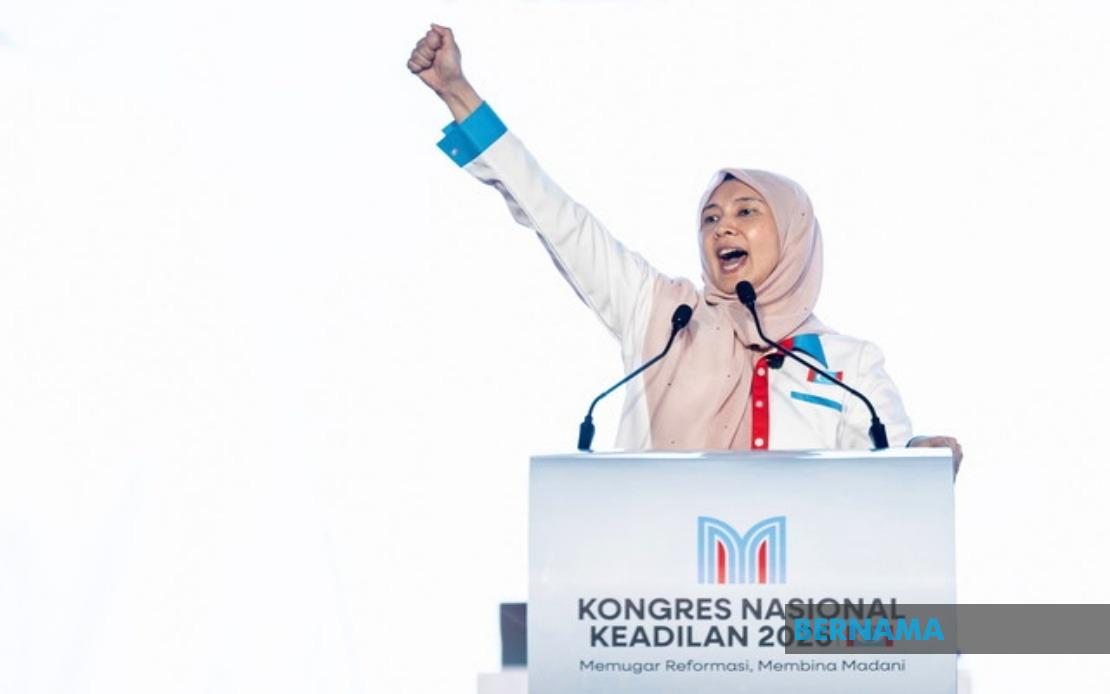
PKR deputy president Nurul Izzah Anwar delivered a call to arms at the party's national congress in Melaka, insisting that the fight for meaningful reform cannot be abandoned simply because the party now occupies ministerial seats. Speaking at the PKR 2026 National Congress at Melaka International Trade Centre on August 16, the politician known as the 'Princess of Reform' emphasised that reform must remain a driving force across multiple levels—within party structures, government administration, and public policy implementation. Her remarks signal concern that electoral success and the trappings of office might gradually erode the ideological commitments that propelled PKR to prominence during Malaysia's democracy movements.
The foundational message underpinning Nurul Izzah's address reflects a tension that governing coalitions across Southeast Asia regularly confront: the challenge of translating campaign promises into durable institutional change while managing competing interests within cabinet and party machinery. PKR emerged as a political force driven by aspirations for systemic change, and Nurul Izzah's intervention suggests party leadership remains cognisant that abandoning this identity risks alienating the constituencies that delivered electoral support. She framed reform not as a temporary campaign theme but as an enduring legacy that successive party generations must nurture and advance.
One concrete example Nurul Izzah highlighted was the successful repeal of the Universities and University Colleges Act (AUKU) 1971, a legislative achievement that PKR had previously championed while in opposition. The realisation of this objective once the party gained governmental authority demonstrates that reform commitments need not remain purely rhetorical. The AUKU repeal carries significant implications for Malaysian higher education, expanding space for student activism and political expression on campuses—a domain historically constrained by restrictive regulations. By invoking this achievement, Nurul Izzah implicitly argues that reform agendas can be operationalised through executive and legislative channels when political will exists.
Beyond legislative measures, Nurul Izzah articulated a vision of reform that encompasses economic redistribution and structural fairness. She underscored that robust economic growth figures under the MADANI Government, while important indicators, remain insufficient if ordinary Malaysians fail to experience tangible improvements in living standards. This framing directly challenges a common technocratic approach wherein headline GDP growth is presented as evidence of government success without corresponding analysis of how such growth translates into wage improvements, employment accessibility, or reduced income inequality. Her emphasis on ensuring that economic gains reach workers, small enterprise operators, and marginalised groups reflects awareness that governance success ultimately depends on popular perception of shared prosperity.
The deputy president specifically called for continued structural reforms targeting wage levels and salary architecture across the economy. She argued that wage growth must align with productivity gains—a principle that, while economically sound, often conflicts with business interests opposed to labour cost increases. This positioning places PKR potentially at odds with corporate constituencies and perhaps sections of its own coalition partners, yet Nurul Izzah's insistence suggests the party views such tension as acceptable if reform commitments are to retain credibility. For Malaysian workers and lower-income households, this rhetorical commitment to wage-related structural reform carries material significance, even as implementation remains contingent on political will and inter-coalition negotiations.
Nurul Izzah also highlighted opportunities for women and young people to participate more fully in mainstream economic structures. This dimension of her reform agenda addresses demographic groups whose economic participation rates and income levels lag peers in developed economies. Young Malaysians, who frequently encounter underemployment despite educational qualifications, and women, whose labour force participation remains constrained by childcare burdens and occupational segregation, represent constituencies whose integration into the formal economy could yield both equity gains and productivity improvements. Whether PKR translates this rhetorical commitment into concrete policy initiatives—through subsidised childcare, entrepreneurship schemes, or regulatory reforms—will significantly influence the party's standing among these constituencies.
Crucially, Nurul Izzah directed a warning toward PKR leadership itself, cautioning against what she termed viewing power as personal property. This admonition carries particular weight in Malaysian political culture, where personalisation of government resources and ministerial authority has historically undermined institutional integrity and public trust. By framing power as a trust requiring stewardship rather than private possession, Nurul Izzah articulated an ethos fundamentally at odds with patronage-based politics that dominates Malaysian governance. Whether this cultural reorientation within PKR translates into actual changes in how ministers allocate resources, distribute appointments, or leverage state capacity remains an open question with profound implications for both party integrity and broader democratic health.
The metaphor Nurul Izzah employed—that positions and titles fade while enduring work and values persist—invoked a legacy-focused conception of political leadership that contrasts sharply with the immediate material accumulation that often motivates political participation in Malaysian contexts. This framing potentially resonates with party idealists and reform-minded activists, yet it simultaneously poses a challenge to those who view political office primarily as a vehicle for personal advancement or factional accumulation. The tension between these two orientations will likely structure internal PKR dynamics as the party navigates governance complexities.
For Malaysian readers and the broader Southeast Asian region, Nurul Izzah's address illuminates ongoing struggles within governing coalitions to maintain reformist credentials amid the institutional pressures and compromises inherent in wielding state power. PKR's experience bears relevance to progressive movements across Southeast Asia that have transitioned from opposition activism to governing responsibility. The question of whether such movements can sustain reform momentum—or whether governance inexorably channels them toward bureaucratic conservatism and elite accommodation—represents one of contemporary Asian politics' most consequential unresolved questions. Nurul Izzah's intervention suggests PKR remains consciously engaged with this dilemma, even if resolution remains uncertain.
The broader implications of maintaining a reform agenda while governing involve navigating relationships with coalition partners who may prioritise stability over change, managing business expectations regarding labour and regulatory reforms, and retaining activist support while accommodating bureaucratic inertia. PKR's capacity to advance wage-related structural reforms, expand economic opportunities for marginalised groups, and prevent personalisation of state power will substantially determine whether the party's governing period represents genuine systemic transformation or merely a rotation of elite personnel within unchanged institutional structures. Nurul Izzah's rhetorical reaffirmation of reform commitments establishes clear expectations, thereby creating accountability mechanisms against which the party's actual performance can be measured.

