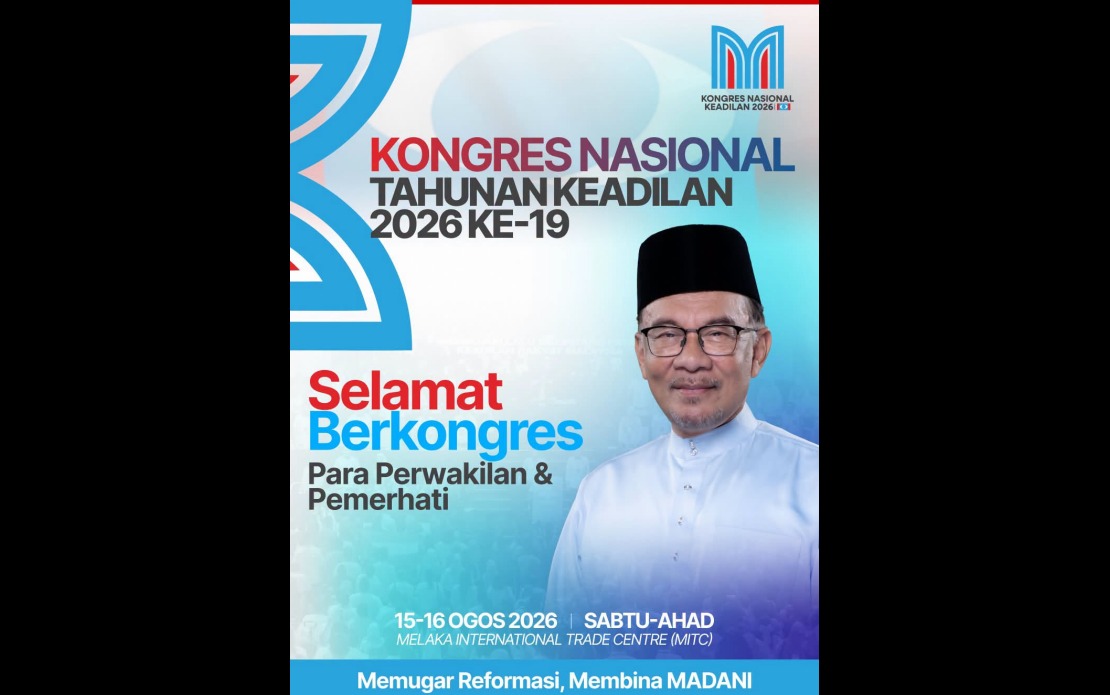
Prime Minister Datuk Seri Anwar Ibrahim has issued a pointed reminder to Parti Keadilan Rakyat that the party's core purpose extends far beyond winning elections, emphasizing instead its responsibility to serve as a mass movement dedicated to integrity, social justice, unity and public trust. The message, delivered through a Facebook post ahead of PKR's National Congress 2026, reflects ongoing concerns within the party about maintaining its foundational values as it navigates the complexities of governing Malaysia as part of the ruling coalition.
Anwar's statement arrives at a significant juncture for PKR, which has undergone considerable transformation since its establishment during the Reformasi movement of the 1990s. The party, which now holds the Prime Minister's office and substantial ministerial positions, faces the inherent challenge of reconciling its roots as a reform-oriented opposition force with the pragmatic demands of holding executive power. The distinction Anwar draws between functioning as a genuine mass movement versus serving as merely an electoral vehicle speaks to internal debates within the party about whether its principles remain intact after years in government.
The two-day PKR National Congress 2026, commencing at the Melaka International Trade Centre in Ayer Keroh, carries considerable symbolic weight for the organization. Held under the theme "Memugar Reformasi, Membina MADANI" — Revitalising Reformasi, Building MADANI — the congress represents a deliberate attempt to reconnect with the party's historical mission while simultaneously demonstrating commitment to the government's broader development agenda. This thematic choice suggests party leadership recognizes the need to address questions about whether PKR has strayed from its original reformist trajectory.
For Malaysian observers tracking developments in the country's political sphere, Anwar's intervention signals that maintaining party cohesion and ideological consistency remain pressing concerns. PKR has experienced internal tensions in recent years, with debates over candidate selection, governance decisions, and the party's relationship with coalition partners occasionally spilling into public view. By emphasizing that the party must prioritize principles over electoral calculations, Anwar appears to be addressing restlessness among grassroots members who may feel the party has compromised its values in pursuit of political advantage.
The concept of Reformasi itself remains central to PKR's identity and appeal, particularly among its core supporters who view the party as continuing a struggle for democratic accountability and social equity that transcends conventional party politics. The 1990s Reformasi movement emerged in response to perceived injustices and authoritarian governance, generating ideological momentum that propelled PKR's establishment and early growth. Revisiting this historical foundation, as the congress title suggests, may be necessary to ensure younger members and recent recruits understand the movement's philosophical underpinnings beyond electoral arithmetic.
Anwar's scheduled policy speech during the congress opening is expected to articulate PKR's strategic direction in coming years, addressing both the party's internal organization and its policy platform. The speech provides an opportunity for the Prime Minister to reinforce the message conveyed in his Facebook post, translating general principles about integrity and social justice into concrete policy commitments and organizational priorities. For party delegates attending the congress, such clarity from the leadership becomes essential in understanding how PKR intends to balance governance responsibilities with its reform agenda.
The timing of this emphasis on maintaining PKR's foundational values also reflects broader regional and global trends in progressive politics. Political movements that emerge during periods of democratic struggle or institutional crisis often struggle to sustain their original momentum once they achieve power and face competing pressures from governance, coalition management, and administrative necessity. Anwar's intervention acknowledges this challenge implicitly, urging the party to resist the gravitational pull toward becoming a conventional ruling party focused solely on perpetuating its hold on office.
Within the Malaysian political context, PKR's evolution carries implications beyond the party itself. As the dominant party within the Pakatan Harapan coalition and the party of the sitting Prime Minister, PKR's ideological direction influences how the entire governing coalition frames its policies and appeals to voters. Should PKR successfully reinvigorate its commitment to its reformist principles, this could shape policy priorities across multiple ministries and government agencies aligned with party members. Conversely, if the party is perceived as abandoning its foundational values, this could affect coalition stability and voter confidence in the government's commitment to the reforms it promised.
The congress also provides a venue for PKR to address questions about party democracy and internal governance structures. A mass movement grounded in genuine principles of justice and accountability must demonstrate these values through its own institutional practices, including transparent decision-making processes, respect for diverse viewpoints within the membership, and equitable distribution of leadership opportunities. The congress can showcase PKR's commitment to such internal democratic practices or, conversely, reveal areas where institutional reforms remain necessary.
Looking forward, PKR's ability to sustain its identity as a reform-oriented movement while managing the demands of governance will likely determine both the party's long-term viability and its capacity to fulfill the broader policy agenda associated with the MADANI framework. This balance cannot be achieved through rhetoric alone; it requires consistent organizational practice, transparent leadership, and demonstrable commitment to the principles Anwar has articulated. The National Congress 2026 represents a significant opportunity for the party to recommit to these values and establish clear mechanisms for ensuring they guide the party's future trajectory.

