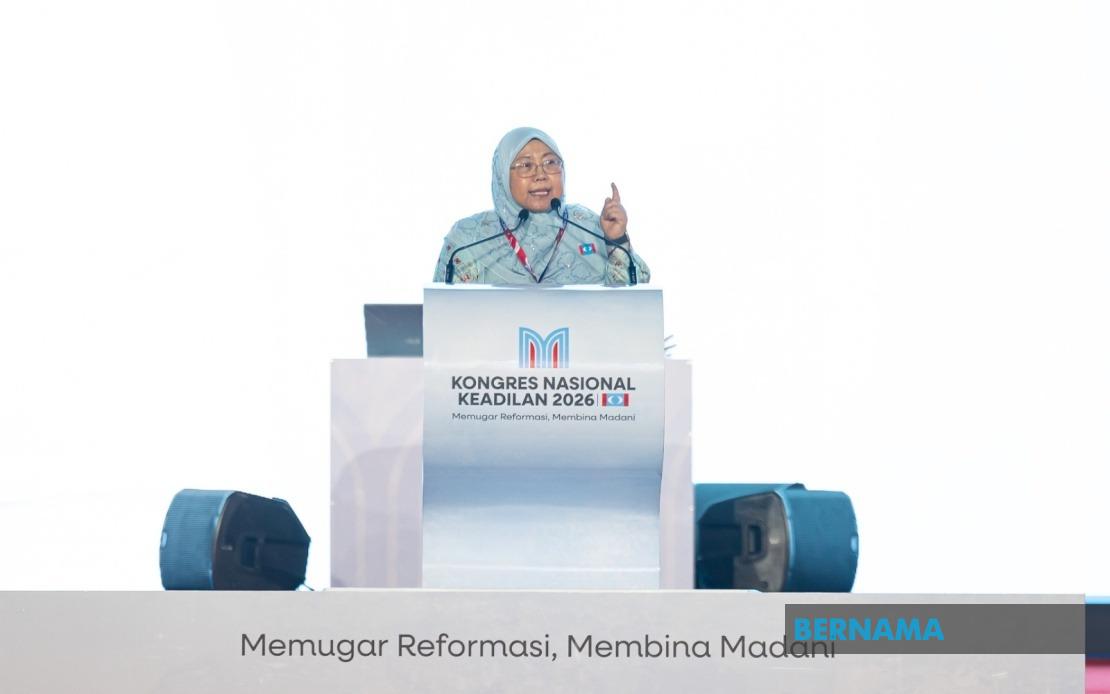
Parti Keadilan Rakyat needs to demonstrate institutional maturity in confronting the harsh realities of contemporary Malaysian politics, according to Secretary-General Datuk Dr Fuziah Salleh. Speaking at the 2026 PKR National Congress in Melaka on August 15, Fuziah urged the party faithful to channel their frustration over failed electoral campaigns into constructive energy aimed at organisational renewal rather than allowing disappointment to corrode party unity.
The gathering at the Melaka International Trade Centre drew substantial participation, with 2,594 delegates and over 2,000 observers representing PKR branches nationwide. The presence of 26 diplomatic observers from 19 countries, including six ambassadors, underscored international attention to Malaysia's ongoing political dynamics and the role of opposition forces. This diplomatic interest reflects the regional significance of how major Malaysian political parties navigate periods of electoral difficulty and maintain coherence during transitions.
Fuziah delivered a pointed message regarding the function of the national congress in the party's trajectory. Rather than permitting the gathering to become a venue for blame-shifting, factional recriminations, or settling scores between competing interests, she advocated that delegates use the occasion for honest self-examination and strategic recalibration. This emphasis on constructive reflection reveals concern within PKR's leadership that electoral disappointments could trigger internal fragmentation unless channelled toward institutional purpose rather than personal or factional grievance.
Drawing upon PKR's institutional memory, Fuziah referenced the party's nadir following the 2004 General Election, when the organisation secured just a single parliamentary seat. That devastating outcome could have presaged PKR's dissolution from Malaysian politics, yet the party persisted through systematic organisational work and sustained engagement with the electorate. By invoking this historical parallel, Fuziah implicitly argued that present difficulties, while undoubtedly serious, do not approach the existential crisis PKR weathered two decades earlier. This framing serves a dual rhetorical purpose: it demonstrates that survival and recovery are possible, while simultaneously tempering catastrophic interpretations of recent setbacks.
The congress theme, "Memugar Reformasi, Membina MADANI," carries profound significance for PKR's self-understanding. The concept of "memugar"—to revive or restore—signals that PKR's leadership views the party's path forward not through innovation or ideological rebranding, but through recommitment to foundational principles. This represents a deliberate choice to anchor the party's response to contemporary political challenges within its historical mission rather than pursuing tactical repositioning that might dilute organisational identity. For PKR members navigating a rapidly shifting political landscape, this message emphasizes continuity of principle despite tactical electoral difficulties.
Fuziah's invocation of the Reformasi spirit carries particular weight in Malaysia's political context. The movement that spawned PKR emerged from a specific moment of national discontent and demands for political accountability, judicial independence, and democratic renewal. By framing current regeneration as a revival of those core commitments rather than an abandonment toward novel ideological territory, Fuziah reinforces PKR's legitimacy as the keeper of a particular strain of Malaysian political aspiration. This positioning matters considerably for party retention, as it provides longtime members with assurance that electoral difficulties do not mandate ideological compromise of founding principles.
The scale and composition of the congress itself provided tangible evidence of PKR's organisational reach. Nearly 2,600 delegates representing party branches across Malaysia, supplemented by thousands of observers, demonstrate that PKR retains substantial grassroots mobilisation capacity despite recent electoral disappointments. Significantly, the attendance of diplomatic representatives from multiple countries indicates international recognition of PKR as a consequential player in Malaysian political development, a factor that may reinforce member morale during a period of domestic political stress.
For Malaysia's broader political economy, PKR's approach to managing internal cohesion during periods of electoral setback carries implications beyond the party itself. Opposition coalitions depend upon the stability and strategic coherence of constituent parties. If PKR were to fragment into competing factions or descend into recriminatory internal contests, the capacity of Malaysia's opposition to function as an effective institutional counterweight to governing coalitions would be materially diminished. Fuziah's emphasis on maturity and unity therefore addresses not merely intra-party concerns but the overall health of Malaysia's competitive political system.
The timing of this congress also reflects the Malaysian electoral cycle. With general elections not constitutionally required until 2028, PKR possesses a window for organisational rebuilding and strategic repositioning. Fuziah's appeal for members to treat recent electoral experiences as developmental rather than simply as defeats allocates this intervening period constructively. Parties that use such intervals for critical reflection and institutional strengthening typically emerge from subsequent electoral cycles in stronger positions than those consumed by internal disputes.
For regional observers, PKR's management of electoral adversity offers insight into how established opposition parties in Southeast Asia navigate periods of political difficulty. Unlike parties that fracture under electoral pressure or leadership succession conflicts, PKR's demonstrated capacity to maintain organisational coherence while absorbing electoral losses suggests institutional resilience. This matters for understanding opposition party dynamics throughout Southeast Asia, where weak institutional structures often render opposition coalitions vulnerable to defection and fragmentation following electoral setbacks.
Fuziah's insistence that present circumstances are not PKR's lowest point, combined with her confidence that renewed commitment to Reformasi principles can propel party revival, establishes an interpretive framework that party leadership will deploy in coming months. This narrative—that temporary electoral setbacks do not invalidate founding purposes and that recommitment to original principles offers the path to recovery—addresses both veteran party members potentially tempted toward disengagement and newer recruits who may lack historical perspective on PKR's cyclical trajectory.
The invocation of "MADANI" alongside Reformasi similarly bridges PKR's historical legacy and contemporary governance messaging. By connecting party revival to Malaysia's stated development framework, Fuziah positions PKR not as a purely oppositional force dwelling in past grievances but as a serious political movement engaged with present policy concerns. This dual emphasis—looking backward to foundational principles while reaching forward to current governance questions—reflects sophisticated political communication aimed at maintaining coalition while preventing atrophy of activist commitment.

