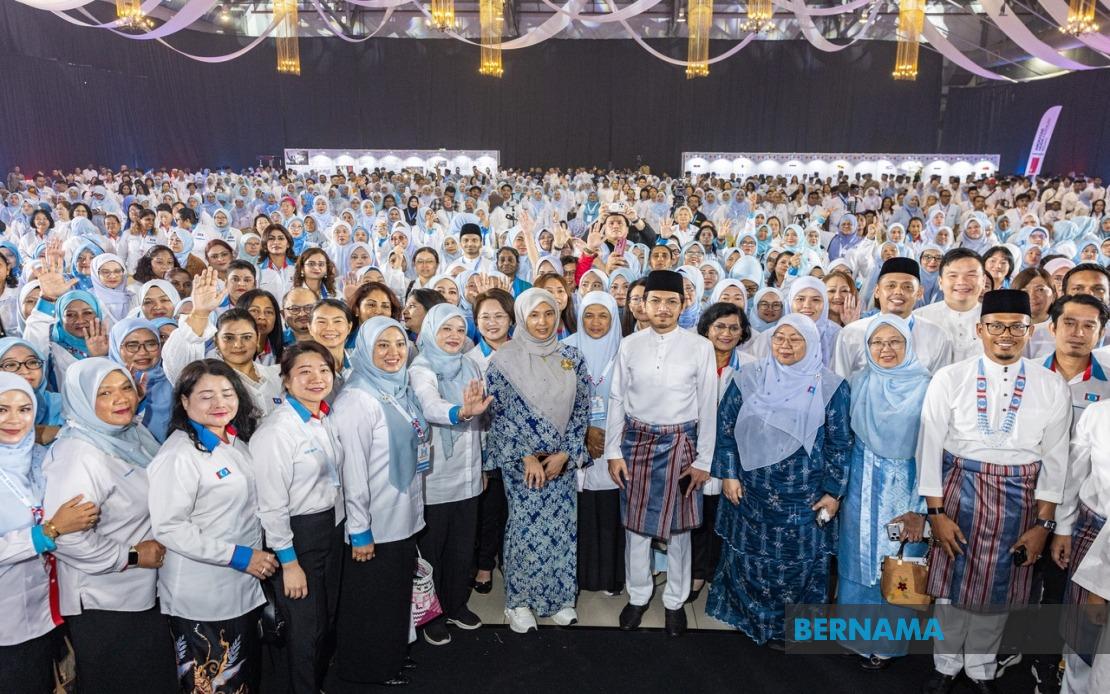
The Parti Keadilan Rakyat faces a critical challenge in reconnecting with voters and rebuilding organizational capacity, according to Angkatan Muda Keadilan chief Muhammad Kamil Abdul Munim, who delivered his assessment at the youth wing's national congress in Melaka this week. While acknowledging PKR's governing role within the federal coalition, Muhammad Kamil stressed that the party must fundamentally rethink how it engages with the public and mobilizes supporters, suggesting that current approaches have not delivered the electoral returns the leadership expects.
The AMK chief's comments reflect broader concerns within PKR about its political positioning following recent state-level setbacks. The party's performance in the Sabah, Johor, and Negeri Sembilan state elections revealed a widening gap between public awareness of PKR and its ability to convert that awareness into votes at the ballot box. This disconnect points to a deeper organizational problem that goes beyond simple messaging challenges. Muhammad Kamil indicated that PKR has historically relied on waves of public sentiment and grassroots enthusiasm that materialized independently, but the party now needs to build its own durable machinery rather than depending on ad hoc mobilization.
For Malaysian observers and regional political analysts, this admission carries significant implications. Since its emergence as a major opposition force in 1998, PKR has positioned itself as the vanguard of reform and democratic renewal, but governing experience within the Pakatan Harapan and subsequent coalitions has complicated that narrative. The party must now articulate a compelling case for its continued relevance while managing expectations about what coalition participation can deliver to voters. This represents a departure from the clarity of opposition politics into the murkier terrain of coalition compromise and incremental change.
Muhammad Kamil called explicitly for PKR to undergo strategic renewal, emphasizing that governing and pursuing reform from within the state apparatus demands different organizational responses than opposition-led campaigning. The distinction is important: when PKR operated primarily outside government, it could focus resources on mobilizing discontent and articulating alternative visions. Now, as part of the ruling coalition, the party must demonstrate effective administration while simultaneously maintaining its reform credentials and fending off challenges from both the opposition and its coalition partners. This multifaceted challenge requires restructured priorities and messaging.
The youth wing chief's emphasis on converting organizational strength into electoral victories underscores frustration with the current state of party machinery. For Malaysia's political landscape, where ground-level mobilization remains crucial despite growing social media influence, PKR's acknowledged weakness in this area represents a significant vulnerability. Other parties, particularly those with stronger rural networks and established patronage structures, may exploit this gap to consolidate support in competitive constituencies.
Wanita PKR chief Fadhlina Sidek reinforced these themes during the congress, framing the gathering as an opportunity for institutional introspection and renewal. Her emphasis on acknowledging weaknesses and listening to grassroots members signals recognition that top-down directives alone will not restore confidence either internally or among the broader electorate. The strategy of using party congresses as forums for bottom-up input represents an attempt to reconnect leadership with membership concerns, though whether this translates into meaningful organizational reform remains unclear.
The congress, opened by PKR deputy president Nurul Izzah Anwar and attended by senior figures including vice-president Datuk Seri Dr Zaliha Mustafa, represented an opportunity for the party to reset expectations and outline concrete action plans. Yet the emphasis on self-reflection and organizational strengthening, while necessary, suggests that PKR currently lacks clear strategic direction going into the next electoral cycle. For voters seeking coherent alternative visions to current coalition governance, this period of introspection may appear as hesitation.
Regionally, PKR's struggles matter because the party has historically attempted to position itself as a model for pro-democracy, multi-ethnic political organization across Southeast Asia. Difficulties in translating voter interest into sustainable organizational power could weaken that appeal and provide ammunition to critics who question whether democratic reform movements can successfully transition from opposition platforms to governing coalitions without losing their distinguishing appeal.
The timing of this self-examination is significant. With the next general election potentially several years away, PKR has a window to implement organizational overhaul and develop fresh political narratives. However, the party operates within a crowded Malaysian political landscape where other coalition partners and opposition blocs are simultaneously competing for voters' attention and resources. Success will require not merely internal renewal but also clearer external communication about PKR's distinct contributions to Malaysian governance and reform.
Muhammad Kamil's call for party members and leadership to accept electoral reality while rising to future challenges suggests PKR recognizes that complacency poses an existential threat. The balance the party must strike between acknowledging recent disappointments and projecting confidence about future prospects will shape member morale and public perception over the coming months. Whether PKR can effectively harness its youth wing's energy and idealism to revitalize broader party dynamics remains an open question with implications extending throughout Malaysia's political system.

