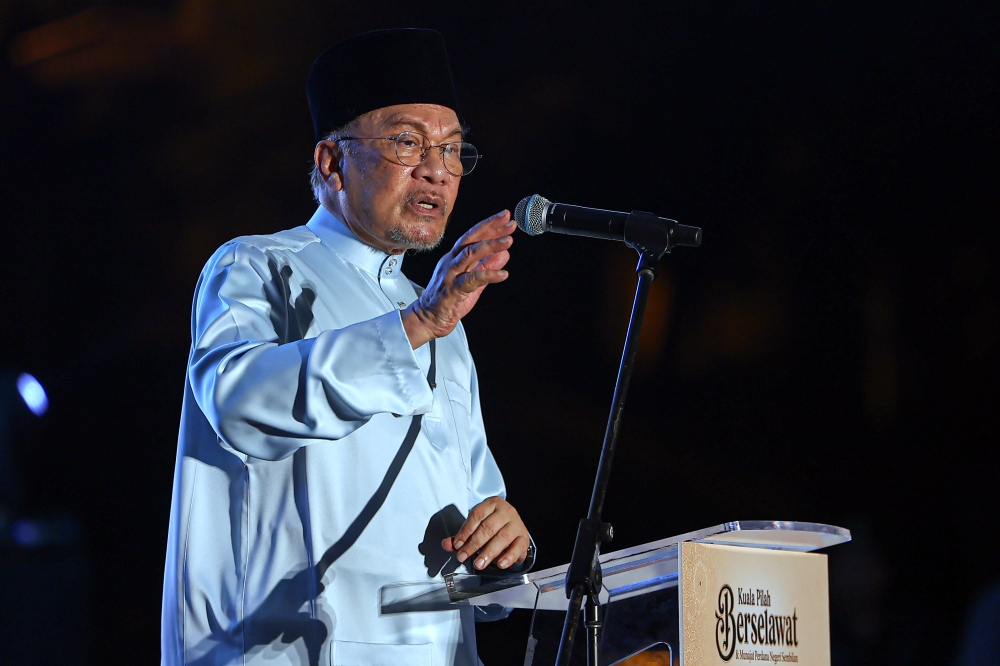
Anwar Ibrahim has delivered a pointed reminder to Parti Keadilan Rakyat (PKR) members that their political organisation must transcend its role as a vehicle for winning elections, instead functioning as a true mass movement anchored in moral principles and public accountability. Speaking in Kuala Lumpur on August 15, the party leader sought to realign PKR's internal culture with the ideals that originally propelled its formation and its subsequent evolution within Malaysia's political landscape.
The distinction Anwar drew between a mass movement and an electoral machine carries substantial weight for PKR's trajectory. A mass movement typically operates on the basis of sustained engagement with grassroots communities, addressing citizen concerns through ongoing dialogue and organising, rather than confining activity to election cycles. In contrast, parties that function primarily as electoral vehicles risk becoming disconnected from the communities they purport to serve, focusing narrowly on campaign machinery and vote maximisation. This tension has become increasingly relevant as Malaysian political parties compete for relevance amid shifting voter expectations and demands for genuine representation.
Integrity emerged as Anwar's central concern in framing PKR's identity and purpose. By emphasising that the party must uphold integrity as a foundational characteristic, he implicitly acknowledged the scrutiny and criticism PKR has faced regarding internal discipline, leadership accountability, and consistency between stated values and operational conduct. In Malaysian politics, where trust deficits periodically plague major coalitions and individual parties, maintaining credibility requires constant demonstration that principles are not merely rhetorical devices deployed during campaign seasons but instead guide daily decision-making and party governance.
For PKR specifically, this message assumes particular significance given the party's historical positioning as a reformist force within Malaysian politics. The party emerged from demands for institutional accountability and equitable governance, having attracted members motivated by ideological commitment rather than patronage alone. Should PKR drift entirely toward functioning as a transactional electoral apparatus, it risks abandoning the differentiation that has contributed to its electoral performance and appeal, particularly among younger voters and urban constituencies seeking alternatives to perceived establishment politics.
Anwar's remarks also reflect calculations about party cohesion and long-term viability. Malaysian political parties frequently encounter internal fragmentation when members perceive that leadership has compromised foundational values in pursuit of immediate political advantage. By articulating that PKR's legitimacy depends upon sustained commitment to integrity and mass mobilisation, Anwar was signalling to party cadres that electoral victory without moral authority would constitute a hollow achievement. This framing appeals to PKR members who joined because of conviction rather than career advancement, potentially strengthening retention and activism among the party's ideological core.
The emphasis on mass movement credentials also positions PKR strategically within Malaysia's broader political ecosystem. As coalition governments have become the norm following electoral fragmentation, parties that maintain grassroots networks and active membership bases gain leverage in negotiations over ministerial posts, policy priorities, and coalition stability. A party reduced to electoral machinery alone possesses less internal capacity to deliver on coalition commitments or respond to unexpected political developments. Conversely, parties with active mass movements can mobilise supporters to defend coalition arrangements or adapt to shifting circumstances, thereby becoming more valuable coalition partners.
Regional context amplifies these dynamics. Throughout Southeast Asia, political parties confronting pandemic-related restrictions, digital media disruption, and younger voters' changing expectations have struggled to maintain relevance through traditional models. Parties successfully navigating this transition have typically done so by genuinely integrating community engagement into their operational structures rather than treating grassroots organising as supplementary to electoral machinery. PKR's explicit commitment to maintaining mass movement character potentially positions the party advantageously relative to competitors struggling with institutional decay and declining membership engagement.
Anwar's messaging also carries implications for PKR's positioning within the governing coalition. By reinforcing that the party's identity depends upon integrity and public service rather than mere office-holding, he creates space for PKR to claim moral authority over coalition partners, justifying demands for policy concessions or defending against perceptions that PKR has compromised principles through coalition participation. This rhetorical positioning becomes particularly valuable when coalition stability is contested or when policy disagreements emerge among coalition members.
The challenge facing PKR's leadership involves translating Anwar's exhortations into institutionalised practices that sustain mass movement character over time. Political parties often discover that rhetoric about grassroots commitment diverges substantially from resource allocation and operational priorities. Maintaining genuine mass engagement requires sustained investment in member development, community programmes, and responsive leadership structures—commitments that compete for attention and resources with electoral campaigns and legislative activities. Whether PKR can operationalise Anwar's vision by embedding mass movement principles into party structures and practices will substantially determine whether these statements remain inspirational rhetoric or catalyse meaningful organisational change.

