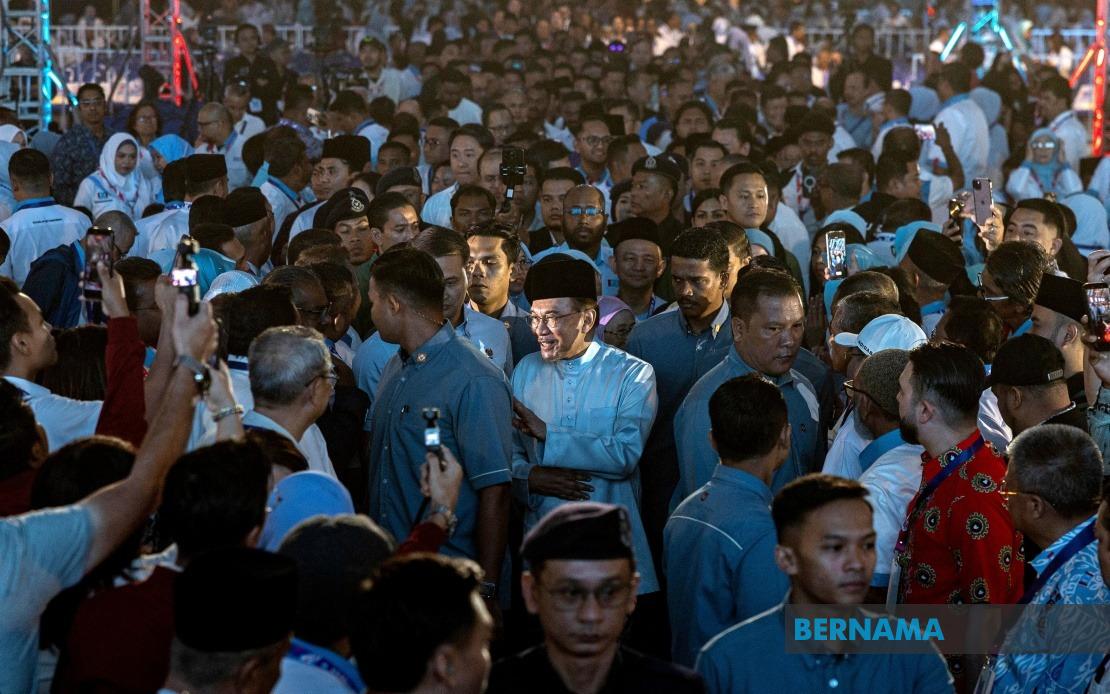
The upcoming 2026 PKR National Congress represents a critical juncture for the party to regroup and restore its standing among Malaysian voters, according to Tengku Datuk Seri Zafrul Tengku Abdul Aziz, the Prime Minister's senior political adviser. Speaking in Melaka on August 15, Tengku Zafrul emphasised that the gathering should function as a unifying platform where party members confront internal weaknesses and commit to systematic organisational improvements across all levels of party structure.
As an ex-officio member of the PKR Political Bureau, Tengku Zafrul carries significant influence within the party's decision-making apparatus. His intervention signals that senior leadership recognises the urgency of addressing dissatisfaction within party ranks following disappointing results in recent state elections. The message appears calibrated to encourage honest accountability rather than deflecting blame onto external factors, a potentially delicate political stance given PKR's role within the broader Unity Government coalition.
The recent electoral performance has prompted difficult questions about PKR's effectiveness as a political force and its ability to deliver tangible benefits to constituents. Tengku Zafrul's prescription goes beyond simple cheerleading, instead advocating for methodical examination of organisational deficiencies. He urged all members to participate in this diagnostic process, emphasising that improvements must cascade from grassroots operations through to central party leadership, suggesting that dysfunction exists at multiple structural levels requiring targeted intervention.
Critically, Tengku Zafrul drew a distinction between factors within and outside PKR's control. While acknowledging that party members may harbour frustrations regarding coalition partners in the Unity Government, he argued that this cannot become an excuse for inaction. Instead, he redirected focus inward, contending that PKR should concentrate its energy on operational excellence and strengthening its own machinery. This reframing attempts to prevent internal recriminations from paralyising the party or undermining coalition stability.
The communication challenge identified by Tengku Zafrul touches on a persistent vulnerability for PKR and the broader Unity Government administration. Even when policies have been implemented or problems addressed, the party has struggled to effectively narrate these achievements to the electorate. He suggested that the gap between work accomplished and public perception represents a significant failure in political communication strategy. This acknowledgement hints at institutional weaknesses in how PKR translates administrative output into electoral capital.
Perhaps most pointedly, Tengku Zafrul advocated for a fundamental shift in how party members engage with constituents. He cautioned against the reflexive tendency to defend or explain away concerns, arguing instead for genuine listening that prioritises understanding public grievances before formulating responses. This emphasis on empathetic engagement suggests recognition that PKR has allowed itself to become defensive in tone, potentially alienating voters who feel unheard by their representatives.
The advice to "listen, acknowledge what remains unresolved, then deliver" establishes a three-step framework for restoring public trust. The acknowledgment phase is particularly significant as it requires political honesty about shortcomings, something often absent from electoral politics. By explicitly naming this as a necessary intermediate step before action, Tengku Zafrul implies that constituents frequently feel invisible to their representatives—acknowledged only when votes are needed. This structural insight into public alienation extends beyond mere tactical communication improvement.
For Malaysian political observers, this statement reflects broader challenges confronting the Unity Government coalition. PKR, as a major component of this alliance, carries responsibility for the administration's perceived performance while simultaneously managing expectations about what it can unilaterally accomplish. The internal tensions this creates—between defending coalition partners and accepting responsibility for party-specific failings—permeate Tengku Zafrul's remarks.
The 2026 congress represents an opportunity to implement these prescriptions before the next general election cycle intensifies. Whether PKR members internalize this call for self-examination or interpret it as an establishment push to suppress internal dissent will significantly influence the party's trajectory. The congress outcomes could either strengthen party cohesion or expose unresolved divisions about strategic direction and coalition positioning.
Regionally, PKR's performance matters beyond Malaysian borders. As a major reformist-oriented party in Southeast Asia's most significant economy, its ability to maintain grassroots mobilisation while administering government serves as a reference point for other centrist opposition parties transitioning into governance roles across the region. The specific challenges PKR confronts—bridging urban and rural constituencies, managing coalition tensions, and translating policy into electoral support—resonate across Southeast Asian political systems struggling with similar democratic pressures.
Tengku Zafrul's intervention also signals that senior party leadership recognises the 2026 congress cannot be a purely ceremonial affair. The party faces concrete organisational deficiencies requiring structured attention and resource allocation. Whether this translates into meaningful institutional reform or remains an aspirational call for party members remains to be seen in the months leading to the congress.

