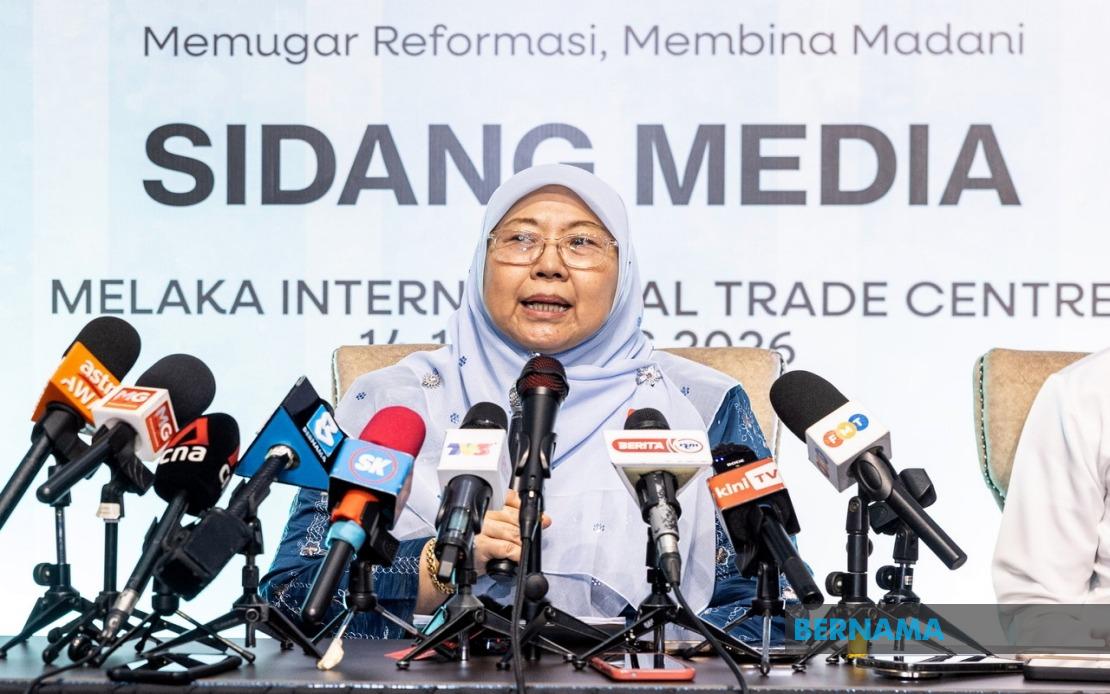
Parti Keadilan Rakyat has confirmed that deputy president Nurul Izzah Anwar will take indefinite leave from her party responsibilities to focus on advancing her education, with no specific deadline set for her return to active duties. PKR secretary-general Senator Datuk Dr Fuziah Salleh made the announcement on August 14 in Melaka, emphasising that the party remains receptive to welcoming Nurul Izzah back whenever she determines she is prepared to resume her portfolio.
The arrangement reflects PKR's commitment to supporting members pursuing professional development, even at senior levels of party hierarchy. Fuziah outlined that the timing of Nurul Izzah's departure would follow the conclusion of PKR's 2026 National Congress, a significant party gathering that determines strategic direction and organisational priorities. This scheduling ensures continuity during a crucial event where party delegates convene to deliberate on institutional matters and set the political agenda for the coming years.
During the three-day National Congress, which took place at the Melaka International Trade Centre in Ayer Keroh, Nurul Izzah remained engaged with her deputy president responsibilities. She officiated proceedings at the Angkatan Muda Keadilan and Wanita PKR congresses, participated in debate sessions, and delivered closing remarks on behalf of the party leadership. This full participation underscored the significance accorded to her role even as preparations proceeded for her temporary withdrawal from active party work.
The flexibility shown by PKR's leadership towards Nurul Izzah's educational aspirations stands out in Malaysian politics, where senior party figures often maintain rigid schedules. Her decision to pursue further studies while maintaining a high-profile position within a major political party reflects contemporary trends among Malaysian politicians who seek to enhance their credentials and expertise. The party's willingness to accommodate this demonstrates confidence in her eventual return and recognition that investing in members' professional growth serves the broader party interest.
Fuziah stressed that responsibility for determining the departure date and duration remains with Nurul Izzah, granting her agency over her own timeline. This approach contrasts with more hierarchical political structures that might impose specific conditions or timeframes. The arrangement sends a signal within PKR that member development and personal advancement are valued, potentially boosting morale among other party figures weighing similar opportunities.
The broader context of this leave becomes significant when examining PKR's current trajectory. As one of Malaysia's leading opposition-aligned parties, maintaining strong bench strength and ensuring leaders are well-equipped with contemporary expertise remains strategically important. Nurul Izzah's decision to pursue further studies positions her as a more comprehensively educated voice within the party hierarchy, potentially enhancing her capacity to contribute to policy deliberations upon her return.
Fuziah also highlighted that President Ibrahim Anwar's keynote policy speech at the National Congress would address the party's foundational direction, institutional reforms, and long-term political strategy. The gathering thus served as both a platform for celebrating current leadership contributions and a forum for delegates to voice perspectives on party strengthening through motions and debate. This democratic space allows PKR members to shape their organisation's evolution during a period when senior figures like Nurul Izzah temporarily step back.
The absence of a predetermined return date carries implications for PKR's internal succession planning and leadership development. By keeping Nurul Izzah's position fluid rather than permanently vacating it, the party maintains institutional memory and relationship continuity. Other senior members can deputise for specific functions without structural reorganisation, a pragmatic approach that minimises administrative disruption.
For Malaysian political observers, this arrangement exemplifies how contemporary political movements balance member development with organisational stability. Unlike some older party structures that view member absences as requiring permanent replacements, PKR's approach acknowledges that talented individuals can pursue growth opportunities without severing their party commitment. This model may influence how other Malaysian political organisations manage similar situations involving senior figures pursuing further education or professional development.
The National Congress setting also provided opportunity for party renewal discussions beyond Nurul Izzah's leave announcement. Delegates could deliberate on strengthening mechanisms, democratic procedures, and institutional resilience. Fuziah's invitation for delegates to propose motions on party strengthening indicates that PKR actively welcomes grassroots input on organisational evolution, a practice that can enhance institutional legitimacy and member engagement.
Looking ahead, Nurul Izzah's pursuit of further studies and subsequent return to active politics may reshape her policy positions and leadership approach. Enhanced educational credentials often broaden political leaders' perspectives on complex governance issues, potentially influencing PKR's policy platform when she resumes her deputy president role. This educational investment thus carries implications extending beyond individual career development to affect the party's intellectual capacity and policy sophistication.
The flexibility demonstrated in this arrangement also reflects practical realities of modern political leadership. Many successful political figures maintain ongoing engagement with academic institutions, professional development, and credential enhancement. By normalising such pursuits rather than viewing them as conflicts with party loyalty, PKR positions itself as an organisation that values intellectual growth alongside political commitment.

