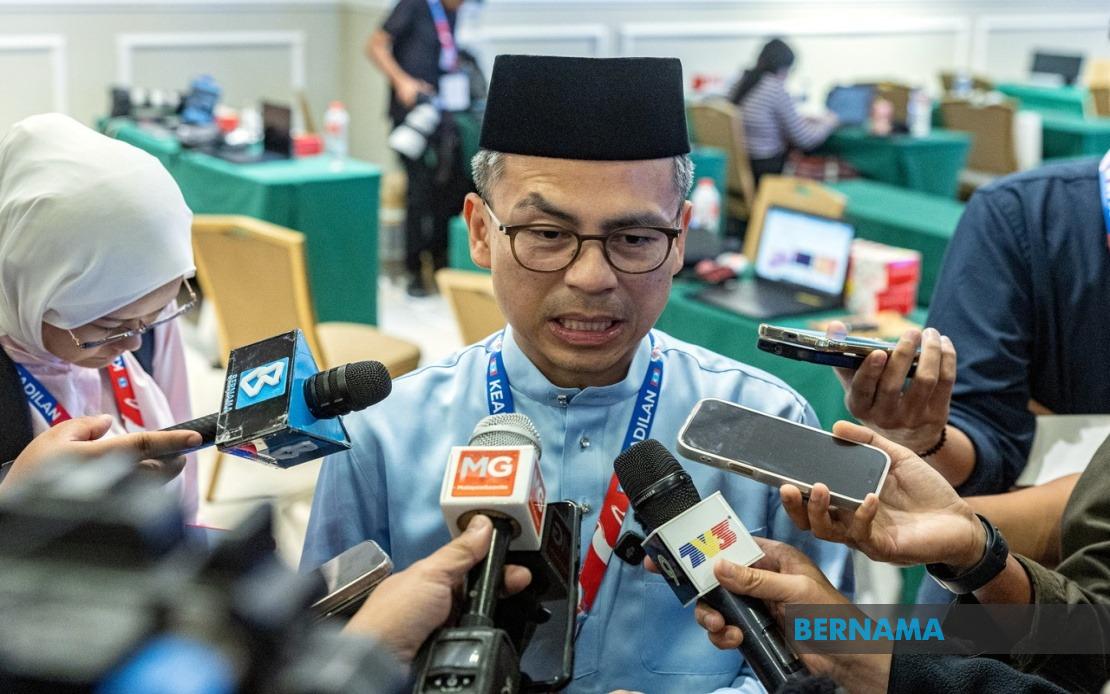
The Parti Keadilan Rakyat is embarking on a significant overhaul of how it communicates government policy and accomplishments to Malaysian voters, according to pledges made during the party's National Congress 2026 held at the Melaka International Trade and Exhibition Centre in Ayer Keroh. The initiative addresses mounting concerns that despite numerous government initiatives and demonstrable economic gains, these successes have failed to translate into measurable improvements at the consumer and household level, leaving a critical messaging vacuum that opposition parties have been keen to exploit.
Communications Minister Datuk Seri Fahmi Fadzil, who also serves as PKR's Information Chief, articulated the challenge facing the coalition government in stark terms. He acknowledged that while the administration has recorded significant achievements particularly in macroeconomic management, the narrative reaching ordinary Malaysians remains disconnected from these accomplishments. This perception gap represents a vulnerability for the Pakatan Harapan coalition ahead of the next general election, as voters increasingly judge governments not by headline economic indicators but by how their salaries and purchasing power are affected.
The recognition of this communication deficit emerged from multiple proposals submitted by party delegates during the congress, suggesting grassroots dissatisfaction extends beyond mere messaging tactics. Branch leaders and party members have reportedly signalled frustration that the government's narrative control remains weak despite having substantial achievements to trumpet. This indicates the problem is not simply one of insufficient communication channels, but rather a fundamental disconnect between the government's own perception of its performance and how that performance registers with the electorate.
Fahmi indicated that PKR's Central Leadership Council, the party's supreme decision-making body, has demonstrated openness to the delegates' concerns and proposals. The communications ministry will integrate these suggestions into a revised strategy to be formally presented during the congress's closing session. The minister emphasised that the party intends to lead by example, initiating internal structural changes within its own leadership apparatus before rolling out enhanced communication protocols across the broader party machinery.
The proposed formalisation of information dissemination channels addresses a structural weakness within PKR's operations. While informal networks for sharing information between parliamentary representatives and central party headquarters in Putrajaya have existed previously, these appear insufficiently coordinated to rapidly identify emerging public concerns and develop responsive communications. By establishing more systematic arrangements, the party hopes to create feedback loops that allow grassroots intelligence to inform national messaging strategy more dynamically.
For Malaysia's political landscape, this initiative carries broader significance beyond PKR's internal reorganisation. The coalition government has consistently struggled to articulate why economic stability and foreign investment confidence should translate into improved living standards for average households. Wage stagnation, rising costs of living, and mounting household debt continue to weigh on voter sentiment despite relatively robust gross domestic product growth. PKR's acknowledgement of this disconnect suggests the entire Pakatan Harapan coalition is grappling with a credibility challenge that transcends any single party.
The emphasis on stronger parliamentary-to-public communication pipelines also reflects evolving democratic expectations in Southeast Asia. Modern voters increasingly expect government representatives to demonstrate responsiveness and accessibility, particularly in an era of social media where misinformation spreads rapidly. By formalising channels for grassroots concerns to reach decision-makers, PKR appears to be recognising that top-down communication strategies prove ineffective without simultaneous investment in bottom-up feedback mechanisms.
The timing of these discussions at PKR's National Congress carries political weight, occurring as the coalition government positions itself for electoral contests at both state and federal levels. Recent state elections have demonstrated voter volatility, with traditional strongholds occasionally shifting allegiances based on cumulative dissatisfaction with governance outcomes. PKR's proactive approach to communication strategy refinement suggests the party has internalised these electoral warning signs and recognises the urgency of rebuilding public confidence.
Fahmi's role as both Communications Minister and PKR Information Chief positions him centrally in executing this strategic overhaul. His dual portfolio theoretically enables coordination between ministerial resources and party political operations, though such arrangements sometimes create tensions between government and party interests. His explicit commitment to the communication enhancement initiative suggests at least rhetorical alignment between these two spheres, though implementation success will depend on sustained political will and adequate resource allocation.
The broader context for this initiative involves Malaysia's complex political economy, where economic growth has not produced proportional improvements in household welfare for significant population segments. Cost of living pressures, particularly in urban centres, continue rising faster than wage growth, creating a lived experience of economic hardship that contradicts official statistics on economic performance. This disconnect has proven remarkably resilient to traditional government messaging strategies, suggesting that structural communication improvements alone may prove insufficient without parallel policy adjustments.
Looking forward, the success of PKR's revamped communication strategy will likely depend on whether the party can develop messaging that acknowledges voter concerns while simultaneously articulating a credible pathway toward household-level improvements. Simply explaining existing economic achievements more effectively risks appearing tone-deaf to populations experiencing financial stress. Instead, the party must frame communication around concrete, achievable improvements in areas directly affecting daily life—wage increases, housing affordability, education costs, and healthcare access.
The regional implications merit consideration as well, given Southeast Asian governments face similar communication challenges in demonstrating economic success translates to improved citizen welfare. Malaysia's approach, whether successful or not, may offer instructive lessons for other regional governments navigating similar political economies where macroeconomic stability coexists uneasily with household financial anxiety.

