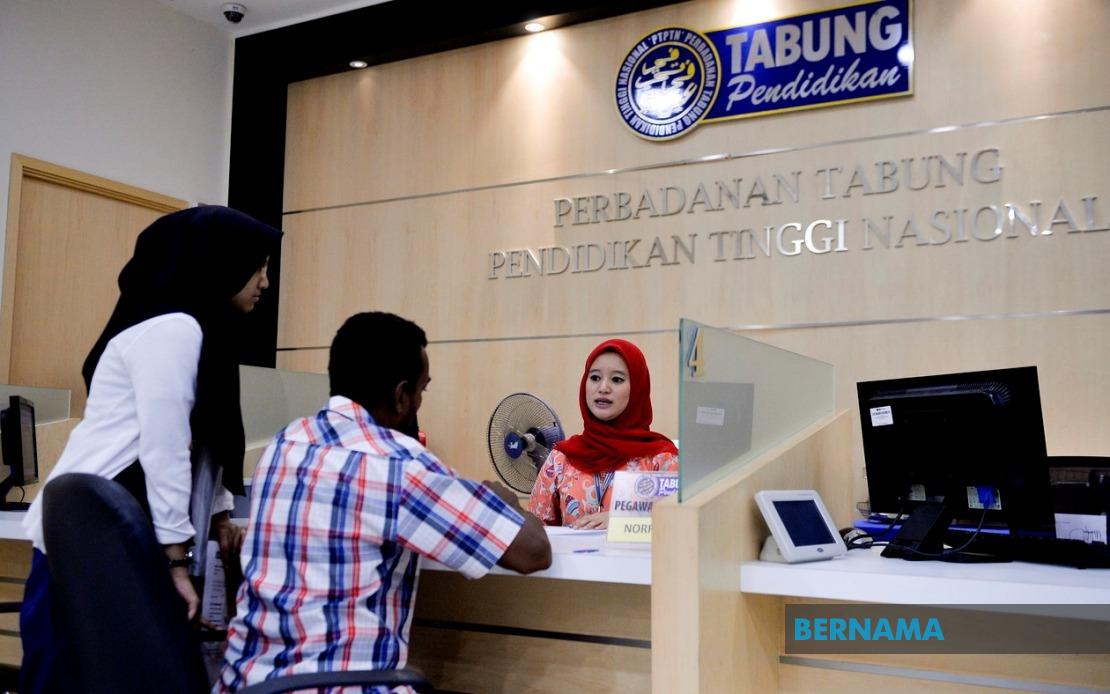
The Women's Wing of Parti Keadilan Rakyat has mounted a forceful challenge to the government's approach to higher education financing, calling for immediate structural reforms to the National Higher Education Fund Corporation's repayment system. PKR Wanita's executive committee member Karen Kasturi articulated the plea in a statement highlighting the urgent plight of thousands of borrowers caught within a system that compounds their financial difficulties rather than alleviating them. While acknowledging the government's recent consideration of broader PTPTN abolition or restructuring, Kasturi emphasised that relief for current loan holders cannot wait for those longer-term deliberations to conclude.
At the heart of PKR Wanita's complaint lies the 15 per cent debt collection agency fee that borrowers must absorb when their accounts are referred to third-party collectors. The fee structure creates an especially harsh scenario for those already struggling to meet their obligations: borrowers face pressure to settle lump-sum payments equivalent to half their outstanding balance, with the additional collection charge compounding their predicament. This mechanism, Kasturi argued, transforms what should be a manageable debt resolution pathway into an increasingly insurmountable financial hurdle. For graduates whose incomes remain modest or unstable, the cumulative burden represents not an incentive to pay but a barrier that deepens desperation and potentially drives borrowers further into default.
A secondary but equally troubling problem identified by PKR Wanita centres on the inconsistency and opacity surrounding loan restructuring procedures. Borrowers attempting to take responsibility for their debts by approaching PTPTN directly to negotiate new repayment schedules encounter a bewildering bureaucratic maze. Rather than receiving clear guidance or genuine restructuring options, many are simply redirected to debt collection agencies without meaningful explanation or acknowledgment of their intent to comply. This procedural dysfunction creates a perverse situation where those most motivated to resolve their obligations—borrowers willing to engage constructively with the institution—are treated identically to those evading payment, referred onward to enforcement mechanisms without distinction.
The policy implications extend beyond individual hardship to reflect broader questions about the government's commitment to inclusive higher education. Malaysia's reliance on PTPTN loans has historically expanded access to university education among lower and middle-income families, yet the current repayment architecture threatens to undermine that foundational purpose. When graduates from B40 and M40 households face disproportionate difficulty in managing their debt burdens, the system risks discouraging future generations from disadvantaged backgrounds from pursuing tertiary qualification, effectively closing the social mobility pathway that PTPTN was designed to open.
Kasturi's call for restructured repayment mechanisms reflects international best practice in student loan administration. Many developed economies employ income-contingent repayment systems that tie monthly obligations to borrowers' actual earning capacity, protecting those facing temporary income disruption while maintaining overall collection rates. The absence of such flexibility in Malaysia's current framework suggests administrative oversight rather than deliberate policy choice. Introducing more nuanced restructuring options—including extended repayment periods, temporary payment suspension during hardship, or income-based adjustment—would align PTPTN with contemporary approaches while preserving the institution's financial sustainability.
The involvement of Employees Provident Fund savings in PTPTN repayment introduces another layer of complexity that merits urgent scrutiny. The government's decision to allow borrowers to utilise EPF withdrawals for loan settlement was intended as relief, yet Kasturi warns that intermediary charges—particularly debt collection fees—can significantly erode the actual benefit borrowers receive. If a borrower withdraws RM10,000 from EPF to settle PTPTN debt but loses 15 per cent to collection agency fees, the retirement savings impact far exceeds the debt reduction achieved. This mechanism essentially transfers wealth from long-term retirement security to third-party debt collectors, a transfer many borrowers may not fully understand when authorising the withdrawal.
Prime Minister Datuk Seri Anwar Ibrahim's recent acknowledgment during parliamentary question time that the government would examine PTPTN abolition signals receptiveness to fundamental reform. The matter gained prominence during the recent Johor state election campaign, suggesting that higher education financing has become a sufficiently salient political issue to command leadership attention. Anwar's commitment to discuss the matter with Higher Education Minister Datuk Seri Dr Zambry Abd Kadir indicates the issue has escalated beyond technocratic education policy into the realm of broader government priorities, though the timeline for concrete action remains undefined.
Yet PKR Wanita's positioning deliberately resists allowing the abolition debate to eclipse immediate relief measures. The advocacy group frames its demands as pragmatic interim steps that can be implemented rapidly without awaiting comprehensive PTPTN restructuring. Eliminating the 15 per cent collection fee requires no legislative amendment—merely a policy directive from the ministry—yet would provide material relief to thousands of borrowers within weeks. Similarly, establishing a clear protocol enabling direct loan restructuring negotiations with PTPTN represents administrative reform rather than systemic overhaul, feasible within existing institutional frameworks. By framing these demands as preliminary steps rather than alternatives to broader reform, PKR Wanita avoids the perception of defending the current system while maintaining pressure for action.
The political economy of PTPTN reform encompasses competing interests that complicate rapid resolution. Debt collection agencies operating under contract with PTPTN have financial incentive to maintain current fee structures and referral practices. Ministry officials may resist reforms perceived as reducing collections or requiring additional administrative resources. Conversely, the borrower constituency—graduates spread across all regions and sectors—represents an economically vulnerable group with limited political mobilisation capacity. Their interests typically receive attention only when elevated by advocacy organisations or when election cycles render them strategically significant, as occurred in Johor.
Regional context adds further dimension to Malaysia's PTPTN dilemma. Across Southeast Asia, governments grapple with comparable challenges balancing accessible higher education financing against fiscal sustainability and collection imperatives. Thailand's student loan defaults exceeded 60 per cent of borrowers within a decade of program expansion, while Philippine loan recipients face similar debt collection difficulties. Malaysia's current system, though troubled, has achieved higher repayment rates than several regional counterparts, suggesting that targeted reforms preserving collection capacity while reducing borrower barriers could simultaneously enhance compliance and equity. Learning from regional experiences might accelerate evidence-based reform design.
For Malaysian borrowers, particularly those from middle and lower-income backgrounds, the immediate relevance of PKR Wanita's advocacy extends beyond rhetorical politics to concrete financial impact. Graduates contemplating PTPTN applications face uncertain repayment futures; current borrowers endure persistent anxiety about debt spiral risks; and those in default confront a system that appears designed to extract maximum financial punishment rather than facilitate resolution. The broader question underpinning the debate concerns what Malaysian society intends PTPTN to accomplish: whether it functions primarily as revenue-recovery mechanism or as genuinely accessible education finance for citizens who lack alternative borrowing options. How policymakers respond to PKR Wanita's specific demands will signal their answer to that foundational question.

