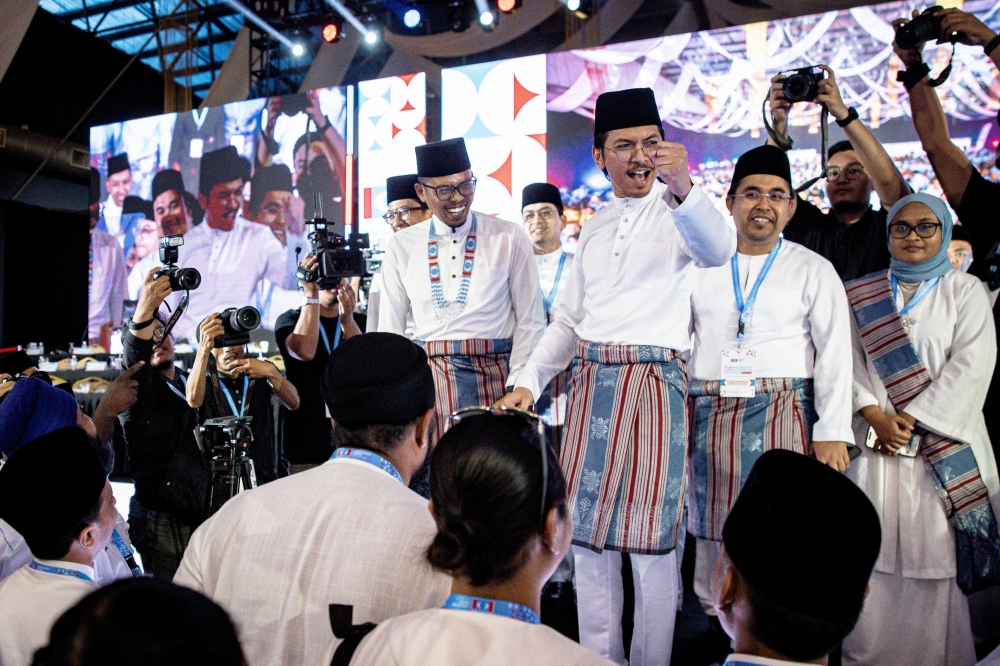
The youth wing of the People's Justice Party has emerged as a vocal supporter of Prime Minister Datuk Seri Anwar Ibrahim's plan to dismantle the Universities and University Colleges Act, positioning the move as a watershed moment for Malaysian higher education. In backing the announced repeal, PKR Youth has seized on the opportunity to call for student communities across the nation to mobilise their voices and advocate for a comprehensive overhaul of university governance and operational structures that extend well beyond the immediate legislative change.
The Universities and University Colleges Act, commonly known as the UUCA, has long been a lightning rod for criticism from students, civil society advocates, and those championing academic freedom in Malaysia. The legislation has been widely perceived as restrictive, imposing significant limitations on student political expression, assembly, and activism within campus environments. For decades, student organisations and human rights groups have contended that the Act stifles the development of critical thinking and democratic participation among young Malaysians at the tertiary level, creating institutional barriers to free speech and collective action on matters of public interest.
PKR Youth's endorsement represents a notable alignment within the ruling coalition, particularly as Anwar's administration seeks to position itself as a force for progressive reform and democratisation. The youth wing's public backing provides political momentum for a legislative initiative that had been signalled as a priority within government circles. By actively encouraging students to engage in the reform discourse, PKR Youth is attempting to channel grassroots energy into a structured advocacy movement that could shape how universities operate once the restrictive legal framework is removed.
The call for students to speak up addresses a critical dimension of the reform effort that extends beyond mere repeal. Simply removing the Act from the statute books would only constitute the first step; the broader challenge involves establishing alternative regulatory frameworks that protect institutional autonomy while maintaining academic integrity and institutional accountability. PKR Youth's framing suggests recognition that the transition period following repeal will require active student participation in determining what governance models should replace the existing constraints.
For Malaysian universities, the implications of UUCA repeal are substantial and multifaceted. Campus administrations across the country would need to recalibrate their approach to student conduct, political activity, and expression within institutional settings. Public institutions would likely need to develop new policies that balance institutional order and reputation with enhanced freedoms for student bodies. This transition represents an opportunity to establish governance norms more aligned with international standards on academic freedom and student rights, positioning Malaysian universities as more competitive and attractive to both domestic and international student populations.
The regional context matters significantly for this debate. Across Southeast Asia, variations in how countries manage university autonomy and student freedom create competitive advantages and disadvantages in the higher education marketplace. Thailand, Indonesia, and the Philippines have each navigated different approaches to student activism and campus governance, with outcomes that have shaped their institutional reputations globally. Malaysia's move toward liberalisation could enhance the country's standing as an education destination and improve the quality of intellectual discourse within academic environments.
PKR Youth's broader call for institutional reform touches on questions of curriculum design, faculty autonomy, research funding mechanisms, and international partnerships. These elements are interconnected with student freedom; institutions that allow robust student engagement and debate tend to attract faculty of higher calibre and foster research environments that generate innovation. By framing UUCA repeal as a gateway to wider transformation, the youth movement is attempting to broaden the conversation beyond restrictive legislation into discussions about what constitutes world-class university education.
The student activism dimension carries particular importance given that Malaysia's younger generation has demonstrated significant political consciousness in recent years. Student organisations have mobilised around environmental issues, social justice concerns, and governance questions with increasing sophistication. Channelling this energy into constructive participation in higher education reform could yield valuable input on institutional priorities, pedagogical approaches, and the relationship between universities and broader society. However, realising this potential requires creating mechanisms for meaningful student participation in governance conversations, not merely symbolic endorsement of changes decided at administrative levels.
The economic implications for Malaysia's education sector should not be overlooked. Malaysian universities compete for talent and resources in a global marketplace where institutional freedom and research quality are significant differentiators. Countries with more restrictive university frameworks often face brain drain, as scholars and talented students migrate to environments offering greater intellectual freedom. UUCA repeal could help reverse some of this attrition by signalling that Malaysia is serious about creating conditions conducive to academic excellence and innovation.
PKR Youth's positioning itself as champion of this reform serves multiple political functions. It appeals to younger voters and demonstrates responsiveness to long-standing student demands while building credit within the ruling coalition for progressive governance. This calculation is not cynical; genuine alignment between policy positions and constituent interests represents the normal functioning of representative democracy. The test will be whether the enthusiasm for reform translates into substantive implementation and whether students are genuinely empowered to shape the post-UUCA university landscape.
As the repeal process advances through legislative channels, how it intersects with other government priorities around education quality, research funding, and internationalisation will become clearer. The commitment from PKR Youth suggests that youthful constituencies within the ruling coalition are prepared to press for comprehensive reform rather than accepting a purely symbolic gesture. For Malaysian students and educators hoping for genuine transformation of the university experience, the next phase will involve translating political will into workable institutional architectures that deliver on the promise of academic freedom while maintaining standards of excellence.

