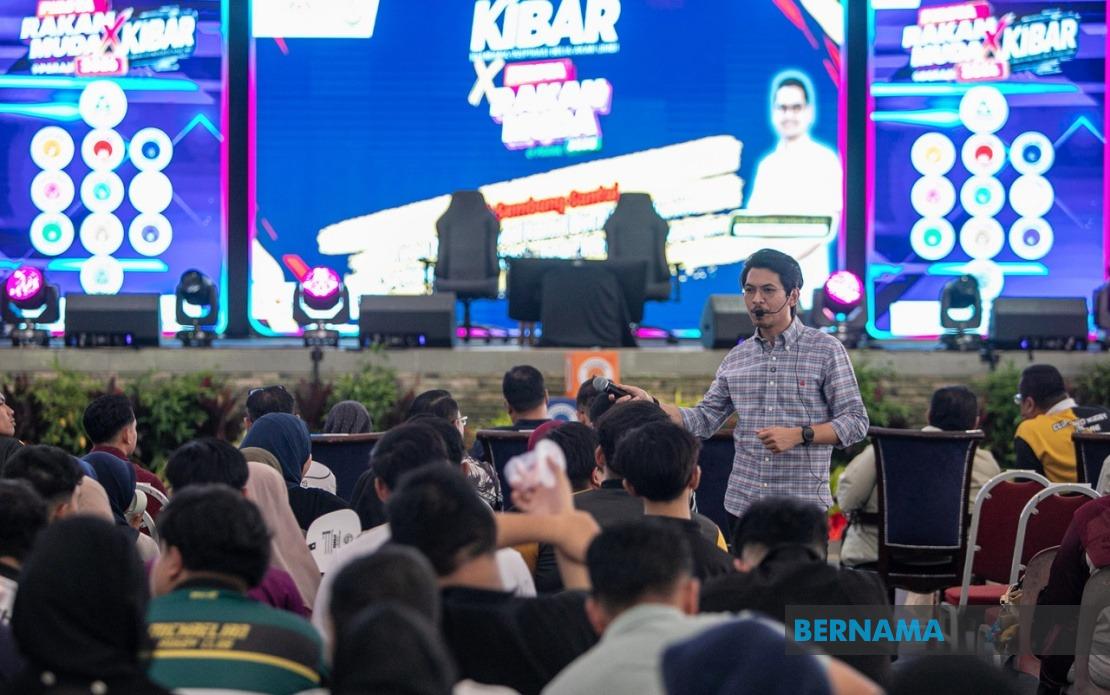
PKR Youth (AMK) has launched a comprehensive push to bolster its election readiness for the upcoming Melaka state election, with party officials signalling their intent to build a more robust campaign apparatus across the state. The youth wing's leadership has received clear instructions to consolidate its electoral machinery and expand grassroots organising efforts, representing a deliberate shift towards structured, methodical preparation rather than ad-hoc political manoeuvres typical of Malaysian campaign seasons.
Muhammad Kamil Abdul Munim, heading the youth organisation, articulated the party's strategic priorities during remarks made at a Perak-level gathering this week. His emphasis on foundational groundwork—organisational discipline, programme coordination, and tactical readiness—underscores PKR Youth's understanding that electoral success in Malaysia's state contests increasingly depends on neighbourhood-level mobilisation and sustained community engagement rather than top-down directives alone. This approach reflects lessons learned from previous electoral disappointments and regional contests where opposition parties have struggled against incumbent machinery.
The timing of these preparations is deliberate. The Melaka State Legislative Assembly's 15th term is scheduled to conclude in December, creating a defined window for campaign activity and allowing both coalition partners and their rivals to marshal resources accordingly. For Pakatan Harapan, the coalition that PKR Youth is embedded within, Melaka represents crucial electoral terrain—a state where the opposition achieved a modest footprint during the 2021 contest and where demographic and political dynamics have shifted measurably in subsequent years.
The 2021 Melaka election results establish the baseline against which current preparations must be measured. Pakatan Harapan managed to capture five state assembly seats out of 28 contested—Kota Laksamana, Kesidang, Bandar Hilir, Bukit Katil and Ayer Keroh—a performance that was substantially outpaced by Barisan Nasional's 21-seat haul, whilst Perikatan Nasional secured two constituencies. These numbers illustrate the formidable challenge confronting the opposition coalition in a state where traditional governmental structures and incumbent advantages remain potent forces. For PKR Youth, the task of expanding the coalition's representation necessitates not merely repeating 2021's performance but fundamentally reshaping the ground-level political landscape.
Candidate selection and seat allocation remain unresolved matters within Pakatan Harapan's internal deliberations, with Kamil explicitly deferring such determinations to senior coalition leadership. This compartmentalisation between grassroots preparation and high-level political negotiations is typical of Malaysian opposition politics, where youth wings often function as auxiliary mobilising forces whilst strategic decisions concentrate among party presidiums and inter-coalition steering committees. Nevertheless, the intensive groundwork being commissioned by AMK suggests confidence that enhanced organisational capacity will yield electoral dividends regardless of specific candidate configurations.
Beyond the immediate electoral calculus, AMK's leadership has deployed the KIBAR programme—Kembara Inspirasi Belia Akar Umbi (Grassroots Youth Inspiration Journey)—as a parallel mechanism for youth engagement and political socialisation. This initiative, coordinated with the Youth and Sports Ministry, convened more than 600 young Malaysians aged between 15 and 30 at the Perak gathering, functioning as both a listening forum and organisational platform. Such programmes serve multiple purposes within Malaysian political contexts: they legitimise youth participation, provide venues for grievance articulation, and create informal networks of young activists who may subsequently volunteer for campaign activities or community organising.
The structure of KIBAR reflects contemporary opposition strategy in Malaysia, where coalition parties recognise that younger voters—particularly urban, educated cohorts—increasingly expect authentic dialogue rather than paternalistic messaging. By positioning the programme as an avenue for young people to voice criticisms, pose questions to leadership, and contribute suggestions, PKR Youth signals openness to grassroots input whilst simultaneously capturing demographic data and identifying committed organisers for future mobilisation. The ministry's involvement also lends governmental legitimacy to what is fundamentally a partisan activity, leveraging institutional resources for coalition advantage.
Kamil's statement that KIBAR implementation will expand across the country with intensified focus on grassroots youth participation indicates that Melaka preparations are integrated within a broader nationwide organisational strategy. This scaling approach suggests PKR Youth leadership recognises that state-level electoral cycles provide opportunities for nationwide network-building and capacity development. Each contest becomes both a specific electoral battle and a training ground for activists and organisers who may subsequently be deployed in different contexts across Malaysia's federal system.
The operational emphasis on strengthening election machinery merits closer examination within the Malaysian context. Effective grassroots organisation—voter registration, constituency mapping, volunteer coordination, and micro-targeted messaging—has proven decisive in recent state and federal contests. Unlike earlier electoral eras where party brand identity and leadership personalities dominated, contemporary Malaysian campaigns increasingly hinge on ground-level execution capacity. PKR Youth's focus on this dimension suggests the coalition has absorbed lessons from underperformance in other states and is attempting systematic improvement in operational fundamentals.
For PKR specifically, youth wing performance in Melaka carries implications beyond immediate electoral gain. The party continues navigating internal dynamics around leadership succession and ideological positioning within Pakatan Harapan. Demonstrable capacity to organise young voters and build grassroots momentum enhances PKR Youth's standing within party hierarchies and may influence resource allocation decisions for future contests. Success in Melaka would validate the organisational models being piloted and create momentum for similar initiatives in other states where opposition fortunes remain contested.
The broader regional context adds dimension to these developments. Across Southeast Asia, opposition parties are experimenting with youth-centric mobilisation strategies as traditional party structures face legitimacy questions amongst younger demographics. PKR Youth's Melaka preparations align with regional trends toward decentralised organising, digital-native communication approaches, and issue-based rather than personality-driven messaging. However, Malaysian constraints—including regulatory restrictions on political assemblies, constraints on electoral campaign financing, and security force discretion—limit the tactical repertoire available to opposition organisers compared with counterparts in more permissive political environments.
Looking forward, the outcomes in Melaka will generate instructive data regarding opposition coalition viability in state contests. Should Pakatan Harapan substantially improve upon 2021's five-seat performance, it would suggest that intensive grassroots preparation and youth mobilisation are yielding electoral returns. Conversely, stagnation or further losses would indicate that structural or demographic factors may be constraining opposition prospects regardless of organisational intensity. For PKR Youth specifically, the December election will test whether the party's current leadership can translate strategic vision into tangible electoral gains and organisational expansion.

