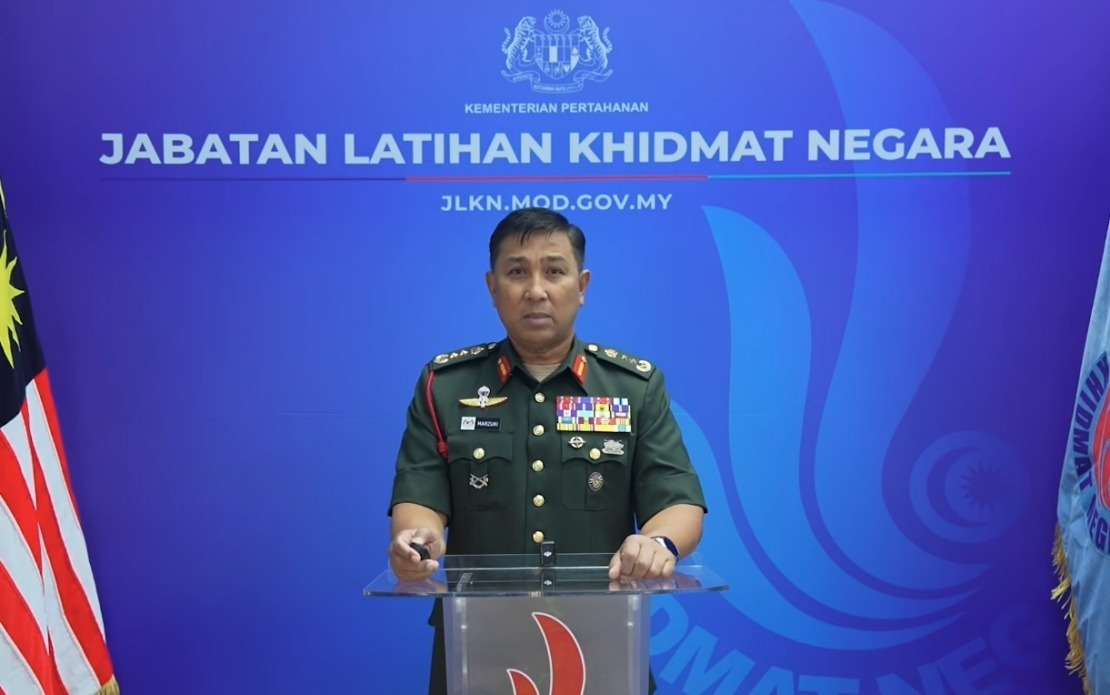
The National Service Training Department has extended voting leave to 77 trainees enrolled in the third cohort of PLKN 3.0 for 2026, allowing them to exercise their democratic rights while participating in the mandatory national service programme. The decision reflects official recognition that civic participation and compulsory military training need not conflict, with arrangements tailored to the electoral calendars of two key states undertaking concurrent political transitions.
Major General Datuk Marzuki Mokhtar, director general of the department, emphasised that the arrangement protects trainees' constitutional voting rights whilst preserving the programme's educational mission. His statement underscored a pragmatic approach to reconciling two significant national obligations: the constitutional entitlement to vote and the statutory requirement for young Malaysians to complete national service training. This accommodation demonstrates the department's recognition that a functioning democracy requires broad participation across all demographic cohorts, including those engaged in state-mandated programmes.
For trainees voting in the Johor state election held on July 11, the arrangement proved relatively straightforward. Thirty-one eligible voters received permission to leave camp early, with instructions to report back for duty the following day. This compressed schedule minimised disruption to the training calendar while accommodating the proximity of the polling date. The tight timeline reflects both the proximity of the election and the operational flexibility required to serve trainees scattered across multiple training locations.
The accommodation for Negeri Sembilan voters proved more substantial, given the later polling date of August 1. Forty-six trainees received approval for a two to three-day leave period to facilitate travel and voting, a window that acknowledges both the geographic distances some may need to traverse and the administrative requirements of voting procedures. This extended arrangement demonstrates understanding that meaningful democratic participation requires adequate logistical support, particularly for young citizens stationed away from their home states.
Overall participation in PLKN 3.0 Series 3/2026 remains robust, with 870 trainees confirmed for the programme's duration from July 11 through August 24. This cohort is distributed across three primary training facilities strategically located across the peninsula: Camp 505 AW in Pekan, Pahang accommodates the largest contingent at 500 trainees, while Camp 515 AW in Kuala Lumpur hosts 250, and Camp 504 AW Bukit Keteri in Perlis manages 120 participants. The geographic spread reflects efforts to decentralise training infrastructure whilst maintaining operational efficiency.
The decision carries broader implications for how Malaysia's mandatory national service programme balances state obligations with individual rights. PLKN represents a significant commitment from young citizens, requiring them to temporarily surrender personal liberty and autonomy in service of national goals. Permitting voting participation demonstrates that such sacrifice need not entail forfeiting fundamental democratic prerogatives, a principle increasingly important as the programme matures and attracts closer public scrutiny.
For Malaysian readers, this accommodation signals official recognition that the PLKN framework can accommodate flexibility without compromising core objectives. The programme's success ultimately depends upon its legitimacy among participants and the broader public. Demonstrating that trainees retain their civic rights even whilst fulfilling national obligations enhances this legitimacy, suggesting the department views itself as steward of both state interests and individual entitlements rather than solely an enforcement mechanism.
The voting leave arrangement also reflects demographic realities. PLKN 3.0 participants, typically in their late teens and early twenties, increasingly come of voting age during their service tenure. As electoral calendars shift and state elections proceed at varying intervals, such conflicts will likely recur. The precedent established here suggests the department will continue seeking accommodations rather than treating voting obligations as incompatible with training schedules.
Simultaneously, the department has reminded prospective PLKN 3.0 Series 4/2026 trainees, particularly those born in 2008, to monitor official channels for registration updates and selection announcements. This forward communication aims to ensure transparency and reach potential participants early, reducing administrative complications during later stages. The reminder also cautions against fraudulent recruitment schemes, emphasising that PLKN has never engaged external agents for staff or participant recruitment—a safeguard against scams targeting vulnerable young citizens unfamiliar with official procedures.
The staggered timing of different state elections throughout Malaysia's electoral cycle means similar situations will inevitably arise. Johor's July polling and Negeri Sembilan's August voting both occurred during the summer training period, creating manageable overlaps. Future cohorts may face elections during training phases, and the precedent established here provides a framework for balancing these competing demands. The department's approach suggests willingness to adapt operational schedules rather than invoke programme requirements as blanket justifications for restricting democratic participation.
For the broader Southeast Asian context, Malaysia's approach demonstrates a democratic state's commitment to protecting voting rights even when they complicate administrative processes. Mandatory national service programmes exist across the region, and how each nation reconciles such obligations with democratic principles reflects deeper commitments to pluralism and individual rights. Malaysia's practical accommodation of voting leave suggests confidence that the programme's legitimacy rests upon more than mere coercion, but rather upon its perceived value as a nation-building exercise compatible with democratic governance.
The willingness to grant voting leave also reflects institutional maturity. Younger programmes or those facing legitimacy challenges might respond inflexibly, viewing any exception as threatening operational integrity. The department's measured approach suggests confidence in the programme's resilience and recognition that small accommodations actually strengthen rather than undermine broader objectives. This flexibility may ultimately prove more valuable to PLKN's long-term success than rigid adherence to schedules regardless of democratic imperatives.

