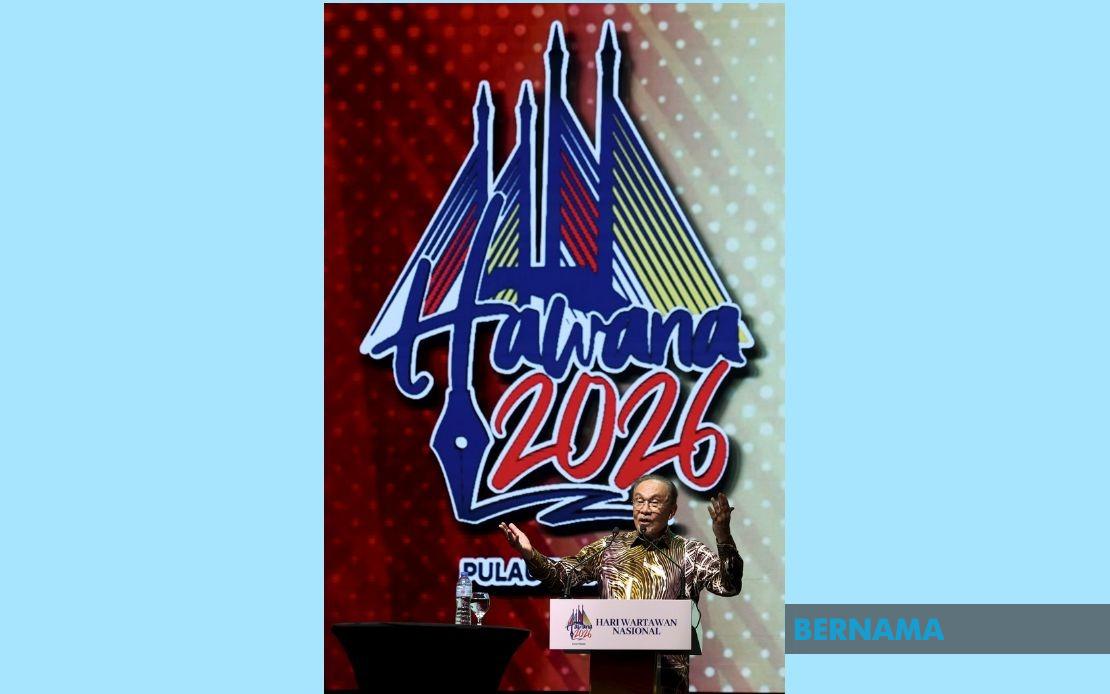
Prime Minister Datuk Seri Anwar Ibrahim has committed an additional RM1 million to Tabung Kasih@HAWANA during the official opening of the National Journalists' Day 2026 main event in Butterworth, signalling the government's deepening investment in the financial security of Malaysia's journalism community. The allocation, announced at the PICCA Convention Centre@Butterworth Arena, underscores the administration's recognition of media practitioners as vital stakeholders in the nation's democratic and information ecosystem.
The government's expanding support for journalists reflects broader concerns about the sustainability of news gathering in Southeast Asia. By directing substantial resources toward a dedicated welfare fund, Kuala Lumpur is positioning itself as a region that values fourth-estate protection at a policy level. This contrasts with the precarious circumstances many newsroom professionals face across Asia, where economic pressures and digital disruption have eroded traditional revenue streams and job security.
Tabung Kasih@HAWANA, established during the 2023 journalists' celebration, has already demonstrated tangible impact within Malaysia's media fraternity. Since its inception, the fund has distributed assistance totalling RM2.26 million to 773 practitioners and former journalists, addressing immediate needs such as medical emergencies, family welfare challenges, and financial hardship. The breadth of beneficiaries—more than 770 individuals—indicates that the fund has successfully reached practitioners across different media outlets, regions, and career stages.
Anwar, who serves concurrently as Finance Minister, personally delivered the funding announcement, underscoring its importance within the cabinet's social welfare agenda. This dual-portfolio involvement suggests that media practitioner welfare has moved beyond Communications Ministry oversight into the broader fiscal planning framework. Such elevation signals that support for the journalism sector now competes successfully for budgetary priority alongside other government expenditure programmes.
The welfare initiative encompasses multiple forms of assistance beyond emergency cash transfers. Financial aid, medical expense reimbursement, and family support schemes create a comprehensive safety net addressing the diverse vulnerabilities journalists face during career transitions, health crises, or periods of unemployment. This multi-faceted approach acknowledges that journalism's precarious economics often leave practitioners underprotected against ordinary life disruptions that salaried professionals in other sectors manage more comfortably.
The HAWANA 2026 gathering itself attracted regional significance, drawing over 1,000 media practitioners from Malaysia and neighbouring countries. The presence of delegates from Timor-Leste, Cambodia, and Laos transformed the event into a Southeast Asian forum for discussing journalism's evolving challenges and standards. This regional dimension reflects recognition that media integrity and professional welfare concerns transcend borders—newsroom sustainability crises in one nation often foreshadow similar pressures elsewhere across the region.
The conference theme, 'Media Integrity Strengthens Credibility', positioned financial security within a broader conversation about journalism quality and public trust. When practitioners face economic desperation, editorial independence becomes compromised and news quality deteriorates. By coupling welfare support with renewed emphasis on professional standards, the government acknowledges this linkage explicitly. Malaysian journalism's credibility, the implicit argument suggests, cannot be sustained without protecting the economic foundation on which practitioners rely.
Senior government figures including Penang Chief Minister Chow Kon Yeow and Communications Minister Datuk Fahmi Fadzil's attendance highlighted political consensus around journalist welfare support across different administrative levels. This convergence between federal and state-level backing reduces the risk that such initiatives become vulnerable to political fluctuations or individual minister preferences. Broad institutional support suggests the fund may persist beyond current political cycles.
The participation of media organisation representatives and strategic partners created space for dialogue between government and the journalism sector itself. Rather than imposing welfare support unilaterally, the inclusive event format allowed practitioners to voice concerns about fund accessibility, application processes, and coverage of diverse media segments including digital-native newsrooms and freelancers who may face particular financial vulnerability.
Malaysia's commitment to journalist welfare through sustained funding allocations differentiates regional governance approaches. While some neighbouring administrations view the press primarily through regulatory and monitoring frameworks, Kuala Lumpur's expanding investment in practitioner security suggests a longer-term view recognising functional journalism as a public good requiring sustained institutional support. This positioning could influence how other Southeast Asian governments calibrate their media policies going forward.
The RM1 million additional allocation, modest by government spending standards, carries disproportionate symbolic weight. To individual journalists facing medical bills or temporary income loss, such funds provide genuine relief. More broadly, they signal that government acknowledges media practitioners as deserving beneficiaries of state resources—a recognition that carries implications for how journalism is perceived within society and how professionals regard their social standing.
Implementing the expanded welfare programme will require clear administrative mechanisms ensuring funds reach intended beneficiaries efficiently. Transparency in allocation decisions and accessibility to application processes will determine whether expanded funding translates into meaningful support reaching practitioners across diverse career stages and organisational contexts. Success will depend on ongoing dialogue between fund administrators and media professionals who can identify and address gaps in coverage.
%22%2F%3E%3C%2Fpattern%3E%3C%2Fdefs%3E%3Crect%20width%3D%22100%25%22%20height%3D%22100%25%22%20fill%3D%22url(%23ph366w1g)%22%2F%3E%3Crect%20width%3D%22100%25%22%20height%3D%22100%25%22%20fill%3D%22url(%23ph366w1p)%22%2F%3E%3Ctext%20x%3D%2250%25%22%20y%3D%2250%25%22%20text-anchor%3D%22middle%22%20dominant-baseline%3D%22central%22%20fill%3D%22rgba(255%2C255%2C255%2C0.95)%22%20font-family%3D%22Georgia%2C%20'Times%20New%20Roman'%2C%20serif%22%20font-weight%3D%22700%22%20font-size%3D%22320%22%20letter-spacing%3D%22-0.02em%22%3ETV3%3C%2Ftext%3E%3C%2Fsvg%3E)
%22%2F%3E%3C%2Fpattern%3E%3C%2Fdefs%3E%3Crect%20width%3D%22100%25%22%20height%3D%22100%25%22%20fill%3D%22url(%23ph50o6fg)%22%2F%3E%3Crect%20width%3D%22100%25%22%20height%3D%22100%25%22%20fill%3D%22url(%23ph50o6fp)%22%2F%3E%3Ctext%20x%3D%2250%25%22%20y%3D%2250%25%22%20text-anchor%3D%22middle%22%20dominant-baseline%3D%22central%22%20fill%3D%22rgba(255%2C255%2C255%2C0.95)%22%20font-family%3D%22Georgia%2C%20'Times%20New%20Roman'%2C%20serif%22%20font-weight%3D%22700%22%20font-size%3D%22170%22%20letter-spacing%3D%22-0.02em%22%3EMalaysia%3C%2Ftext%3E%3C%2Fsvg%3E)
%22%2F%3E%3C%2Fpattern%3E%3C%2Fdefs%3E%3Crect%20width%3D%22100%25%22%20height%3D%22100%25%22%20fill%3D%22url(%23ph5vazwg)%22%2F%3E%3Crect%20width%3D%22100%25%22%20height%3D%22100%25%22%20fill%3D%22url(%23ph5vazwp)%22%2F%3E%3Ctext%20x%3D%2250%25%22%20y%3D%2250%25%22%20text-anchor%3D%22middle%22%20dominant-baseline%3D%22central%22%20fill%3D%22rgba(255%2C255%2C255%2C0.95)%22%20font-family%3D%22Georgia%2C%20'Times%20New%20Roman'%2C%20serif%22%20font-weight%3D%22700%22%20font-size%3D%22170%22%20letter-spacing%3D%22-0.02em%22%3EMalaysia%3C%2Ftext%3E%3C%2Fsvg%3E)