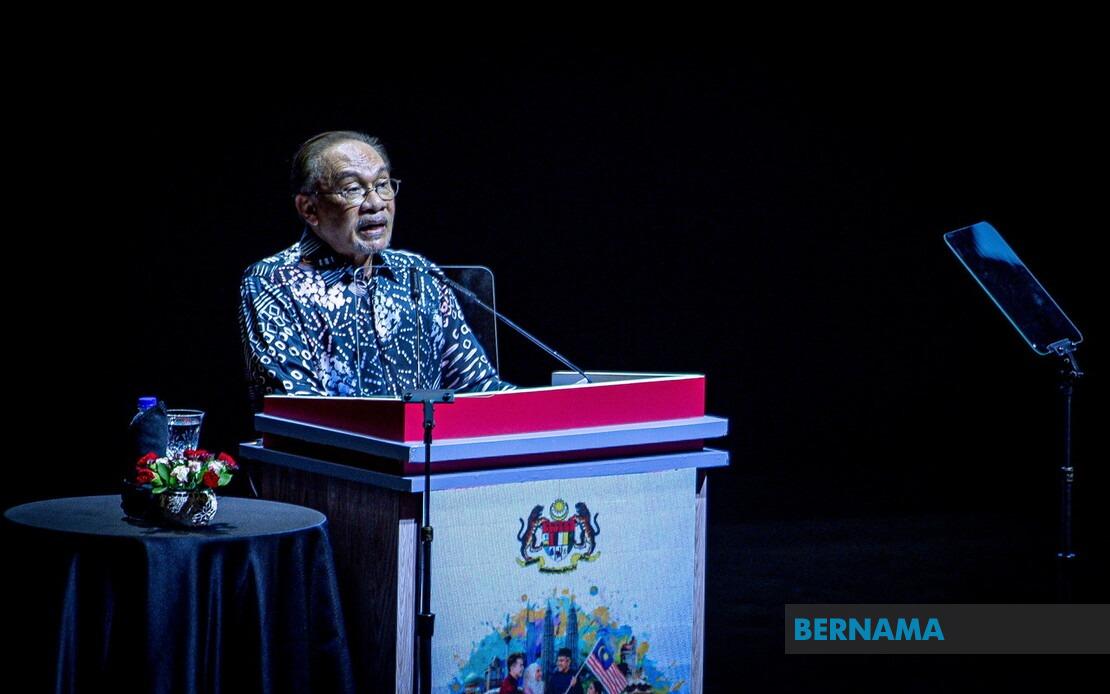
Prime Minister Datuk Seri Anwar Ibrahim has unveiled six immediate policy interventions designed to ease the financial strain facing Malaysian households, with all measures scheduled to commence on September 1. Unveiled at the Putrajaya International Convention Centre during the 2026 National Day Prime Minister's Address, the initiatives encompass fuel subsidy adjustments, school maintenance provisions, artificial intelligence applications, healthcare digitalisation, e-Invoicing systems, and microfinancing accessibility. The announcement reflects the government's strategic pivot toward targeted relief as households continue grappling with elevated living costs and mounting daily expenses.
The timing of the announcement carries symbolic weight, arriving on the eve of Malaysia's National Day celebration. Anwar positioned the measures as evidence of the administration's responsiveness to persistent public concerns rather than a dismissal of ongoing financial hardship facing ordinary Malaysians. He acknowledged that despite previous government interventions, significant gaps remain in the government's efforts to comprehensively address cost-of-living pressures. This candid assessment signals a departure from rhetoric that overstates progress, instead grounding policy announcements in realistic acknowledgment of the scale of household financial stress across the nation.
The fuel subsidy component represents a cornerstone of the relief package, directly impacting transport costs that cascade through the economy. Malaysians depend heavily on private vehicles for daily commuting, and fuel price volatility has historically triggered inflationary pressures across sectors ranging from food distribution to logistics. By adjusting fuel subsidy mechanisms, the government aims to stabilize one of the most visible cost pressures affecting household budgets. The subsidy framework remains politically sensitive given its fiscal implications and the need to balance affordability with sustainability of government finances.
Education-focused measures addressing school maintenance signal recognition that educational infrastructure quality directly influences household spending patterns. When school facilities deteriorate, families often invest in private tuition or supplementary education to compensate, creating additional financial burdens particularly for lower-income households. Targeted maintenance funding reduces the necessity for household-level expenditure on educational supplements while improving learning environments across the country. This approach acknowledges education's foundational role in breaking cycles of economic disadvantage.
The integration of artificial intelligence and healthcare digitalisation initiatives demonstrates the government's commitment to leveraging technology for efficiency gains that translate into cost savings for citizens. Digital healthcare systems reduce administrative redundancies, minimize unnecessary medical procedures through better data integration, and enhance preventive care accessibility. AI applications across government services can streamline service delivery, reducing the time citizens spend navigating bureaucratic processes and the associated indirect costs. For Malaysia's increasingly tech-literate population, these digital-first approaches align with contemporary expectations about service provision.
E-Invoicing implementation addresses inefficiencies in business-to-business transactions that ultimately burden consumers through higher prices. Digitalized invoicing reduces transaction costs, minimizes disputes, and accelerates payment cycles particularly for small and medium enterprises. When businesses operate more efficiently, cost savings often translate into competitive pricing that benefits consumers. The measure particularly supports the lower-income merchants and traders who constitute significant portions of Malaysia's economic base yet often lack sophisticated financial management infrastructure.
Microfinancing expansion targets one of the most persistent gaps in Malaysia's financial inclusion landscape. Despite decades of economic development, many Malaysians lack access to formal credit mechanisms at reasonable rates, forcing reliance on informal lending at exploitative terms. Expanded microfinancing channels enable small entrepreneurs to capitalize opportunities, smoothe household cash flow during emergencies, and invest in income-generating activities without incurring debt-trap interest rates. This measure addresses structural inequality in financial access that perpetuates economic vulnerability among lower-income segments.
Deputy Prime Minister Datuk Seri Dr Ahmad Zahid Hamidi, Communications Minister Datuk Seri Fahmi Fadzil, and Cabinet colleagues attended the announcement, signifying unified government commitment to the measures. This ministerial alignment suggests the initiatives received cross-cabinet scrutiny and support rather than emerging as isolated prime ministerial directives lacking departmental coordination. Collaborative policy development typically produces more implementable measures and reduces the risk of unintended bureaucratic conflicts during execution.
The Chief Secretary to the Government Tan Sri Shamsul Azri Abu Bakar's presence underscores the administrative apparatus's readiness for implementation. Civil service readiness proves crucial for translating policy announcements into tangible benefits reaching citizens. The tight timeline between announcement and September 1 implementation indicates advance preparation within government departments, suggesting these measures were developed through established working groups rather than conceived hastily for announcement purposes.
The package reflects sophisticated understanding that cost-of-living pressures operate through multiple channels simultaneously affecting different population segments. Students benefit from school maintenance, digital healthcare improvements serve all citizens, small traders gain from e-Invoicing efficiency, and entrepreneurs access microfinancing. This diversified approach contrasts with simplistic single-measure responses and demonstrates policy thinking informed by cross-sectoral impact analysis. However, the measures' cumulative effectiveness depends entirely on competent implementation across multiple government agencies with varying administrative capacities.
Anwar's acknowledgment that previous efforts have not fully addressed public concerns carries political significance in Malaysian context where governments traditionally emphasized accomplishments. This transparent assessment may build credibility by demonstrating honesty about policy limitations while simultaneously committing to incremental improvements. For citizens experiencing persistent financial stress despite earlier government interventions, such candor offers modest reassurance that policymakers recognize and take seriously their ongoing struggles rather than dismissing concerns as resolved.
The September 1 effective date aligns with the new financial quarter and school academic calendar, suggesting careful coordination with existing administrative cycles. Implementation during established transition periods typically reduces operational disruptions and allows institutions to absorb new requirements within regular planning cycles. However, the effectiveness of cost-of-living relief ultimately depends not on announcement fanfare but on citizens actually experiencing tangible benefits through lower fuel prices, improved school facilities, reduced healthcare transaction friction, streamlined business processes, and genuine microfinancing access. The government's willingness to deliver measurable results from these initiatives will significantly influence public confidence in its capacity to address economic pressures facing Malaysian households.

