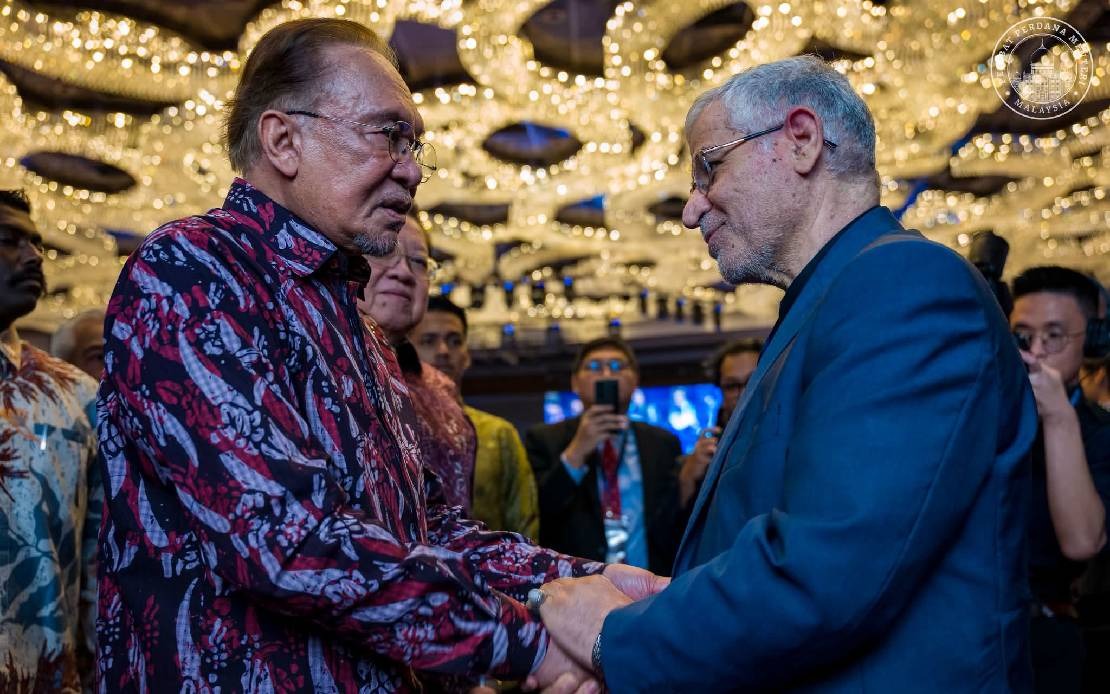
Prime Minister Datuk Seri Anwar Ibrahim has formally apologised to the Islamic Republic of Iran for his absence from the state funeral and farewell ceremonies honouring the late Supreme Leader Ayatollah Ali Khamenei. The apology was delivered during a bilateral meeting with Iranian Ambassador to Malaysia Valiollah Mohammadi at the 39th Asia-Pacific Roundtable conference in Kuala Lumpur on Tuesday. Through a Facebook statement, Anwar acknowledged the constraints of his schedule while reaffirming Malaysia's respect for the Iranian leadership and its people during this significant moment of national mourning.
The timing of Anwar's absence reflects the competing demands facing senior Malaysian officials during periods of heightened diplomatic activity. While honouring the passing of a major regional leader carries considerable diplomatic weight, the Prime Minister's domestic and international obligations apparently outweighed the feasibility of attending the six-day ceremonial proceedings personally. This practical constraint, though respectfully communicated through official channels, underscores the logistical realities that often shape high-level diplomatic attendance at major international events. Rather than forgo representation entirely, the Malaysian government opted for a delegated approach that maintains the nation's ceremonial participation without disrupting executive operations.
Ayatollah Khamenei, who was 86 years old, passed away on 28 February at his residence in central Tehran. According to reports, the Supreme Leader's death followed a combined military attack involving both the United States and Israel. His nearly four-decade tenure as Iran's highest authority had witnessed transformative periods in the nation's history, including its nuclear programme negotiations and evolving relationships with regional and global powers. The comprehensive nature of Khamenei's influence on Iran's domestic and foreign policy meant his passing carried implications extending far beyond Tehran's borders, resonating throughout the Middle East and among nations maintaining diplomatic ties with the Islamic Republic.
The funeral proceedings, commencing on 4 July and extending through 9 July, were designed as a major state occasion befitting Khamenei's position. The ceremonies encompass multiple stages, beginning with funeral processions through both Tehran and Qom, Iran's two most significant cities in terms of religious and political authority. The final element of this extended ritual involves interment at the Imam Reza Shrine in Mashhad, one of Islam's holiest sites. This geographical spread across three major cities reflects the magnitude of the occasion and ensures that diverse sections of the Iranian populace have opportunity to participate in the national rites, reinforcing both religious and civic dimensions of the ceremonial farewell.
Instead of attending in person, Anwar tasked Agriculture and Food Security Minister Mohamad Sabu with heading Malaysia's delegation to the ceremonies. This assignment carries its own diplomatic significance, as ministerial representation at high-level state funerals constitutes a recognised protocol for expressing national solidarity without requiring the head of government's personal presence. Sabu's attendance would allow Malaysia to participate meaningfully in the proceedings while respecting the ceremonial importance Iran attached to the occasion. The selection of the Agriculture Minister, rather than the Foreign Minister, might reflect Malaysia's broader policy priorities or the particular relationship dynamics the government wished to emphasise during this sensitive period.
Malaysia's relationship with Iran has historically encompassed economic partnerships, cultural exchange, and shared positions on certain international issues, despite their different governance structures. The nation's large Muslim population and Malaysia's position as a leading voice in the Islamic world create natural bridges for maintaining diplomatic engagement with Iran. At the same time, Malaysia's strategic interests in maintaining balanced relationships across the Middle East require careful diplomatic navigation, particularly given the participation of external powers in regional conflicts. The formal apology regarding Anwar's inability to attend, combined with the despatch of a ministerial representative, reflects this balancing act—acknowledging Iran's significance while maintaining pragmatic flexibility in Malaysia's bilateral conduct.
The wider context of Anwar's absence also touches upon the broader patterns of Malaysian diplomatic conduct in the post-pandemic era. As international engagement has intensified and summits have proliferated, prime ministers face increasingly complex scheduling challenges. The Asia-Pacific Roundtable conference itself, where the apology was conveyed, represents a high-profile commitment to regional dialogue on security and strategic matters. Anwar's presence at this event, coupled with his acknowledged inability to travel simultaneously to Iran, illustrates the practical constraints even powerful leaders encounter when balancing multiple hemispheric responsibilities. Such realities have become increasingly common in the contemporary diplomatic calendar.
The manner in which Anwar communicated the apology—through a public Facebook statement combined with in-person diplomatic contact—demonstrates the multi-layered approach modern governments employ for delicate communications. By making the message public, Anwar ensured that both Iranian officials and the Malaysian public understood his reasoning and commitment to maintaining bilateral relations. The transparency of the approach served to underscore that the absence was genuinely unavoidable rather than a deliberate slight, while the direct conversation with Ambassador Mohammadi provided the formal, person-to-person dimension that diplomacy values. This combination of public and private communication reflects contemporary political communication practices that blend traditional diplomatic protocols with the realities of social media and public information management.
Looking forward, the incident poses no evident threat to Malaysia-Iran relations, which appear sufficiently established to accommodate such scheduling conflicts when handled with appropriate diplomatic courtesy. Both nations share interests in regional stability, economic cooperation, and representing Muslim-majority perspectives in international forums. The ceremonial and symbolic importance of Anwar's apology and Sabu's representation, rather than contentious substance, defines the episode. For Malaysian observers, the situation illustrates how even significant international events sometimes require pragmatic compromises from national leaders, and how such compromises can be managed diplomatically to maintain relationships without sacrificing domestic priorities.

