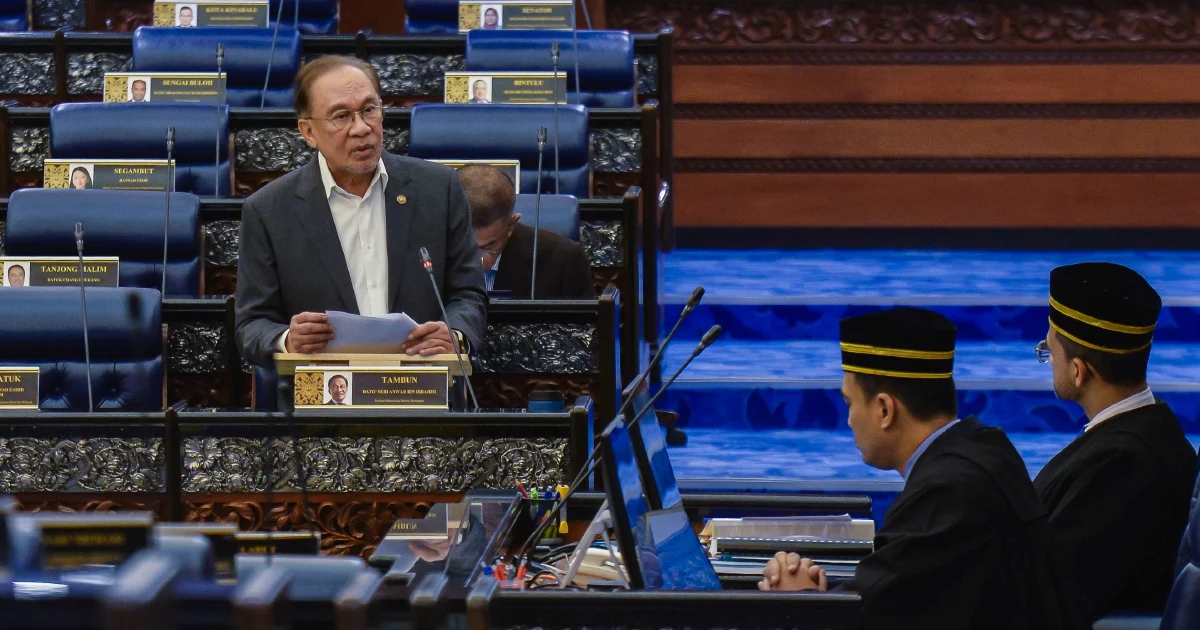
Prime Minister Datuk Seri Anwar Ibrahim moved today to distance himself from a decision to shelve the 2026 Johor Felda Settlers' Day celebration planned for Kluang, flatly rejecting claims that he had personally directed the cancellation earlier this month. The denial comes amid mounting controversy surrounding the postponement of what would have been a significant annual gathering for smallholder community members across Johor and the broader Felda network nationwide.
The Johor Felda Settlers' Day represents more than a ceremonial observance for the Federal Land Development Authority's constituent members, who have long viewed the annual occasion as a vital platform for engaging with government leadership and raising concerns specific to rural agricultural communities. For decades, these celebrations have served as anchors in the social calendar of Felda settlers, attracting top government officials and providing opportunities for grassroots voices to reach decision-making circles. The sudden cancellation signalled a departure from established practice and prompted speculation about shifting political priorities or underlying administrative difficulties that government officials had declined to articulate publicly.
The Kluang event had been anticipated to draw a substantial turnout from Felda settlements across Johor, which hosts one of the largest concentrations of smallholder farmers within the network. These settlers have historically relied on occasions such as this to assess government responsiveness to their evolving needs, whether touching upon commodity pricing, agricultural modernisation, or broader rural development initiatives. The postponement therefore carried implications extending beyond ceremonial matters into the realm of stakeholder communication and political accountability within rural constituencies that remain electorally significant.
Anwar's categorical repudiation of personal involvement in the cancellation raises important questions about the decision-making chain that led to the postponement. The denial suggests that if the event was indeed shelved, responsibility may lie with subordinate officials within relevant ministries or agencies rather than the prime minister's office. This distinction matters considerably for Felda communities seeking clarity on whether the cancellation reflected deliberate policy recalibration or administrative oversight at departmental level. Without transparent explanation of the actual reasoning behind the postponement, settlers remain largely in the dark regarding the circumstances surrounding a decision that directly affects their annual engagement with government.
The incident highlights recurring tensions between federal administrative machinery and grassroots rural constituencies within Malaysia's electoral landscape. Felda schemes, established through decades of agricultural development programmes, house voters whose stakes in governmental performance remain direct and tangible. Any perception of reduced attention to settler welfare or diminished accessibility to high-level political forums can translate into broader dissatisfaction with incumbent administrations. In this context, the apparent miscommunication or deliberate distancing by the Prime Minister's office from the cancellation decision suggests either a gap in inter-departmental coordination or a calculated effort to manage political fallout.
The timing of the denial carries its own significance. By issuing an explicit public refutation, Anwar appears intent on protecting both his political standing within Felda constituencies and the broader credibility of his administration regarding rural engagement commitments. Such denials, when necessary, often indicate that criticism had reached sufficient prominence to demand prime ministerial response—a sign that the cancellation had resonated negatively within intended beneficiary communities and possibly among broader political observers monitoring government responsiveness to smallholder interests.
Felda settlers themselves now occupy an ambiguous position. Anwar's denial, while clarifying that the PM's office did not unilaterally order the cancellation, provides little concrete information about why the 2026 event was postponed or whether it will ultimately proceed as rescheduled. The absence of parallel clarification from relevant agencies responsible for delivering the event leaves a communications vacuum that settlers and their representatives will inevitably fill with their own interpretations and concerns. This gap between denial and explanation often frustrates constituencies seeking substantive engagement with government rather than merely receiving clarifications about ministerial accountability.
The broader implications for Malaysia's political trajectory warrant consideration. Rural communities such as those represented within Felda have historically expected direct access to and engagement with national leadership. Events like the Johor Felda Settlers' Day ceremony provide tangible expression of this expectation, with the physical presence of senior officials signalling governmental recognition of settler importance. Disruption of such established patterns, even if unintentional or mismanaged, can gradually erode the organic connections between rural voters and national political structures that underpin electoral stability in agricultural constituencies.
Government officials and agencies now face implicit pressure to clarify precisely which office or ministry took the cancellation decision and on what grounds. Anwar's denial, while politically prudent in the short term, ultimately transfers accountability to subordinates while leaving the substantive question unanswered. For Felda constituencies considering their political allegiances ahead of future electoral cycles, such lack of clarity may prove more consequential than the cancellation itself, as it suggests either bureaucratic dysfunction or deliberate obfuscation—neither prospect reassuring to voters dependent on government-delivered agricultural support and development programmes.
Moving forward, the Prime Minister's office would benefit from working with relevant agencies to provide transparent communication to Felda settlers regarding the 2026 event's status. Doing so would not only address legitimate grievances within an important rural constituency but also demonstrate the kind of direct responsiveness to grassroots concerns that Anwar's administration has emphasised as a distinguishing characteristic of its governance approach. Without such follow-through, the denial risks becoming merely another episode in what settlers may increasingly perceive as deteriorating government attentiveness to their particular needs and aspirations.

