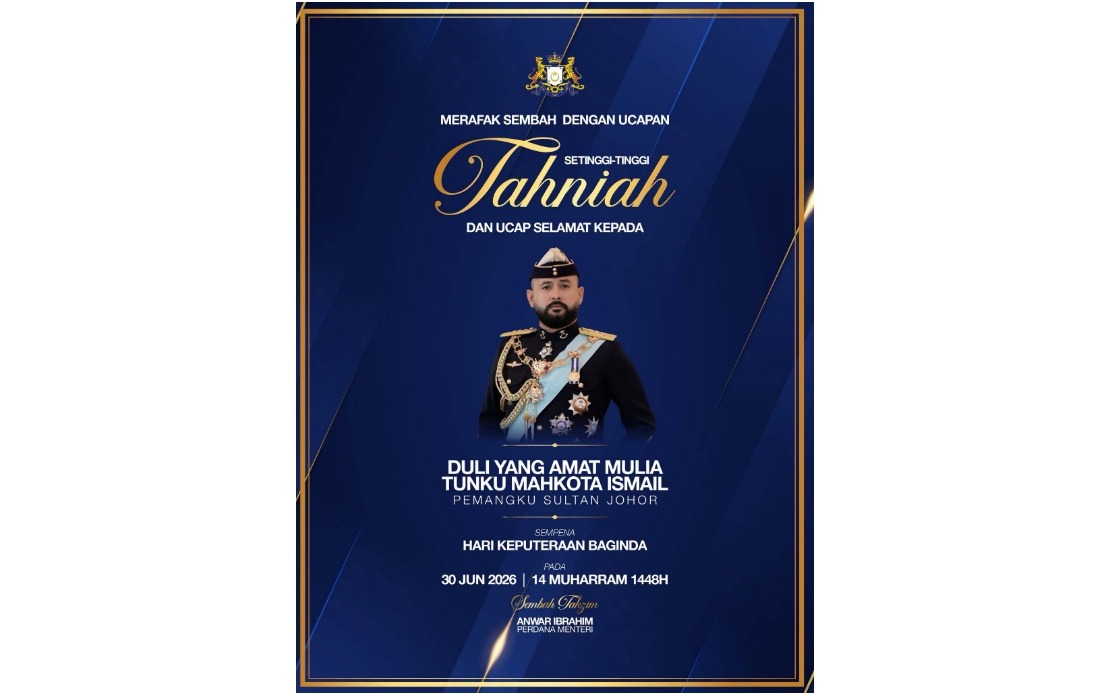
Prime Minister Datuk Seri Anwar Ibrahim and Deputy Prime Minister Datuk Seri Dr Ahmad Zahid Hamidi marked the birthday of Tunku Mahkota Ismail, the Regent of Johor, with warm congratulatory messages through social media on June 30, underscoring the ceremonial importance placed by the nation's top leadership on acknowledging senior members of the Malaysian royal hierarchy.
Anwar's acknowledgment, posted on his official Facebook page, conveyed more than simple felicitations. The Prime Minister appealed for divine blessing upon the Johor royal, requesting that Allah grant Tunku Mahkota Ismail sustained vitality, personal wellness, and an abundance of grace as he continues his duties. Such public expressions of goodwill from Malaysia's chief executive carry symbolic weight, reflecting the cordial relationship between the federal administration and Johor's seat of power.
The Deputy Prime Minister followed suit with his own tribute to the royal dignitary. Zahid's message, similarly shared on Facebook, articulated a comprehensive prayer encompassing multiple dimensions of the Regent's life and responsibilities. Beyond wishing for sound health and divine mercy, Zahid specifically invoked blessings for the wisdom required to govern Johor Darul Ta'zim and to lead the Johor people effectively. This framing reveals the nuanced understanding within Malaysia's federal leadership of the Regent's dual role as both ceremonial head of state and symbolic champion of Johor's interests.
Tunku Mahkota Ismail holds one of the most significant positions within Malaysia's constitutional monarchy framework. As Regent, he serves as the de facto head of state for Johor, managing both the ceremonial functions of royalty and the strategic stewardship of state affairs. Given Johor's status as one of Malaysia's most economically vibrant and geographically strategic states, the role carries considerable influence within the broader Malaysian political landscape. The birthday greetings from Anwar and Zahid thus represent more than mere courtesy; they signal the federal government's recognition of Johor's importance and its commitment to maintaining harmonious relations with the state's leadership.
Malaysia's system of constitutional monarchy operates through a unique arrangement whereby nine state sultans rotate the position of Yang di-Pertuan Agong, the national sovereign. Between rotation periods, the rulers maintain significant authority within their respective states. Johor, in particular, has historically wielded considerable clout in federal affairs, with its rulers wielding influence over appointments, policy direction, and economic development initiatives. Any strain in the relationship between Putrajaya and Johor's royal establishment could have ramifications for Malaysia's political stability and national development priorities.
The timing of these public birthday wishes also carries political significance. Malaysia's political landscape remains fluid, with ongoing adjustments to coalition arrangements and governance priorities following previous electoral cycles. Anwar's administration has worked to consolidate support across various state governments and political actors. By prominently acknowledging the Johor Regent's birthday, both Anwar and Zahid demonstrate attentiveness to symbolic relationship-building with influential state actors who control substantial economic resources and command deep loyalty among their constituencies.
From a regional perspective, such demonstrations of respect towards state-level monarchs reflect Malaysia's continued commitment to preserving its constitutional order and the ceremonial role of royalty within the federal system. For observers in Southeast Asia watching Malaysia's political evolution, these gestures underscore the persistence of traditional hierarchical relationships even as the nation navigates contemporary governance challenges. The balance between democratic processes and respect for constitutional monarchy remains a defining characteristic of Malaysian politics.
The Johor Regent's position extends beyond ceremonial functions into substantive policy influence. Johor's development agenda, from port operations to manufacturing zones, intersects with federal economic strategy. The Regent's blessing and cooperation can facilitate or complicate implementation of national projects that depend on state-level coordination. Therefore, the Prime Minister and Deputy Prime Minister's public courtesies serve practical political purposes alongside their ceremonial value.
These birthday greetings also reflect the broader Malaysian practice of high-level officials using social media platforms to communicate directly with the public and key stakeholders. By conducting these tributes through Facebook, Anwar and Zahid ensured visibility beyond immediate circles, signalling to the broader Malaysian populace and international observers the significance placed on the Johor Regent and the stable functioning of Malaysia's federal-state relationships. Such transparency in official relationships helps maintain public confidence in the nation's institutions.

