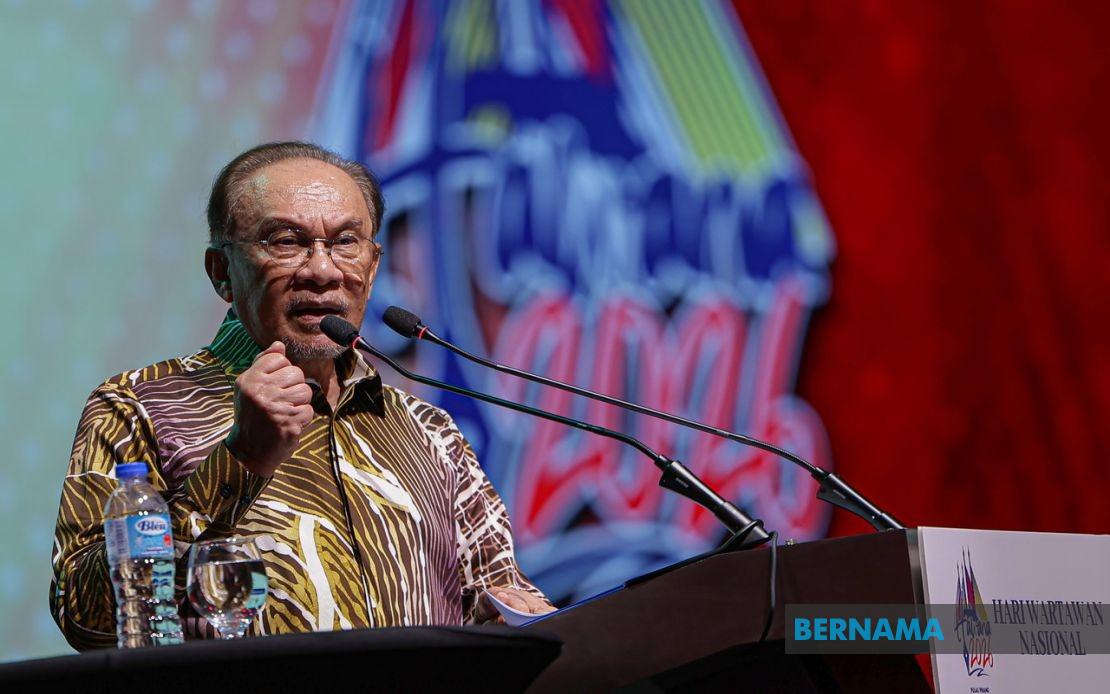
Prime Minister Datuk Seri Anwar Ibrahim has thrown his weight behind the appointment of Tan Sri Nallini Pathmanathan as chairman of the Malaysian Media Council, viewing the move as instrumental in restoring public confidence in the self-regulatory body. Speaking at the National Journalists' Day celebration in Butterworth on June 20, Anwar underscored how Nallini's distinguished background in the judiciary would serve to elevate the council's standing within Malaysian society. The appointment represents a deliberate effort to address concerns about institutional credibility at a time when media regulation remains a sensitive issue in the Southeast Asian region.
Anwar's remarks reflected a broader strategic consideration underlying the selection process. The Prime Minister emphasised that Nallini's nomination followed thorough deliberation, with particular attention paid to her sterling judicial record, professional accomplishments, and unwavering integrity throughout her career on the bench. These attributes, according to Anwar, position her uniquely to inject fresh legitimacy into an organisation tasked with maintaining standards across Malaysia's diverse media landscape. The implicit acknowledgment that such institutional credibility requires external validation from respected figures signals the government's recognition that media councils cannot function effectively without public acceptance of their leadership.
The Malaysian Media Council itself operates within a relatively new legal framework, having been established under the Malaysian Media Council Act 2025. As a self-regulatory body, the MMC carries significant responsibility for multiple interconnected functions that shape the media environment. These responsibilities extend across strengthening journalistic standards, processing and managing public grievances concerning media conduct, fostering adherence to ethical guidelines, and—critically—safeguarding media freedom as a foundational democratic institution. Given the stakes involved in these functions, the appointment of a figure with Nallini's credentials addresses potential concerns about whether the council possesses sufficient independence and moral authority to execute its mandate effectively.
Nallini's ascension to the chairmanship received formal endorsement from all MMC board members during their May 26 meeting, indicating consensus among the council's internal leadership regarding the direction of the organisation. This unanimous backing strengthens her position and suggests that board members recognised the strategic value of appointing a figure with her background. The unanimity also implies that the appointment transcends partisan considerations and reflects a shared institutional commitment to elevating the council's operational credibility. For Malaysian observers of media governance, such consensus at the board level provides some assurance that the selection reflects substantive merit rather than narrow political calculation.
The event where Anwar made his remarks drew attendance from several key figures in Malaysia's governmental and media infrastructure. Communications Minister Datuk Fahmi Fadzil and Penang Chief Minister Chow Kon Yeow's presence highlighted the cross-party significance attributed to media governance issues. The gathering also featured senior officials from the Communications Ministry, as well as leadership from Bernama, Malaysia's national news agency. This congregating of institutional actors underscored how media regulation engages multiple levels of government and professional bodies, each with distinct but overlapping interests in ensuring a functional media ecosystem.
The timing of Nallini's appointment arrives amid broader global conversations about media self-regulation and the balance between industry autonomy and public accountability. In Southeast Asia, where media independence remains contested in several jurisdictions, Malaysia's investment in institutional self-regulatory mechanisms potentially positions the country as attempting to navigate a middle path between unrestricted commercial media operation and state-controlled information dissemination. The credibility of this approach rests substantially on the perceived independence and integrity of persons holding leadership positions within the regulatory framework. Nallini's judicial background provides certain assurances regarding her familiarity with legal reasoning and institutional constraints, though questions about the council's actual enforcement mechanisms and independence from political influence persist regardless of individual leadership appointments.
For Malaysian journalists and media organisations, the council's effectiveness will ultimately depend less on the symbolic value of appointing respected figures and more on the substance of policies implemented and complaints adjudicated. The self-regulatory model assumes that industry actors possess sufficient economic incentives and professional commitment to maintain standards without external coercion. This assumption faces periodic testing when high-profile cases emerge involving allegations of bias, inaccuracy, or ethical violations. Nallini's appointment signals intention to establish impartial adjudication processes, yet the actual functioning of the council will reveal whether institutional design and leadership selection prove adequate to address the nuanced challenges inherent in monitoring modern media operations across digital and traditional platforms.
The establishment of the MMC under 2025 legislation also reflects Malaysia's ongoing evolution in media policy frameworks. Rather than pursuing heavy-handed regulatory approaches, the framework delegates significant responsibility to the media industry itself, operating through a body comprising representatives with stakes in media freedom and operational flexibility. This approach carries both advantages and limitations. On one hand, industry-led regulation potentially avoids the heavy hand of state censorship and preserves editorial independence. Conversely, self-regulation sometimes struggles when commercial pressures conflict with ethical standards, or when the industry lacks sufficient incentive to enforce discipline against powerful media proprietors. The appointment of an independent chair with strong judicial credentials represents an attempt to mitigate these structural vulnerabilities by introducing a figure unlikely to prioritise sectional media interests over broader public benefit.
Anwar's explicit endorsement of Nallini carries significance beyond mere ceremonial support. As Prime Minister, his backing reinforces the government's official commitment to accepting the council's authority and respecting its adjudications, at least in principle. This matters because media self-regulation functions most effectively when government actors refrain from attempting to circumvent or undermine council decisions through alternative channels. Conversely, when governments treat regulatory bodies as inconvenient obstacles, the legitimacy of self-regulation collapses and tends to devolve into either state control or unregulated market chaos. Anwar's public endorsement therefore carries implicit commitment regarding the government's treatment of the council's future determinations.
Looking forward, Nallini's tenure will face multiple pressures and expectations from diverse stakeholders. Media organisations will watch closely to ensure the council does not impose onerous compliance burdens that restrict editorial latitude. Civil society actors and the public will assess whether the council effectively processes complaints and holds powerful media interests accountable. Policymakers will monitor whether the council successfully maintains public confidence in media institutions—a prerequisite for media freedom's long-term sustainability in democratic societies. This convergence of interests means that the council's performance, more than individual appointments, will ultimately determine whether Malaysia's self-regulatory approach succeeds in fostering both media responsibility and media freedom simultaneously.
%22%2F%3E%3C%2Fpattern%3E%3C%2Fdefs%3E%3Crect%20width%3D%22100%25%22%20height%3D%22100%25%22%20fill%3D%22url(%23ph366w1g)%22%2F%3E%3Crect%20width%3D%22100%25%22%20height%3D%22100%25%22%20fill%3D%22url(%23ph366w1p)%22%2F%3E%3Ctext%20x%3D%2250%25%22%20y%3D%2250%25%22%20text-anchor%3D%22middle%22%20dominant-baseline%3D%22central%22%20fill%3D%22rgba(255%2C255%2C255%2C0.95)%22%20font-family%3D%22Georgia%2C%20'Times%20New%20Roman'%2C%20serif%22%20font-weight%3D%22700%22%20font-size%3D%22320%22%20letter-spacing%3D%22-0.02em%22%3ETV3%3C%2Ftext%3E%3C%2Fsvg%3E)
%22%2F%3E%3C%2Fpattern%3E%3C%2Fdefs%3E%3Crect%20width%3D%22100%25%22%20height%3D%22100%25%22%20fill%3D%22url(%23ph50o6fg)%22%2F%3E%3Crect%20width%3D%22100%25%22%20height%3D%22100%25%22%20fill%3D%22url(%23ph50o6fp)%22%2F%3E%3Ctext%20x%3D%2250%25%22%20y%3D%2250%25%22%20text-anchor%3D%22middle%22%20dominant-baseline%3D%22central%22%20fill%3D%22rgba(255%2C255%2C255%2C0.95)%22%20font-family%3D%22Georgia%2C%20'Times%20New%20Roman'%2C%20serif%22%20font-weight%3D%22700%22%20font-size%3D%22170%22%20letter-spacing%3D%22-0.02em%22%3EMalaysia%3C%2Ftext%3E%3C%2Fsvg%3E)
%22%2F%3E%3C%2Fpattern%3E%3C%2Fdefs%3E%3Crect%20width%3D%22100%25%22%20height%3D%22100%25%22%20fill%3D%22url(%23ph5vazwg)%22%2F%3E%3Crect%20width%3D%22100%25%22%20height%3D%22100%25%22%20fill%3D%22url(%23ph5vazwp)%22%2F%3E%3Ctext%20x%3D%2250%25%22%20y%3D%2250%25%22%20text-anchor%3D%22middle%22%20dominant-baseline%3D%22central%22%20fill%3D%22rgba(255%2C255%2C255%2C0.95)%22%20font-family%3D%22Georgia%2C%20'Times%20New%20Roman'%2C%20serif%22%20font-weight%3D%22700%22%20font-size%3D%22170%22%20letter-spacing%3D%22-0.02em%22%3EMalaysia%3C%2Ftext%3E%3C%2Fsvg%3E)