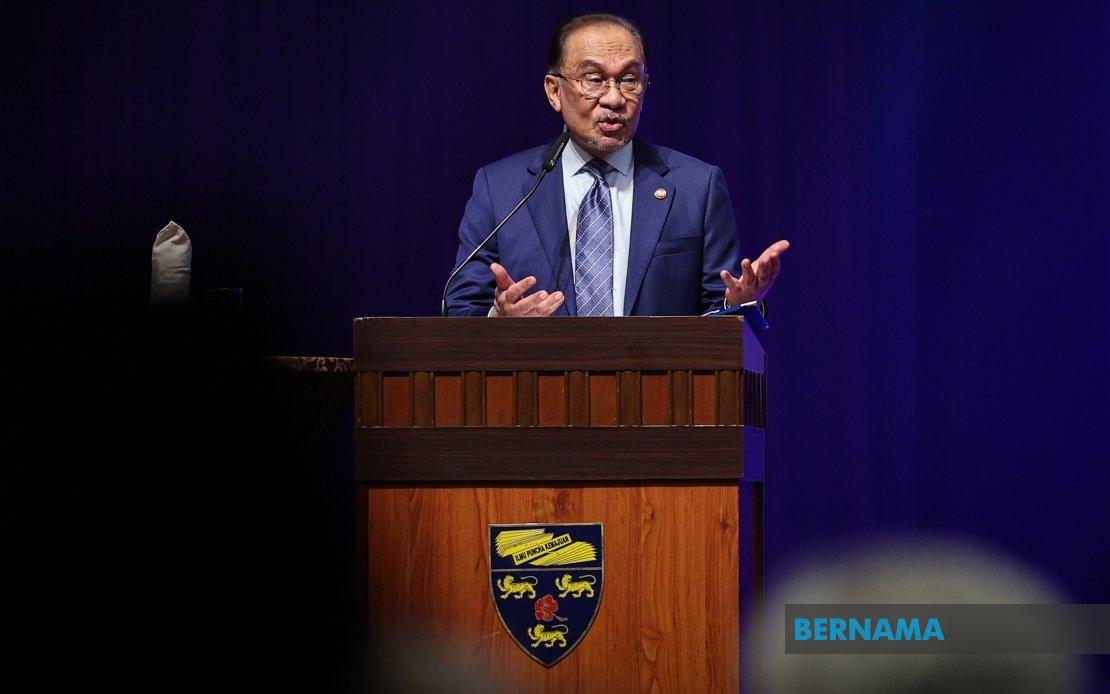
Prime Minister Datuk Seri Anwar Ibrahim has extended financial assistance to a gravedigger in Kuala Terengganu who is battling a severe case of mouth cancer. The intervention, facilitated through the Prime Minister's Department, underscores ongoing government attention to citizens facing medical hardship in East Coast Malaysia. Rosli Abdullah, aged 52, received RM2,000 in cash support at the Flat Batas Baru surau on July 9, marking a direct response to his deteriorating health condition and mounting treatment expenses.
The funds were presented by Azhar Abd Hamid, deputy director of the Terengganu Federal Development Department's Implementation Coordination Unit, who explained that the contribution aimed to alleviate Rosli's immediate financial burden while he prepares for urgent surgical intervention. Beyond the direct monetary grant, officials identified a systemic gap in the existing support infrastructure: Rosli had not been registered with e-Kasih, the government's welfare assistance programme despite meeting eligibility requirements. Azhar committed to immediate enrolment, indicating that further assistance would follow through established welfare channels once his registration was processed.
Rosli's medical trajectory reflects the cumulative toll of untreated or inadequately managed malignancy. For three years, he has endured oral cancer; however, the condition has accelerated sharply in recent months. The surau's deputy chairman, Mohd Radzali Mohamad, painted a stark picture of Rosli's current state: unable to speak for an entire month due to severe swelling affecting his mouth and right cheek, and unable to consume solid food for two weeks, subsisting instead on liquids delivered through a tube. This nutritional deprivation during active cancer progression compounds the physiological stress of the underlying disease and leaves him profoundly weakened heading into surgery.
The medical referral pathway illustrates Malaysia's healthcare coordination mechanisms across state lines. Sultanah Nur Zahirah Hospital in Terengganu, having exhausted its capacity or expertise for his case, referred Rosli to Universiti Sains Malaysia Hospital in Kubang Kerian, Kelantan. This interstate referral suggests the complexity of his condition and the need for specialised oncological or surgical intervention available at teaching hospitals. The transfer also highlights potential disparities in healthcare resource distribution, whereby advanced tertiary facilities remain concentrated in select locations, necessitating patient travel and coordination.
Rosli's employment history reveals both his previous stability and his current vulnerability. Beyond his primary work as a gravedigger—a role intrinsically tied to his surau community—he had supplemented income through janitorial duties, maintaining the prayer house's cleanliness. His deteriorating health has rendered both occupations impossible, eliminating even modest income streams and pushing him into complete dependence. At 52, he sits at a life stage where employment prospects are typically constrained; his medical condition has erased them entirely.
The surau community has emerged as Rosli's de facto social safety net. He has resided at Flat Batas Baru surau for more than three decades, effectively embedding himself within its institutional structure and leadership. This long tenure has fostered relationships that have mobilised charitable response: the mosque management initiated a fundraising effort specifically for his medical and surgical costs. Yet this community-driven initiative, though meaningful, has proven insufficient. The gap between collected funds and actual expenses underscores the financial ceiling of grassroots charitable capacity, particularly in addressing major medical crises.
Rosli's solitary status—unmarried and without apparent family—intensifies his precarity. He lacks the kinship networks that typically anchor social support during health crises in Malaysian society. His reliance on institutional charity administered by the surau management reflects an absence of familial obligation structures, a condition that administrative systems like e-Kasih are specifically designed to address. The registration initiative thus represents an attempt to create formal welfare recognition for individuals who fall outside traditional support systems.
The Prime Minister's intervention carries symbolic significance within Malaysia's political context. Direct assistance to individual citizens experiencing hardship has become an expected gesture of executive accessibility, particularly in states outside the federal capital. The donation, while modest in absolute terms, functions as both material relief and public acknowledgement of an individual's dignity and suffering. Its timing and execution through formal government channels lend weight beyond the nominal amount, signalling institutional recognition of a problem that might otherwise remain confined to local knowledge.
This case also illuminates broader healthcare financing vulnerabilities affecting middle-aged and elderly Malaysians. Rosli appears to have navigated the public healthcare system without explicit mention of catastrophic cost-sharing mechanisms or advanced cancer care subsidies. His need for community and governmental fundraising alongside repeated surgeries suggests gaps in the protective architecture surrounding major illness episodes, even within Malaysia's relatively developed health infrastructure. The situation invites examination of whether existing safety nets adequately address prolonged malignancies requiring multiple interventions and extended recovery periods.
The surau's philanthropic fundraising initiative, combined with government assistance and e-Kasih enrolment, represents a three-tiered response structure: immediate community support, direct executive intervention, and integration into formal welfare systems. Whether this composite approach will sufficiently cover the full trajectory of Rosli's treatment—surgery, hospitalisation, recovery, potential further interventions—remains uncertain. His case serves as a practical illustration of how individual hardship intersects with institutional capacity and the limits of charitable response in addressing catastrophic medical events.

