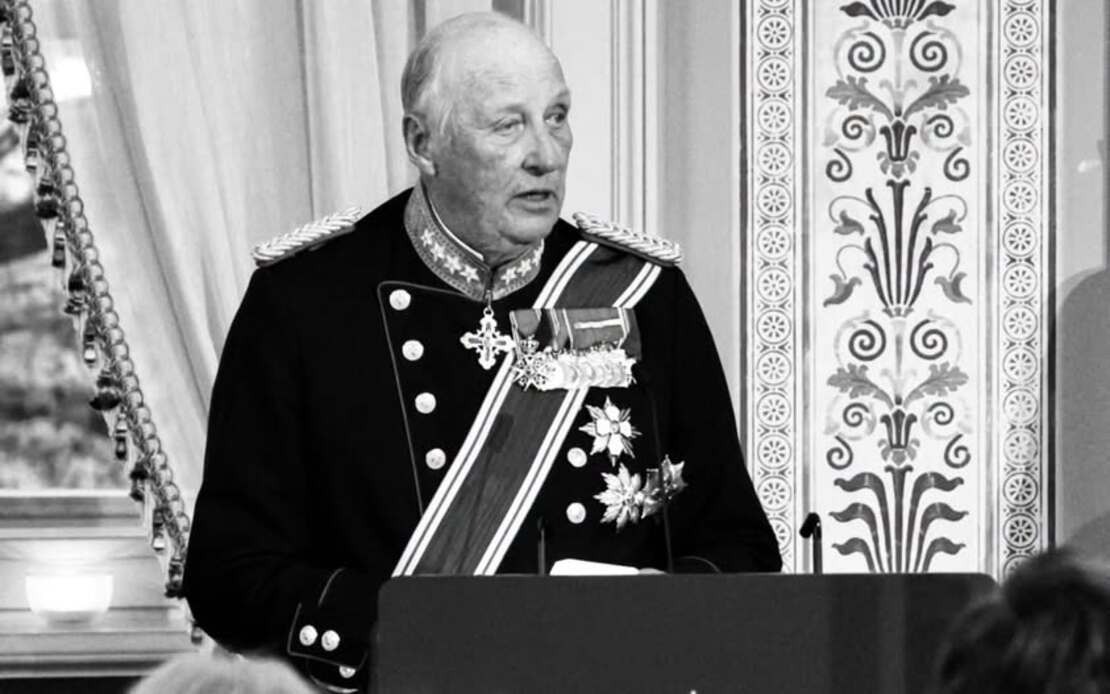
Prime Minister Datuk Seri Anwar Ibrahim has conveyed Malaysia's formal condolences to the people and government of Norway following the death of King Harald V, who passed away on Friday at the age of 89. The Malaysian leader released his statement through Facebook, offering the nation's sympathy during this period of royal mourning in the Scandinavian kingdom.
King Harald V expired at Oslo's National Hospital after spending more than a week in medical care. The monarch had been hospitalised since August 17 and was undergoing treatment for hemolytic anemia, receiving cortisone therapy in his final days. His death marks the conclusion of a reign that spanned decades and saw Norway navigate significant changes in its role within contemporary Europe.
In his carefully worded tribute, Anwar highlighted the Norwegian king's distinctive contribution to how his nation understood itself and its place in the modern world. Rather than focusing solely on ceremonial duties or constitutional roles, the Prime Minister drew attention to Harald's philosophy regarding national identity and social cohesion—themes that resonate across diverse societies, including Malaysia's own multicultural framework.
The PM emphasized that King Harald would be remembered for his gracious interpretation of what Norwegian identity meant in practice. This was not merely an abstract concept but a lived reality that the late king actively promoted through his words and actions. His recognition of Norway's increasingly diverse population demonstrated a forward-thinking approach to nation-building that transcended traditional ethnic or religious boundaries.
Anwar specifically recalled Harald's public statements acknowledging that Norwegian nationals included individuals whose family origins traced to Afghanistan, Pakistan, Poland, and numerous other countries. These remarks, which the PM characterised as particularly significant, reflected the monarch's understanding that modern nationhood could accommodate multiple heritage backgrounds while maintaining a coherent national identity. Such inclusive rhetoric from a constitutional head of state carried considerable weight in shaping public discourse and national attitudes.
The Prime Minister extracted a broader lesson from King Harald's approach to governance and national leadership. He suggested that the Norwegian monarch grasped a fundamental principle: that nations accumulate strength not through homogeneity or exclusionary practices, but through the respect and dignity they extend to all inhabitants, regardless of their ethnic or cultural origins. This observation carries particular relevance for Malaysia, a nation similarly composed of citizens with diverse ancestral connections and religious affiliations.
Beyond questions of social inclusion, Anwar highlighted the late king's respect for the sanctity of oaths and commitments. In the Malaysian Prime Minister's assessment, Harald V understood the gravity of the obligations undertaken at his coronation and throughout his reign. This dimension of the tribute speaks to broader questions of constitutional duty and personal integrity that extend across different political systems and cultural traditions.
Malaysia's formal expression of mourning reflects the diplomatic protocols typically observed among Commonwealth and non-Commonwealth nations when senior members of foreign royal families pass away. The timing and tone of Anwar's statement demonstrate respect for Norway's constitutional arrangements while also positioning Malaysia within a broader network of nations acknowledging the significance of King Harald's life and reign.
The Norwegian monarch's death concludes a chapter in Scandinavian history and raises questions about succession, institutional continuity, and the evolving role of constitutional monarchy in contemporary Europe. King Harald's long tenure witnessed dramatic transformations in Norway's economy, society, and international standing, particularly following the discovery and development of North Sea oil resources that fundamentally altered the nation's prosperity and global influence.
From a Southeast Asian perspective, King Harald's passing and the Malaysian government's response underscore how small nations and monarchical systems worldwide continue to engage with questions of national identity, social integration, and the symbolic functions of hereditary leadership. While Norway and Malaysia operate within distinctly different political contexts—one a constitutional monarchy in Scandinavia, the other a constitutional monarchy in Southeast Asia—both grapple with similar tensions between tradition and modernity, between particular identities and inclusive nationhood.
The late king's legacy extends beyond Norway's borders, as his approach to reconciling tradition with contemporary social realities offered lessons applicable across various political systems. His willingness to articulate explicitly that immigrants and their descendants formed integral parts of Norwegian society represented a significant statement from a figure of constitutional authority, helping to shape how nations approached questions of belonging and citizenship during periods of demographic change.
Malaysia's expression of condolences through Prime Minister Anwar reflects standard diplomatic courtesy while also suggesting genuine appreciation for the values King Harald represented. The Malaysian government's acknowledgment of the Norwegian monarch's commitment to inclusive governance and constitutional obligation provides a moment for reflection on how diverse societies can maintain cohesion while respecting the multiple identities of their citizens—an ongoing challenge that transcends geography and cultural tradition.

