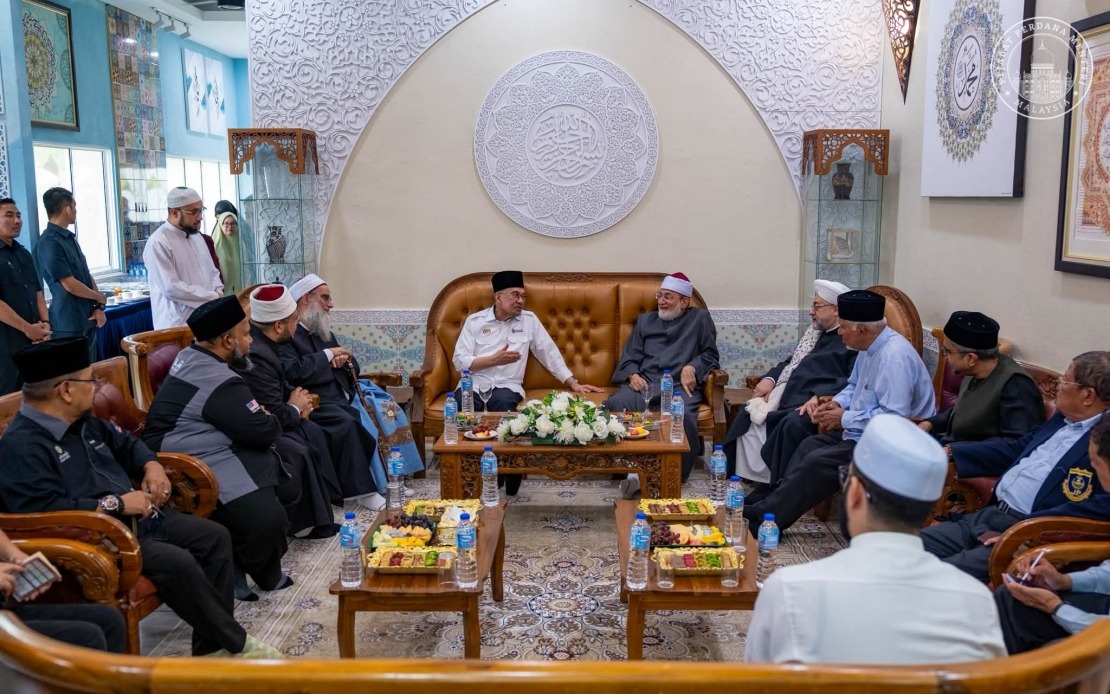
Prime Minister Datuk Seri Anwar Ibrahim has made time in his schedule to meet with three eminent Islamic scholars currently visiting Malaysia, underscoring the government's continued emphasis on strengthening religious knowledge and spiritual guidance within the nation. The visit reflects a broader pattern of engagement with international religious authorities that has characterised Anwar's leadership since assuming office.
The three scholars represent different but complementary dimensions of Islamic scholarship and practice. Al-Fadhil Al-Allamah Al-Muhaddith Syeikh Dr Mustafa al-Nadwi Al-Hasani brings expertise in hadith studies, one of the foundational disciplines in Islamic learning that examines the authenticated sayings and practices of Prophet Muhammad. His work carries significant weight among Sunni scholars globally. The second visitor, Al-Fadhil Al-Allamah Al-Muqri' Syeikh Dr Ahmad Isa Al-Ma'sarawy, is recognised internationally for his mastery in Quranic recitation and tajweed, the science of proper pronunciation and rhythmic delivery of the Quran. The third, Al-Fadhil Al-Syeikh Maulana Al-Sayyid Afeefuddin Al-Jailani, holds custodianship of the waqf, mosque and maqam associated with Syeikh Abdul Qadir Al-Jailani, a celebrated Islamic figure whose spiritual legacy remains influential across Muslim communities.
Through a Facebook statement, Anwar described the encounter as an opportunity to inquire about the scholars' wellbeing while seeking their counsel and spiritual intercession. The Prime Minister also conveyed gratitude for their presence in Malaysia and their commitment to sharing Islamic knowledge and wisdom with Malaysian audiences. This diplomatic approach to religious engagement demonstrates the administration's view of international Islamic scholarship as a resource for elevating spiritual and intellectual standards domestically.
Anwar emphasised that the visit represents more than a ceremonial gesture. In his remarks, he framed the scholars' presence within a larger vision of nation-building that integrates religious knowledge with social virtues. The stated objective—to foster greater understanding of Islamic teachings while promoting societal harmony and knowledge—suggests that the government sees religious education and guidance as instrumental to its broader development agenda.
For Malaysia, hosting such distinguished Islamic figures carries both symbolic and practical significance. The country positions itself as a centre for Islamic learning and scholarship within Southeast Asia, competing with other regional hubs. By facilitating visits from internationally recognised scholars, the government reinforces Malaysia's credentials as a respectable venue for serious Islamic discourse, potentially attracting more scholars and students seeking authentic religious instruction.
The meeting also reflects Anwar's personal commitment to Islamic scholarship, a dimension of his leadership that distinguishes his premiership. Unlike some of his predecessors, who approached religious matters primarily through policy implementation, Anwar demonstrates active personal engagement with scholarly networks. This hands-on approach appeals to constituencies that value direct connection between political leadership and spiritual authority.
The emphasis on seeking prayers and counsel from these scholars carries particular resonance in Islamic governance traditions. In Muslim-majority societies, the practice of leaders consulting with respected religious authorities is viewed as consistent with Islamic principles of consultation and deference to knowledge. By publicly documenting such consultations, Anwar signals that his decision-making incorporates spiritual and ethical considerations alongside pragmatic governance.
The reference to Nasyrul Quran as the venue for these meetings indicates that the engagement was facilitated through established Islamic educational infrastructure in Malaysia. This suggests coordination with domestic religious institutions to ensure that visiting scholars can connect meaningfully with Malaysian audiences beyond the meeting with the Prime Minister, likely including public lectures or educational sessions.
The scholars' visit occurs within a context where Malaysia continues to navigate questions about Islamic identity, governance, and pluralism. International Islamic scholars can serve as voices of moderation and intellectual rigour, potentially influencing domestic discourse on religious matters. Their presence and endorsement of Malaysia's efforts to promote Islamic knowledge carry weight among communities that respect traditional Islamic learning.
For Southeast Asian observers, the visit underscores how Malaysia leverages its Muslim-majority status and institutional capacity to maintain influence within broader Islamic networks. These engagements create soft power advantages, positioning the country as a gateway between the Arab Islamic heartland and Southeast Asian Muslim communities, a role that has strategic implications for regional diplomacy and intellectual exchange.
The timing of such visits also reflects Malaysia's calendar of religious observances and educational initiatives. Bringing prominent scholars during specific periods allows for maximum impact on religious programming and public engagement, ensuring that their knowledge benefits the widest possible audience within the country.
Moving forward, these types of scholarly exchanges are likely to continue under Anwar's administration as part of a deliberate strategy to elevate Malaysia's standing in international Islamic circles while enriching the country's own religious and intellectual environment. The visibility of such meetings sends clear messages both domestically and internationally about the government's commitment to knowledge-based approaches to Islamic governance and community development.

