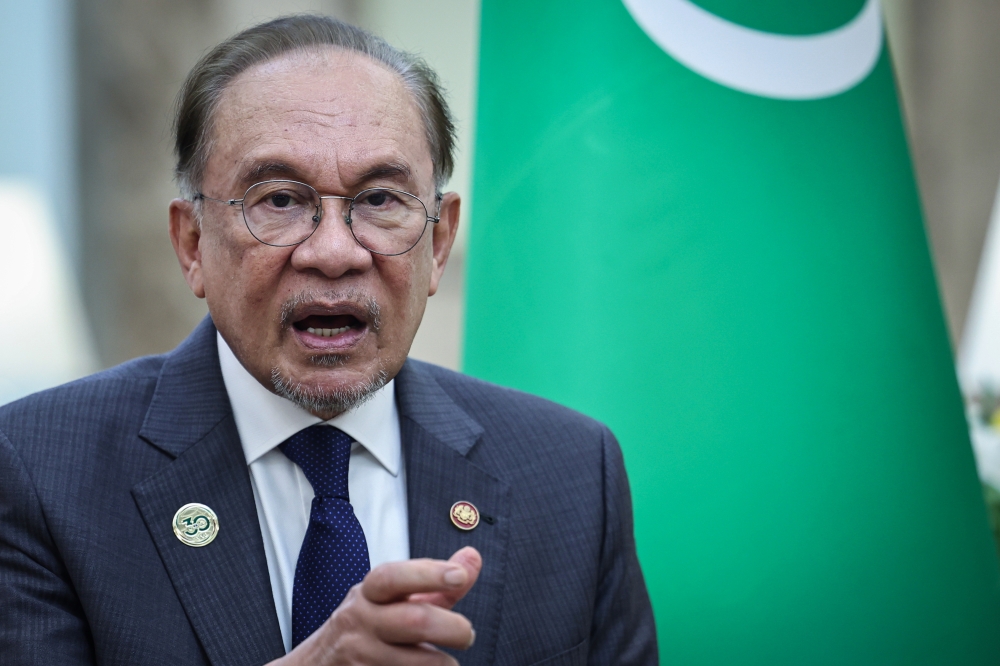
Prime Minister Datuk Seri Anwar Ibrahim has expressed his profound grief at the passing of John L. Esposito, the internationally acclaimed scholar whose decades-long career centred on bridging understanding between Islam and Western societies. The Malaysian leader's tribute underscores the significant intellectual influence Esposito wielded across Muslim-majority nations and his contributions to interfaith dialogue during a period of considerable geopolitical tension.
Esposito, who held a distinguished academic position at Georgetown University in Washington D.C., became one of the most prominent Western voices interpreting Islamic civilisation, theology, and contemporary Muslim-majority societies for American and European audiences. His extensive body of work, spanning numerous books and scholarly articles, fundamentally shaped how Western policymakers and intellectuals approached questions of Islam and Muslim governance in an era marked by profound misunderstandings and polarisation.
Anwar's characterisation of Esposito as a "true friend to the Muslim world" reflects the scholar's consistent efforts to counter stereotypes and present nuanced analyses of Islamic history and modern Islamic movements. Rather than reducing complex theological and political phenomena to simplistic narratives, Esposito demonstrated intellectual rigour in examining the diversity of Islamic thought and practice across different regions and traditions. This scholarly approach resonated particularly with Muslim leaders and intellectuals who recognised the value of having credible Western voices articulating their perspectives with accuracy and respect.
The timing of Esposito's death carries particular significance for Malaysia and Southeast Asia, where Islam intersects with plural, multiethnic societies navigating intricate questions of religious identity, governance, and communal coexistence. Esposito's research occasionally touched upon Malaysian and Southeast Asian contexts, contributing to broader scholarly understanding of how Islamic principles were negotiated and implemented within democratic and constitutional frameworks. His work provided valuable intellectual scaffolding for countries attempting to balance religious values with secular governance structures.
Georgetown University's Centre for Muslim-Christian Understanding, which Esposito founded and directed, became an influential institutional hub for research, dialogue, and policy analysis. The centre's initiatives frequently brought together scholars, diplomats, and civil society figures from Muslim-majority nations with American counterparts, creating rare spaces for substantive conversation during periods when official relations remained strained. This institutional legacy extends beyond academic circles, having influenced how American foreign policy approached engagement with Muslim societies.
For Malaysian policymakers and intellectuals, Esposito represented something increasingly valuable in polarised global discourse: a Western scholar genuinely committed to understanding Islam on its own terms rather than through a lens of suspicion or civilisational conflict. His rejection of simplistic frameworks portraying inevitable clashes between Islam and modernity, or between Islam and democracy, offered intellectual ammunition for Muslim leaders promoting inclusive development models. Malaysia, as a Muslim-majority nation with significant non-Muslim minorities and democratic institutions, found in Esposito's scholarship validation for its own development trajectory.
Esposito's influence extended into diplomatic spheres as well, with his scholarship occasionally informing American approaches to Muslim-majority nations and communities. His work contributed to debates within Western foreign policy establishments about whether engagement with Islamist movements might be possible and productive, questions that remain contested and relevant. By demonstrating that scholarly inquiry could illuminate possibilities beyond confrontation, Esposito challenged prevailing assumptions among policymakers accustomed to viewing Islam primarily through security lenses.
The scholar's passing represents a generational loss for Islamic studies as an academic discipline. His intellectual contributions helped establish Islam and Muslims as worthy subjects of serious, sympathetic scholarly attention in Western universities, elevating the field's prestige and attracting subsequent generations of researchers. This institutional and intellectual foundation has proven essential for maintaining spaces where nuanced discussion of Islam remains possible amid broader social and political currents that often reward sensationalism and polarisation.
For Malaysia specifically, Anwar's public mourning of Esposito carries additional symbolic weight given the Prime Minister's own international standing as a Muslim intellectual and political leader. Anwar has frequently articulated visions of Islam compatible with modernity, pluralism, and democratic governance—frameworks that Esposito's scholarship consistently supported and elucidated. The tribute therefore reflects not merely courtesy toward a deceased colleague but acknowledgement of intellectual kinship and shared commitment to advancing Muslim-Western understanding during a critical historical moment.
The scholar's death prompts reflection on whether sufficient successors have emerged to carry forward his scholarly mission. While Islamic studies has grown substantially since Esposito's early career, concerns persist about whether contemporary scholarship maintains the same commitment to sympathetic understanding and intellectual bridge-building. Malaysian and Southeast Asian readers with interests in international relations and civilisational dialogue may find cause for concern that the passing of such figures leaves gaps in the Western intellectual landscape where genuine understanding of Islamic societies can flourish.
Esposito's legacy will likely endure through his published works, institutional contributions, and the scholars he mentored throughout his career. For Malaysia and the broader Muslim world, his scholarship remains a resource for countering reductive narratives about Islam's relationship to contemporary politics and governance. Anwar's condolences thus acknowledge not only a personal loss but the passing of a bridge-builder whose contributions to global understanding of Islam and Muslims remain profoundly relevant to Malaysia's own navigation of complex questions about religion, identity, and national development.

