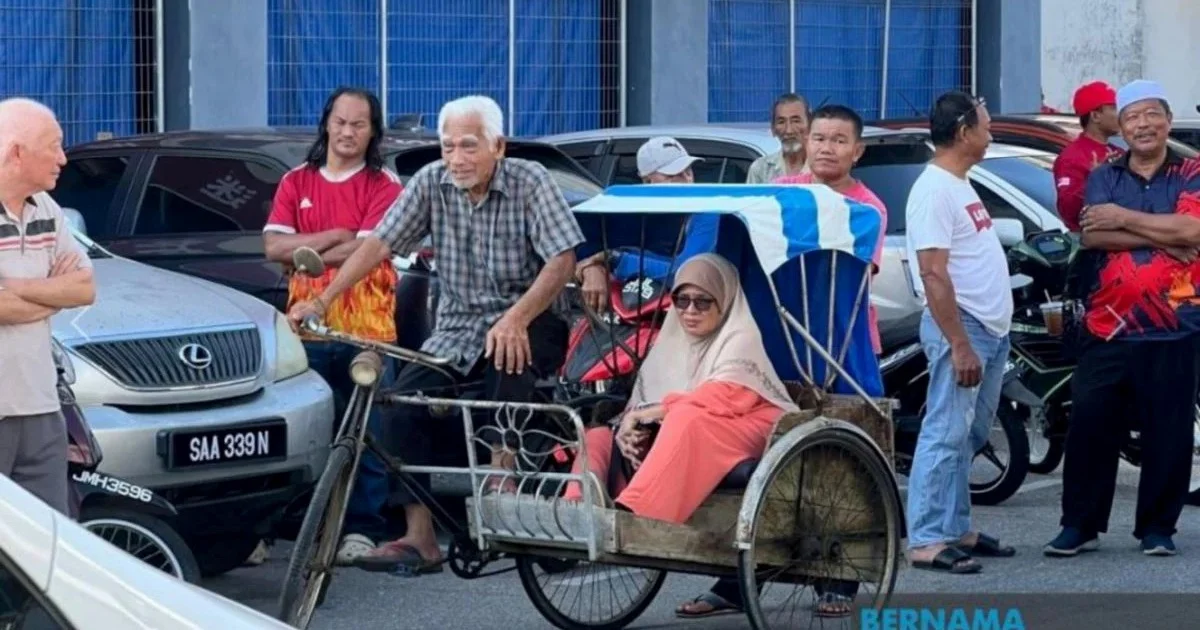
Prime Minister Datuk Seri Anwar Ibrahim has publicly commended an 86-year-old trishaw rider for his determination in pedalling nearly a kilometre to enable his wife to fulfil a cherished wish of meeting him in person. The gesture, touching in its simplicity yet profound in its reflection of personal devotion, captures the human stories that often accompany high-profile public moments in Malaysia's political landscape.
The elderly trishaw operator's act of commitment to his spouse's desire demonstrates values increasingly rare in contemporary society. Rather than dismissing the journey as too arduous at his advanced age, the man instead chose perseverance, using his trishaw—a mode of transport that represents a fading chapter in Malaysia's urban heritage—to cover the distance. This decision speaks volumes about the prioritisation of family wishes and the willingness to overcome physical limitations for those we care about most.
Anwar's response to this gesture underscores an aspect of political leadership that extends beyond policy announcements and legislative achievements. When politicians acknowledge and honour such personal stories from ordinary citizens, they reinforce the notion that governance remains fundamentally connected to the lived experiences of the people they serve. The Prime Minister's expression of gratitude suggests an understanding that these unscripted moments of human connection often resonate more deeply with the public than any formal ceremony or official communication.
The trishaw itself carries historical and cultural significance within Malaysia's urban narrative. Once a ubiquitous sight on city streets, particularly in older districts and heritage zones, these manually-pedalled vehicles represent a bygone era of transportation. The fact that an 86-year-old man still operates one speaks to both economic necessity and personal attachment to a traditional livelihood. For many Malaysians, especially those with memories of mid-20th century urban life, the image of an elderly trishaw rider evokes nostalgia while also raising contemporary questions about economic security for ageing workers in the informal economy.
The encounter also illuminates broader social themes relevant to Malaysian society. The wife's desire to see the Prime Minister reflects a level of civic interest and engagement, while the husband's willingness to facilitate this wish demonstrates how family dynamics and personal relationships often motivate actions that transcend individual preference. In a nation where family bonds and respect for elders remain culturally central, this story resonates with values deeply embedded in the Malaysian social fabric.
From a political communication perspective, Anwar's acknowledgement of this elderly couple represents an opportunity to bridge the gap between the state apparatus and grassroots citizens. When leaders take time to recognise such genuine human moments—free from the orchestration of elaborate public relations campaigns—they signal accessibility and genuine regard for constituents. This type of authentic interaction, particularly when it occurs naturally rather than through manufactured pageantry, tends to generate more meaningful political goodwill than carefully staged public relations initiatives.
The story also touches upon questions of public space and accessibility. The fact that an 86-year-old man felt motivated to pedal nearly a kilometre suggests that there were opportunities for casual public engagement with the Prime Minister. This implies a degree of openness in Malaysia's political culture that permits citizens to approach leaders in person, a feature that distinguishes it from more heavily fortified political systems where such interactions are virtually impossible for ordinary people.
For the broader Malaysian public, particularly elderly citizens, this narrative offers representation and recognition. Stories of older adults undertaking challenging tasks in pursuit of meaningful goals help counter negative stereotypes about ageing and capability. The trishaw rider's journey demonstrates that age need not be a barrier to determination or to participating in civic life. His wife's cherished wish and his commitment to realising it remind society that dignity and human connection remain valuable pursuits at any stage of life.
Anwar's gratitude also carries implications for how Malaysia's leadership engages with informal economy workers. Trishaw operators, like many others in the informal sector, often receive limited official recognition or policy attention. By publicly thanking an elderly trishaw rider, the Prime Minister implicitly acknowledges this segment of society and their continued participation in the nation's economic and social fabric, even as modernisation reshapes urban transportation landscapes.
This episode illustrates how political narratives are sometimes authored by citizens themselves rather than by official communications teams. The spontaneous nature of the elderly couple's journey and the organic quality of their interaction with the Prime Minister stand in contrast to the carefully choreographed nature of most high-level political engagements. Such unplanned moments frequently capture public imagination more effectively than any professionally managed media campaign.
Looking forward, the incident serves as a gentle reminder to political leadership across Southeast Asia about the importance of remaining connected to the human dimensions of governance. As nations become increasingly complex and technologically mediated, opportunities for genuine, unscripted interactions between citizens and their leaders become ever more precious. The 86-year-old trishaw rider and his wife have, through their simple journey, offered Malaysian society a small but meaningful example of civic participation and marital devotion that transcends the ordinary political calendar.

