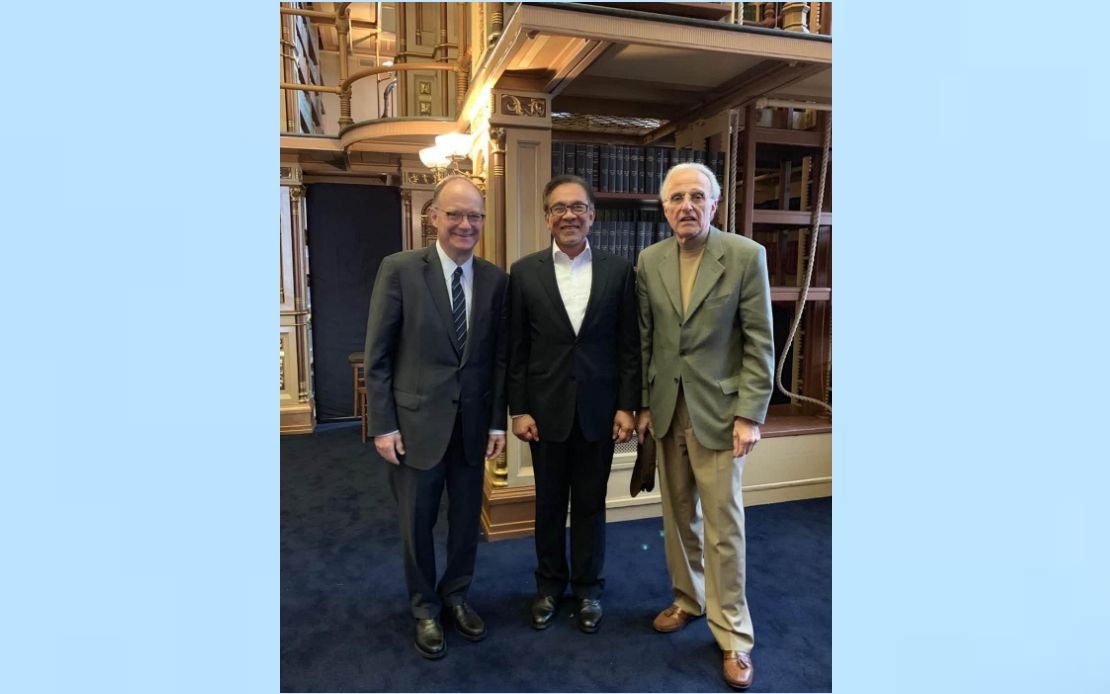
Prime Minister Datuk Seri Anwar Ibrahim has paid tribute to Professor John L. Esposito, the internationally acclaimed Islamic scholar whose death marks the loss of one of the most influential voices in advancing understanding of Islam across the Western world. In a statement shared publicly, Anwar extended condolences on behalf of Malaysia to Esposito's family, reflecting on a personal and professional relationship that had spanned more than five decades since their initial encounter in the early 1970s.
Esposito's scholarly legacy represents a pivotal moment in how Western academia approached the study of Islam during a period when such inquiry was often clouded by stereotypes and geopolitical tensions. His work fundamentally reshaped the landscape of Islamic studies in American universities and beyond, establishing frameworks that treated the Muslim world with academic rigour rather than prejudicial assumptions. The Prime Minister specifically acknowledged Esposito's role in founding the Centre for Muslim-Christian Understanding at Georgetown University, an institution that became a beacon for serious, evidence-based dialogue between faiths during an era of significant global polarisation.
The depth of Anwar's tribute underscores the personal dimension of their relationship, which extended far beyond formal academic or diplomatic exchanges. Rather than merely documenting Esposito's professional achievements, the Prime Minister characterised him as a loyal friend whose counsel and wisdom had proven invaluable across decades of shifting global circumstances. This personal testimony carries particular weight given Anwar's own trajectory through Malaysia's political system and his positioning as an Islamic leader who has consistently advocated for progressive interpretations of Islam and interfaith cooperation.
Among Esposito's most influential contributions were his foundational works that democratised Islamic scholarship for general audiences. His book "What Everyone Needs to Know About Islam" and his co-authored work "Who Speaks for Islam?" proved especially significant in the aftermath of the September 11 attacks, when global demand for credible, accessible information about Islamic civilisation surged. Rather than exploiting widespread anxiety, Esposito's writings countered misconceptions with meticulous research and contextual analysis, demonstrating that rigorous scholarship could reach mainstream readers without compromising intellectual standards.
The metaphor Anwar employed—describing Esposito as someone who "built bridges where others were content to build civilisational barriers"—captures a fundamental aspect of the scholar's mission. In an era marked by rising Islamophobia in the West and growing religious polarisation globally, Esposito's steadfast commitment to dialogue represented not merely an academic position but a moral stance. His work demonstrated that understanding Islam required engagement with Muslim voices, diverse theological traditions, and historical nuance rather than monolithic characterisations.
Esposito's co-authored volume "Makers of Contemporary Islam" stands as another testament to his broader vision of Islamic studies as a field deeply rooted in human agency and historical development. By examining figures who shaped modern Islamic thought and practice, the work emphasised that Islam, like all major faiths, encompasses diverse interpretations and evolving expressions rather than fixed dogma. This approach aligned closely with Anwar's own intellectual framework and his political advocacy for modern, inclusive approaches to Islamic governance.
The Prime Minister's emphasis on Esposito's private character alongside his public scholarship reveals an important dimension often overshadowed in academic tributes. Anwar noted that Esposito possessed generosity in personal interaction that matched the rigour evident in his published work, suggesting a consistency of principle that extended from the written word to lived relationships. For someone in Anwar's position, maintaining such friendships across diverse cultures and religious frameworks represents both a personal commitment and a strategic investment in building networks of understanding.
Esposito's influence on Malaysian and Southeast Asian Islamic discourse, though less direct than his impact on Western academia, remains significant. His frameworks for understanding Islamic modernism, democratic governance, and religious pluralism have permeated discussions among Malaysian intellectuals, religious scholars, and policymakers grappling with similar questions about Islam's role in contemporary societies. The scholarly legitimacy Esposito provided to discussions of Islamic reform helped create intellectual space for voices within the Muslim world advocating progressive positions.
The timing of this tribute also reflects Malaysia's ongoing positioning within global conversations about Islam and the West. As the country continues navigating its identity as a Muslim-majority democracy engaged with international institutions and Western partners, the model of interfaith dialogue that Esposito championed remains relevant. His insistence that understanding Islam required serious engagement rather than defensive posturing offered a blueprint that aligned with Malaysia's diplomatic approach to building bridges across religious and cultural divides.
Anwar's final words—describing Esposito as "a true friend to the Muslim world"—encapsulate a recognition that genuine friendship across religious and cultural boundaries requires more than polite engagement. It demands sustained commitment to understanding, willingness to challenge one's own assumptions, and dedication to dialogue even when circumstances make such efforts difficult. In honouring Esposito's memory, Anwar simultaneously reaffirmed Malaysia's commitment to the model of interfaith understanding that the scholar dedicated his life to constructing, suggesting that such work remains an essential foundation for peaceful coexistence in an increasingly diverse world.

