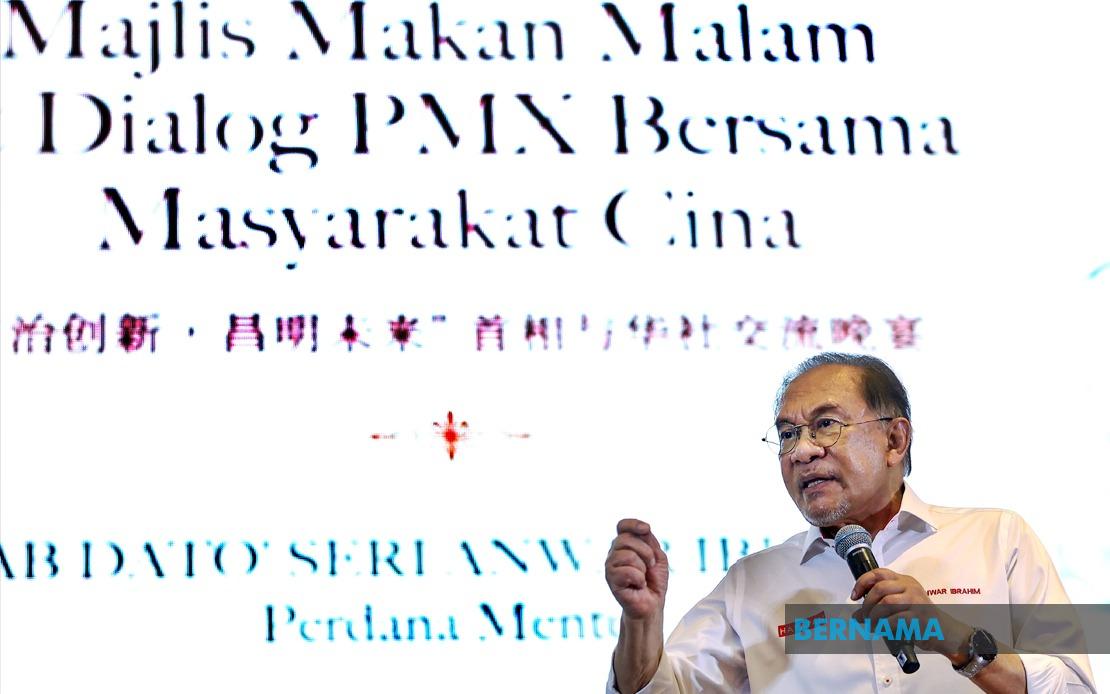
Prime Minister Datuk Seri Anwar Ibrahim used an engagement with Johor Bahru's Chinese community to underscore his determination to position Malaysia as a thriving and accomplished nation, emphasising that his leadership philosophy centres on serving citizens from all walks of life without distinction. The remarks, made at a community dinner on July 4, represent a continued articulation of his broader governance mandate since assuming office, where bridging communal divides and fostering national cohesion have featured prominently in his public messaging.
At this stage of his political career, Anwar indicated that his overriding priority involves establishing a leadership record defined by equitable treatment, institutional integrity, and unwavering dedication to the welfare of Malaysia's diverse population. This positioning reflects a deliberate strategy to consolidate support across demographic groups at a time when the nation navigates complex economic and social challenges. His emphasis on leaving a positive imprint rather than accumulating power signals a longer-term vision of how his premiership will ultimately be assessed by historians and the public alike.
The Prime Minister articulated a philosophy that elevates every resident's significance within the national framework, insisting that his executive responsibilities demand him to demonstrate tangible affection and commitment toward the people he leads. This framing moves beyond transactional governance toward an emotional and relational understanding of political leadership, where the bond between leader and citizen becomes central to legitimacy and effectiveness. In Malaysia's multiracial context, such rhetoric carries particular weight, as historical tensions and contemporary concerns about equitable resource distribution remain sensitive political territory.
Anwar's reflection on his advancing age and eventual retirement introduced an introspective dimension often absent from political speechmaking in Malaysia. By contemplating how posterity will remember him, he positioned his current actions within a narrative arc that extends beyond his tenure, inviting citizens to become co-authors of his historical legacy. This approach potentially resonates with voters concerned about long-term institutional stability and the values that successive administrations will inherit and perpetuate.
The call for collective stewardship of the nation—articulated as a shared responsibility binding all Malaysians together—echoes nationalist themes while implicitly acknowledging the challenges of fragmented political discourse. The emphasis on "looking after this nation as our own, together" suggests that national success hinges upon transcending narrow communal interests and embracing interdependence. For a government navigating coalition politics and managing expectations across diverse constituencies, this unifying rhetoric serves both practical and symbolic functions.
The presence of Parti Keadilan Rakyat vice president and Selangor Menteri Besar Datuk Seri Amirudin Shari at the event underscored the PKR's ongoing commitment to grassroots engagement and community building, particularly within significant urban populations. This demonstrates that Anwar's vision of inclusive governance extends through party structures and into state-level administration, where Selangor's visible political leadership reinforces messages of accessibility and responsiveness to citizen concerns.
Engagements with the Chinese community hold particular significance within Malaysia's political economy, given the demographic's historical importance to commerce, investment, and electoral calculations. By directly addressing this constituency and emphasizing his commitment to serving them without regard to ethnicity, Anwar signals openness to concerns that may have previously received inconsistent attention from different administrations. Such outreach also carries implications for national unity initiatives and confidence in institutional fairness among communities that sometimes perceive unequal treatment in policy implementation.
The substantive framing of leadership as a solemn trust to be executed with honesty and dedication—rather than an opportunity for personal aggrandisement—addresses public anxieties about corruption and self-interest in government that have shaped Malaysian political consciousness in recent decades. By explicitly linking his personal legacy to standards of cleanliness and fairness, Anwar positions himself within reform narratives that gained momentum during Malaysia's earlier transition toward greater accountability.
The rhetoric around loving the people and earning their reciprocal affection introduces an emotional dimension that contrasts with more transactional or technocratic approaches to governance. This appeal to mutual regard and collective welfare suggests a political philosophy that values social cohesion as foundational to economic progress and institutional stability. For Southeast Asian readers observing Malaysia's evolution, such leadership framing offers one model of how post-transition democracies navigate legitimacy and public trust.
Moving forward, the consistency with which Anwar reinforces these themes will substantially determine whether they translate into concrete policy outcomes and measurable improvements in intercommunal relations and institutional integrity. The gap between aspirational rhetoric and administrative reality remains a persistent challenge in Malaysian governance, where public expectations and lived experience sometimes diverge significantly. Citizens across racial and religious lines will assess whether this legacy-focused vision finds expression in budgetary allocations, appointment practices, and responses to communal grievances that inevitably emerge throughout any administration.

