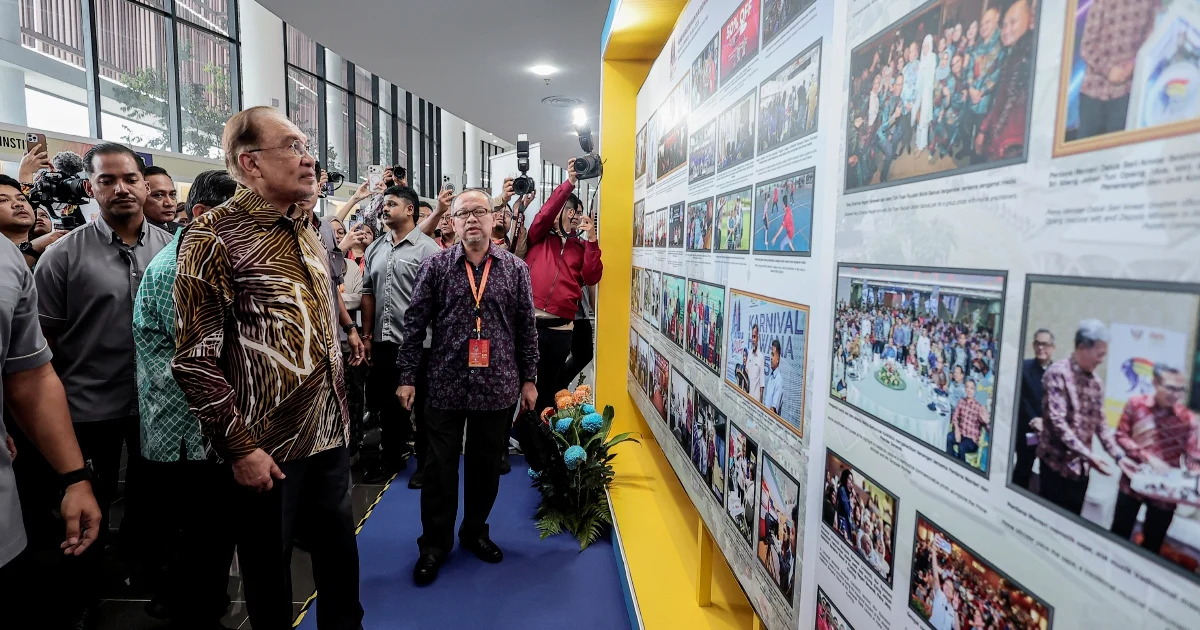
Prime Minister Datuk Seri Anwar Ibrahim has pledged RM1 million in government funding for Tabung Kasih@Hawana 2026, a welfare initiative designed to support journalists in Malaysia. Speaking at the Hawana 2026 event in Permatang Pauh, the Premier signalled the administration's determination to sustain its backing for programmes aimed at revitalising the media industry amid ongoing economic and technological shifts.
The allocation represents a tangible commitment to addressing welfare concerns within Malaysia's journalism profession, a sector that has faced mounting pressures from digitalisation, advertising revenue decline, and workforce instability over the past decade. By channelling resources into Tabung Kasih@Hawana 2026, the government is attempting to establish a safety net for practitioners while simultaneously reinforcing the notion that media development remains a policy priority at the highest levels.
Anwar's announcement arrives at a pivotal moment for Southeast Asian media landscapes. The region's news organisations are grappling with the dual challenge of maintaining editorial quality and financial sustainability as business models fundamentally shift. In Malaysia specifically, the traditional advertising base that historically sustained newsrooms has contracted, forcing publishers to experiment with subscription models, sponsored content, and alternative revenue streams. A government welfare fund, while modest in scale, provides an important buffer against the most severe employment instability.
The welfare fund's purpose extends beyond immediate financial relief. Such initiatives typically address healthcare provision, retirement planning, and emergency assistance—elements that strengthen journalist retention and morale during turbulent market conditions. For a profession increasingly characterised by freelancing and contract work rather than permanent positions, structured welfare mechanisms become particularly significant in providing baseline security.
The government's framing of media support as integral to industry transformation rather than simple subsidy reflects a sophisticated understanding of journalism's role in contemporary governance. Democratic institutions depend on functioning fourth estates capable of holding power accountable while informing public discourse. When newsrooms contract excessively or face existential threats, the entire accountability architecture weakens. By investing in journalist welfare, authorities can present themselves as committed to media health while simultaneously building goodwill within the profession.
However, observers note the tension inherent in government-funded journalist welfare schemes. While RM1 million provides genuine assistance to practitioners, critics may question whether such direct funding creates subtle incentives toward editorial accommodation or reduced scrutiny of administration policies. Maintaining editorial independence whilst accepting government support requires robust organisational governance and clear firewalls between management, editorial operations, and funders. Malaysian news organisations will need to demonstrate these safeguards transparently.
The RM1 million commitment should be contextualised within broader regional media investment patterns. Singapore, Thailand, and Indonesia have experimented with various state and private sector initiatives to stabilise journalism, though results remain mixed. Some programmes succeeded in extending career longevity for journalists; others faced criticism regarding editorial influence or inefficient resource allocation. Malaysia's approach will likely be scrutinised through similar lenses by international media freedom advocates and local journalism professionals.
Tabung Kasih@Hawana 2026 operates within a wider ecosystem of media policy considerations. Digital transformation, audience fragmentation, and competition from social media platforms fundamentally challenge traditional journalism business models across Asia. While welfare funds address immediate practitioner concerns, systemic media sustainability requires parallel investments in digital capability development, training programmes, and newsroom technology infrastructure. Policymakers must ensure that welfare spending does not substitute for comprehensive media industry modernisation strategies.
The announcement carries particular significance for Malaysian journalists currently experiencing wage stagnation and reduced job security. Entry-level reporters and mid-career practitioners have witnessed newsroom downsizing, frozen recruitment, and compression of editorial staff over recent years. A dedicated welfare fund signals governmental recognition of these pressures, potentially offsetting some of the sector's morale challenges and demonstrating that career sustainability in journalism remains viable despite current market headwinds.
Looking forward, the government's continued commitment to supporting industry transformation will require sustained funding and coordinated action across multiple policy domains. Beyond welfare provision, this encompasses press freedom protections, digital skills development, journalistic ethics training, and potentially incentive structures encouraging local news production. Anwar's pledge therefore represents merely one component of a more comprehensive media modernisation agenda that Malaysian stakeholders will monitor closely.
The RM1 million allocation underscores the government's recognition that healthy journalism serves broader national interests, extending beyond individual practitioner concerns to encompass democratic governance, public trust, and social cohesion. As Southeast Asian media industries navigate profound structural transformation, countries demonstrating concrete commitment to journalistic sustainability through tangible investment may emerge with stronger information ecosystems and more resilient fourth estates capable of fulfilling constitutionally mandated accountability functions.
%22%2F%3E%3C%2Fpattern%3E%3C%2Fdefs%3E%3Crect%20width%3D%22100%25%22%20height%3D%22100%25%22%20fill%3D%22url(%23ph366w1g)%22%2F%3E%3Crect%20width%3D%22100%25%22%20height%3D%22100%25%22%20fill%3D%22url(%23ph366w1p)%22%2F%3E%3Ctext%20x%3D%2250%25%22%20y%3D%2250%25%22%20text-anchor%3D%22middle%22%20dominant-baseline%3D%22central%22%20fill%3D%22rgba(255%2C255%2C255%2C0.95)%22%20font-family%3D%22Georgia%2C%20'Times%20New%20Roman'%2C%20serif%22%20font-weight%3D%22700%22%20font-size%3D%22320%22%20letter-spacing%3D%22-0.02em%22%3ETV3%3C%2Ftext%3E%3C%2Fsvg%3E)
%22%2F%3E%3C%2Fpattern%3E%3C%2Fdefs%3E%3Crect%20width%3D%22100%25%22%20height%3D%22100%25%22%20fill%3D%22url(%23ph50o6fg)%22%2F%3E%3Crect%20width%3D%22100%25%22%20height%3D%22100%25%22%20fill%3D%22url(%23ph50o6fp)%22%2F%3E%3Ctext%20x%3D%2250%25%22%20y%3D%2250%25%22%20text-anchor%3D%22middle%22%20dominant-baseline%3D%22central%22%20fill%3D%22rgba(255%2C255%2C255%2C0.95)%22%20font-family%3D%22Georgia%2C%20'Times%20New%20Roman'%2C%20serif%22%20font-weight%3D%22700%22%20font-size%3D%22170%22%20letter-spacing%3D%22-0.02em%22%3EMalaysia%3C%2Ftext%3E%3C%2Fsvg%3E)
%22%2F%3E%3C%2Fpattern%3E%3C%2Fdefs%3E%3Crect%20width%3D%22100%25%22%20height%3D%22100%25%22%20fill%3D%22url(%23ph5vazwg)%22%2F%3E%3Crect%20width%3D%22100%25%22%20height%3D%22100%25%22%20fill%3D%22url(%23ph5vazwp)%22%2F%3E%3Ctext%20x%3D%2250%25%22%20y%3D%2250%25%22%20text-anchor%3D%22middle%22%20dominant-baseline%3D%22central%22%20fill%3D%22rgba(255%2C255%2C255%2C0.95)%22%20font-family%3D%22Georgia%2C%20'Times%20New%20Roman'%2C%20serif%22%20font-weight%3D%22700%22%20font-size%3D%22170%22%20letter-spacing%3D%22-0.02em%22%3EMalaysia%3C%2Ftext%3E%3C%2Fsvg%3E)