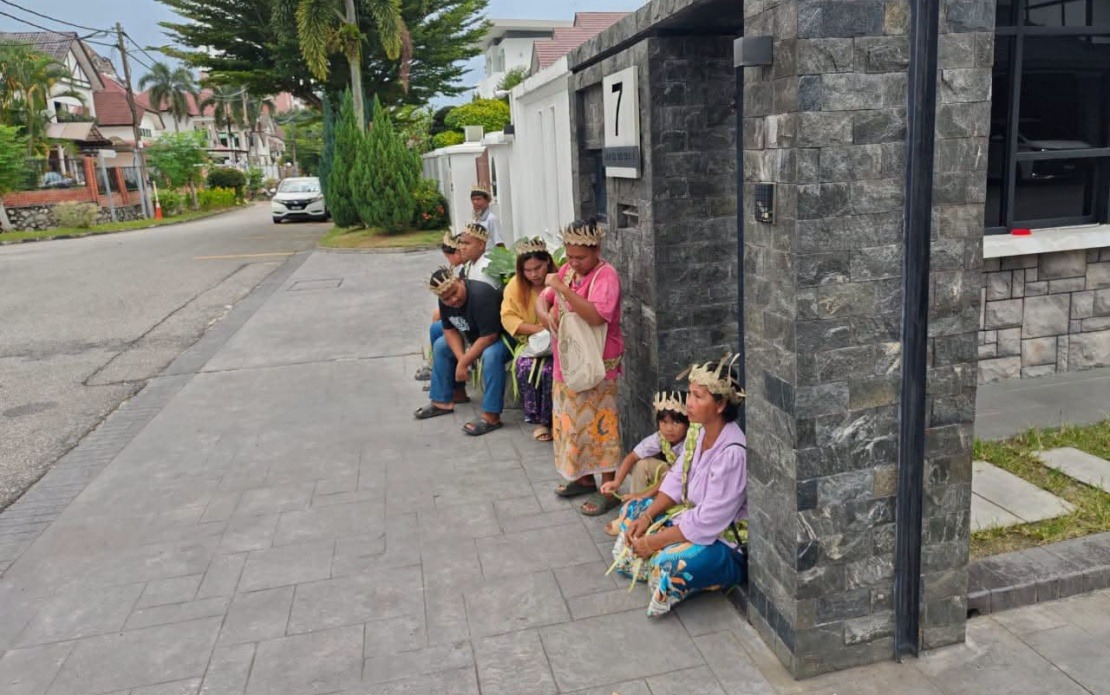
Prime Minister Datuk Seri Anwar Ibrahim has committed to escalating a contentious land dispute affecting the Orang Asli community of Kampung Sungai Cot in Maran, Pahang, with state authorities. The announcement came after the premier spoke directly with community representatives who had travelled to his residence seeking intervention on the matter. Through a social media statement released on July 17, Anwar indicated he would serve as a bridge between the indigenous community and the state government to facilitate resolution of the longstanding disagreement over land tenure.
The Kampung Sungai Cot situation represents a microcosm of broader land rights challenges facing Orang Asli communities across Malaysia. These indigenous groups have long struggled to secure recognition and protection of their customary territories amid competing commercial interests and state development priorities. The fact that residents felt compelled to petition the Prime Minister directly underscores the perception that conventional state-level channels may not adequately address their grievances, a concern that extends beyond Pahang to other states with significant Orang Asli populations.
During the discussion with visiting community representatives, Anwar heard firsthand accounts of the obstacles confronting Kampung Sungai Cot residents. Beyond the land dispute itself, the conversation touched on the detention of three villagers, an episode that highlighted the potential for security concerns to compound existing property disputes. The government's swift release of the detained individuals signals a willingness to de-escalate tensions, though questions remain about the circumstances that prompted their detention and the underlying causes that drove community members to seek prime ministerial intervention.
Anwar's public acknowledgment of the matter carries symbolic importance within Malaysia's ongoing discourse about indigenous rights and land justice. By documenting his engagement through a Facebook post, the Prime Minister created a transparent record of his commitment, establishing both a timeline and baseline expectations for action. This approach aligns with his broader positioning as an accessible leader responsive to constituent concerns, particularly those from marginalised groups historically distant from federal power structures.
The Prime Minister's cautionary remarks about manipulation of the issue suggest he recognises the potential for land disputes to become weaponised in political contests. By emphasising the need for solutions grounded in law and prudent governance rather than opportunistic rhetoric, Anwar attempted to insulate the matter from partisan politicisation. This framing is particularly significant in Pahang, where state politics involve multiple competing interests and where indigenous land questions intersect with development agendas, electoral calculations, and centre-periphery tensions within the federation.
For the Pahang state government, this federal intervention introduces both opportunity and constraint. An opportunity exists to demonstrate responsiveness by moving expeditiously toward addressing community concerns, thereby strengthening legitimacy among constituents and building cooperative relations with the federal centre. Conversely, the escalation to federal level potentially complicates state autonomy and may be perceived as external pressure in matters traditionally considered within state jurisdiction. How Pahang authorities navigate this dynamic will establish precedent for federal-state coordination on indigenous affairs.
The Orang Asli themselves occupy a complex position within Malaysia's federal structure and development paradigm. Numbering roughly 180,000 individuals across the peninsula, they remain economically marginalised and politically underrepresented despite constitutional provisions theoretically affording them special status. Land disputes like that affecting Kampung Sungai Cot frequently reflect deeper structural inequalities wherein indigenous communities lack the institutional capacity and legal resources to defend their interests against better-resourced competitors, whether commercial entities, government agencies, or neighbouring populations.
Regionally, Malaysia's handling of the Kampung Sungai Cot situation will be observed by indigenous rights advocates and international observers monitoring the country's compliance with United Nations and ASEAN standards regarding indigenous peoples. Other Southeast Asian nations grapple with similar tensions between development imperatives and indigenous land rights, making Malaysia's approach instructive. The degree to which Anwar's commitment translates into meaningful institutional reform or structural redress will shape international perceptions of Malaysia's commitment to indigenous welfare beyond rhetoric.
The pathway forward likely requires coordination spanning multiple levels of governance. The Pahang state administration must engage with district-level authorities responsible for land administration, whilst ensuring alignment with federal frameworks governing Orang Asli affairs under agencies such as the Department of Orang Asli Development. Legal specialists will need to examine the specific claims underpinning Kampung Sungai Cot's dispute, assessing whether customary land rights documentation exists and how such rights interface with state-issued titles or development concessions.
For Malaysian civil society, this episode reinforces the importance of sustained advocacy on behalf of indigenous communities. That residents felt able to approach the Prime Minister directly reflects both growing awareness of potential recourse mechanisms and the mobilisation of support networks capable of facilitating such engagement. Sustaining this momentum will require continued pressure to ensure that Anwar's commitment produces concrete outcomes rather than becoming subsumed within the broader machinery of governance.
Looking ahead, the Kampung Sungai Cot matter serves as a test case for how Malaysia's federal system can harmonise competing claims over land and resources while respecting both state prerogatives and indigenous rights. Success in this instance could establish positive precedent encouraging similar communities to pursue grievances through institutionalised channels rather than through confrontation or extrajudicial means. Conversely, inadequate resolution risks deepening alienation and might inspire more confrontational approaches to land defence.

