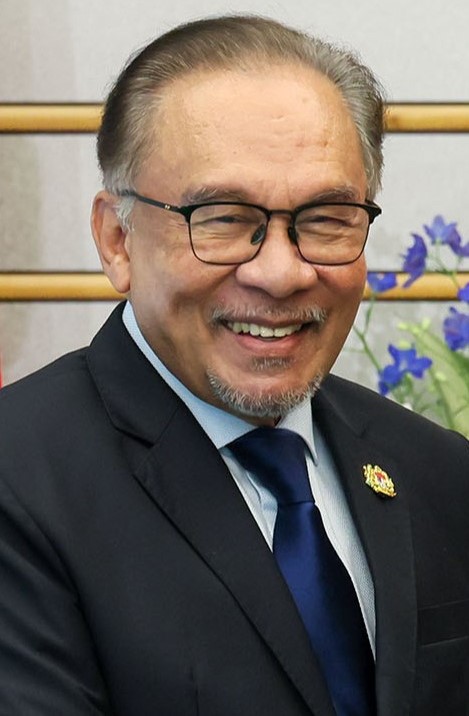
Prime Minister Datuk Seri Anwar Ibrahim is making a swift return to Johor, arriving in Segamat for what marks his second visit to the state within a 72-hour window. The trip underscores the government's intensive campaign rhythm as the polling date for the 16th Johor state election looms, with the Prime Minister coordinating high-visibility events designed to reinforce Pakatan Harapan's message directly to voters in a crucial electoral battleground.
Segamat, situated approximately 200 kilometres south of Johor Bahru, will host the Prime Minister for two consecutive public engagements this evening. The scheduling reflects a deliberate strategy to maintain momentum following Anwar's earlier announcement of the full Pakatan Harapan slate on Monday, when he revealed candidates across all three coalition partners who will contest the 56 available state assembly seats. The density of his appearances suggests the coalition views Johor as demanding sustained executive attention during the pre-election phase.
The centrepiece of Anwar's Segamat agenda is the official launch of the MADANI KITA programme, scheduled for 5 pm at Dataran Segamat. This initiative partners with Rukun Tetangga, the traditional neighbourhood watch association structure that remains deeply embedded in Malaysian suburban and village life. The programme's framing emphasises strengthening community bonds and cross-racial harmony—messaging that carries particular weight in Johor, a state with significant population diversity and a contested political landscape where neighbourhood-level mobilisation can meaningfully influence electoral outcomes.
Beyond its stated community objectives, MADANI KITA represents the government's broader attempt to translate its policy philosophy into tangible grassroots activities. The initiative aims to disseminate information about government programmes while simultaneously cultivating social cohesion, a dual purpose that reflects Anwar's administration's focus on embedding development messaging within community spaces rather than confining it to formal ministerial announcements. For Malaysian readers, this reflects an evolving approach to political communication that prioritises direct citizen engagement over traditional media-mediated discourse.
Following the formal MADANI KITA launch, Anwar will shift into a deliberately informal register for the evening's second event—the "Jom! Makan Durian" gathering at the Yayasan Bazaar site in Segamat at 6.30 pm. The tonal shift from official programme to casual community meal illustrates a calculated political strategy: the Prime Minister moving from an institutional setting into neighbourly, familiar social space where political barriers often diminish. Durian, deeply embedded in Malaysian cultural identity and commonly associated with informal social bonding, serves as the vehicle for this approachability, converting a campaign activity into something resembling spontaneous community gathering.
This paired programming strategy reflects professional campaign craft. The formal MADANI KITA element allows government messaging to be formally conveyed and documented, while the durian gathering permits more relaxed, conversational engagement with voters—the type of interaction where political persuasion often operates most effectively precisely because it appears unpolitical. The back-to-back nature of the events means Anwar maximises visibility and engagement within a single Segamat visit, reducing logistical burden while intensifying the campaign footprint.
The political context surrounding Anwar's Segamat visit remains consequential. Johor has historically been a Barisan Nasional stronghold, though recent electoral cycles have demonstrated volatility and declining government supermajorities. The state's political trajectory carries significance beyond its borders: Johor's electoral direction often signals broader sentiment across the Klang Valley and Peninsular Malaysia more broadly. For Pakatan Harapan, demonstrating sustained executive engagement in Johor—particularly through the Prime Minister's personal presence—communicates confidence while addressing any perception of coalition neglect.
The Pakatan Harapan candidate slate that Anwar unveiled on Monday comprises 20 PKR representatives, 19 from Amanah, and 17 from DAP, distributed across the 56 contested seats. This distribution reflects internal coalition dynamics and seat-allocation negotiations that precede every election. The coalition's capacity to maintain unity across three distinct parties while contesting a state election remains operationally complex, and Anwar's visible engagement with grassroots supporters helps reinforce coalition cohesion while building voter confidence in the alliance's viability.
The Election Commission's calendar is now firmly established: nomination day falls on June 27, early voting occurs on July 7, and polling day is set for July 11. This compressed timeline—less than three weeks from nomination to election—intensifies the campaign period and places premium value on sustained executive visibility. Anwar's decision to allocate time to Segamat during this critical window reflects institutional priority-setting, suggesting that either the constituency represents genuinely competitive terrain where marginal gains matter, or that the government judges it strategically important to demonstrate presence in non-urban areas rather than concentrating efforts in metropolitan centres.
For Malaysian voters observing these activities, Anwar's Segamat visit exemplifies contemporary campaign practice: high-frequency executive engagement, carefully calibrated messaging across formal and informal registers, and strategic deployment of cultural symbols to build political connection. The visit also illustrates how state elections increasingly become vehicles for national political messaging, with Prime Ministerial involvement transforming what might otherwise be localised contests into expressions of broader governance narratives and coalition positioning.
As Johor prepares for polling day, the intensity of Pakatan Harapan's campaign efforts—signalled by Anwar's multiple visits within days—communicates the coalition's assessment of the state's electoral competitiveness. Whether such sustained engagement translates into electoral gains will become apparent after July 11, but the visible commitment demonstrates how Anwar's administration continues prioritising direct voter engagement as a cornerstone of contemporary political communication in Malaysia.