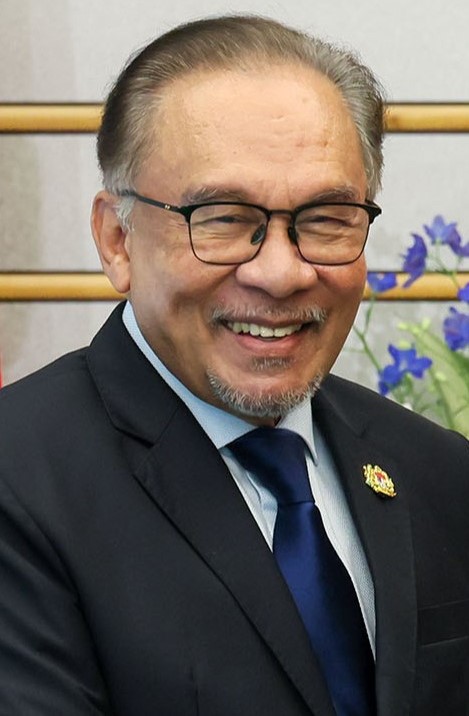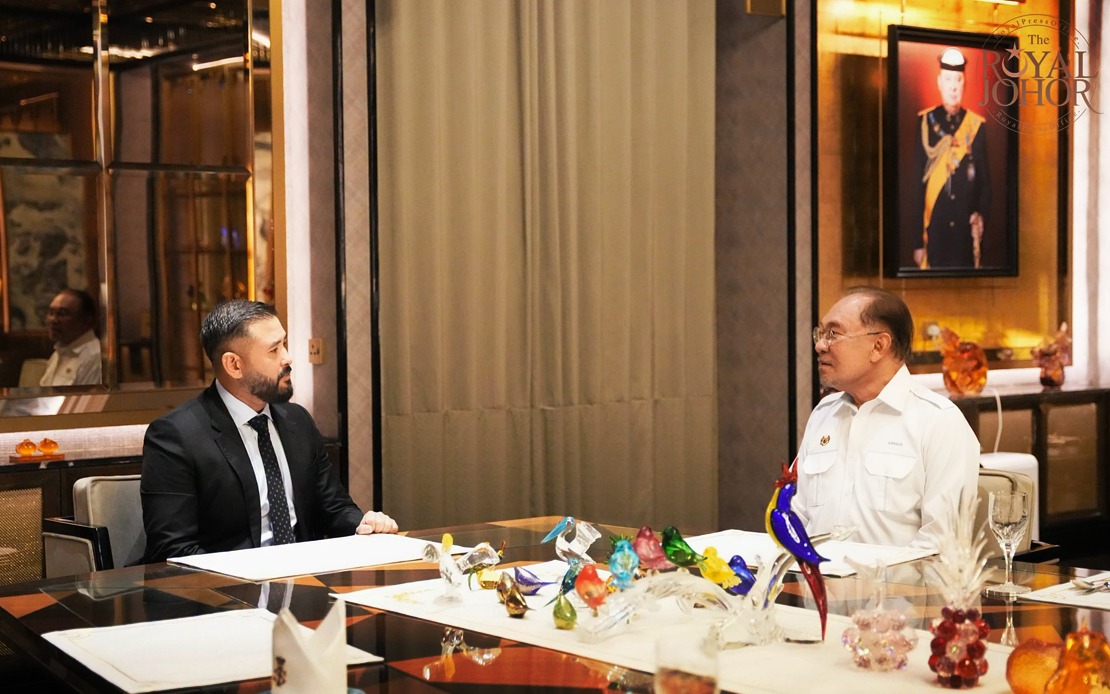
Prime Minister Datuk Seri Anwar Ibrahim has expressed appreciation for the Regent of Johor, Tunku Mahkota Ismail, who extended a gesture of friendship by granting him an audience. Speaking at a Pakatan Harapan candidate announcement ceremony in Tangkak on Saturday evening, Anwar characterised the meeting as a statement in itself that transcends political grandstanding, and emphasised the importance of maintaining clear boundaries between the monarchy and electoral competition.
The meeting between the Prime Minister and the Johor Regent has taken on symbolic significance in Malaysia's political landscape, where questions about the relationship between the federal government and individual state rulers frequently surface. By accepting the audience and subsequently making it public, Anwar sought to demonstrate that Pakatan Harapan maintains respectful and functional ties with the Malay Rulers despite the coalition's holding of federal power. The gesture carries particular weight in Johor, historically one of Malaysia's most economically significant states and a crucial political battleground.
Anwar launched a pointed criticism at what he termed "petty political campaigns" that invoke royal names while engaging in mudslinging. His remarks appeared directed at opposition figures who might attempt to claim royal backing or use the monarchy's name in campaign rhetoric. He argued that those who resort to such tactics lack the confidence to compete on substantive policy grounds and instead attempt to borrow legitimacy from state institutions. This framing positions Pakatan Harapan as the more mature and institutionally respectful political force.
During the audience with Tunku Mahkota Ismail, Anwar took the opportunity to brief the Johor Regent on federal government initiatives benefiting Johor's residents. This underscores a practical dimension to the meeting beyond ceremonial courtesy—the Prime Minister used the platform to communicate his administration's development agenda directly to the state's titular head. Such briefings allow rulers to stay informed about federal programmes and can smooth potential friction points between state and federal governments.
The Prime Minister underscored that Pakatan Harapan, as the federal governing coalition, remains committed to honouring the constitutional role and advisory functions of the Malay Rulers. This commitment extends beyond mere protocol; Anwar emphasised a genuine willingness to incorporate royal perspectives into governance discussions. He acknowledged that disagreements sometimes arise between the federal government and individual rulers, but framed these as natural occurrences within Malaysia's constitutional framework rather than crises.
Anwar's approach to interactions with the sultans reflects a philosophy of consulting, seeking audience, and explaining government positions—a methodology he claims extends consistently across all nine rulers. This stance carries significance for interstate relations, as different sultanates sometimes hold divergent views on federal policies affecting their territories. By institutionalising consultation rather than confrontation, Anwar positions his administration as defending constitutional monarchy in practice rather than merely in theory.
The Prime Minister drew an explicit parallel between his engagement with state rulers and his relationship with King Ibrahim, the current Yang di-Pertuan Agong. He portrayed the Crown as an institution that offers views, occasionally disagreements, and counsel that the federal government receives with respect. This characterisation is notable because it normalises disagreement between the executive and the monarchy, framing it as healthy constitutional interaction rather than crisis or disrespect. For Malaysian governance, this signals a sophisticated understanding that constitutional monarchy functions through dialogue rather than unquestioning deference.
Present at the ceremony were senior Pakatan Harapan figures including DAP secretary-general Anthony Loke Siew Fook and Amanah president Datuk Seri Mohamad Sabu. The presence of coalition leadership underscored that Anwar's position on royal relations represents official coalition policy rather than personal preference. This collective messaging strengthens the coalition's claim to institutional maturity and respect for constitutional structures during the lead-up to Johor's state election.
The event itself—announcing candidates for the 16th Johor state election—represents a critical political moment, as Johor remains a state where multiple political forces compete vigorously. Any perceived alignment between the ruling coalition and state rulers can influence electoral dynamics, as voters consider not only policy platforms but also relationships between different power centres. Anwar's explicit discussion of his meeting with the Johor Regent transforms the audience from a routine courtesy into a political statement about the confidence and legitimacy his administration enjoys among the state's traditional authorities.
For Southeast Asian observers, Anwar's emphasis on respecting royal institutions while maintaining government autonomy reflects broader democratic governance challenges in constitutional monarchies. Many regional democracies struggle with defining appropriate royal roles in electoral politics. Anwar's articulated position—that rulers deserve consultation and respect while remaining outside partisan campaigns—offers a model for how elected governments can honour constitutional monarchy without ceding executive authority to unelected institutions.
The timing of these remarks carries additional weight as Malaysia approaches electoral contests at both state and potentially national levels. By publicly establishing his administration's respectful approach to the Malay Rulers, Anwar attempts to occupy the centre ground politically. This positioning allows Pakatan Harapan to claim both progressive governance credentials and institutional conservatism—an appealing combination for voters concerned about both change and stability.
Moving forward, Anwar's articulated commitment to consulting rulers on major policy matters suggests that state rulers will maintain meaningful advisory roles in Malaysian governance. This consultation model may prove particularly important for policies affecting state-level interests in areas such as land management, water rights, and state development priorities. By framing such consultation as normal and desirable rather than constraint, Anwar subtly shifts the narrative about federal-state relations away from tension toward cooperation.