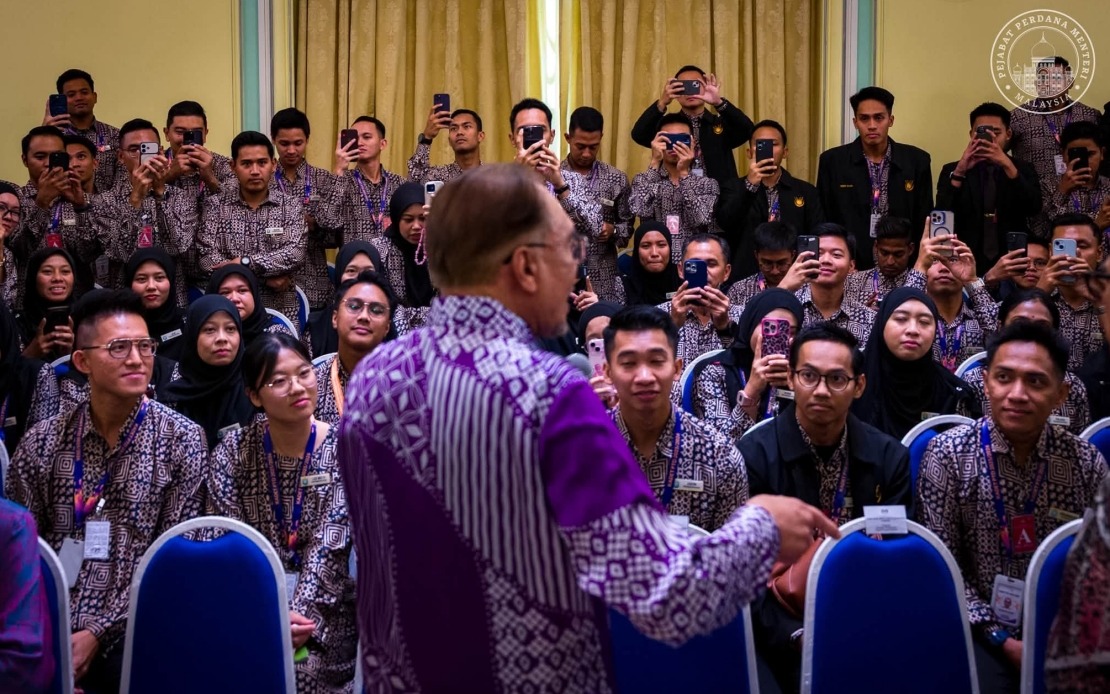
Prime Minister Datuk Seri Anwar Ibrahim has delivered a pointed message to Malaysia's administrative leadership: the nation's public sector must simultaneously pursue transformation and uphold the highest standards of conduct. Speaking during a meeting with cadets in the Administrative and Diplomatic Service (PTD) Postgraduate Diploma in Public Management programme at his Putrajaya office, Anwar outlined what he views as the foundational pillars required to steer the country toward sustainable development and social cohesion.
The timing of Anwar's remarks carries significance within the current Malaysian political landscape, where the government is navigating competing demands from both reformers and traditionalists. By directly addressing the next generation of senior civil servants, the Prime Minister is attempting to shape institutional culture at its formative stage. The PTD programme produces officers who will occupy strategic positions across government agencies for decades, making them crucial vectors for whatever administrative philosophy the leadership wishes to propagate.
Anwar's emphasis on embracing change reflects the administration's stated commitment to digital transformation, institutional modernisation, and adaptive governance. Malaysia's bureaucracy has long been criticised for resistance to innovation and inflexible adherence to outdated procedures. By framing change as not merely desirable but essential to public service excellence, the Prime Minister signals that reform is not optional but integral to how officials should execute their duties. This reframing matters because it attempts to overcome the institutional inertia that often impedes efficiency improvements.
Simultaneously, Anwar's stress on integrity appears calculated to address public scepticism about governance standards. Recent years have exposed significant lapses in ethical conduct within government institutions, with high-profile cases involving misappropriation of funds and abuse of office damaging public trust. By placing integrity at the centre of his message to rising administrators, Anwar articulates the view that technical competence divorced from ethical foundation creates corruption risk rather than good governance. The dual emphasis suggests recognition that change pursued without principled leadership merely redistributes opportunities for malfeasance.
The concept of placing national and public interest above all else carries particular resonance in Malaysia's multi-ethnic, multi-religious context. Civil servants serve constituencies with diverse needs and competing claims on state resources. Officials who prioritise factional loyalty, political affiliation, or personal enrichment over equitable service delivery threaten social cohesion. Anwar's invocation of nationalist interest appears designed to appeal to professionalism and transcendent purpose as antidotes to patronage-based governance patterns that have persisted across successive administrations.
The meeting with PTD cadets represents a deliberate choice of audience. These junior officers will staff the middle and upper ranks of government within the next decade. Their formative experiences, mentorship relationships, and institutional learning during this training phase influence how they later interpret policy directives and exercise discretionary authority. By communicating directly with these cadets, Anwar attempts to establish baseline expectations before entrenched habits take root. This represents a strategic investment in long-term institutional culture change rather than merely rhetorical positioning.
The framing of integrity, efficiency, and change as mutually reinforcing rather than competing values offers a constructive intellectual framework for civil service reform. Some observers present modernisation and ethical governance as opposing imperatives, arguing that rapid transformation necessarily creates oversight gaps. Anwar's formulation rejects this false dichotomy by suggesting that genuine efficiency requires integrity—that corruption actually slows administration by generating bottlenecks, duplicative processes, and institutional distrust. Efficiency gains achieved through corner-cutting prove counterproductive to long-term national interest.
For Malaysian readers concerned with governance quality, the Prime Minister's remarks signal both aspiration and acknowledgement of current deficiency. The need to remind civil servants of their obligation to serve the nation rather than personal interest implies that such lapses occur frequently enough to warrant executive intervention. The fact that these reminders must come from the top suggests institutional antibodies against improper conduct may be insufficiently developed or activated within many government agencies.
Regionally, Malaysia's governance trajectory influences how peer nations and international observers assess Southeast Asian institutional capacity. The ASEAN region contains multiple governance models, and Malaysia's success or failure in building a professional, ethical, corruption-resistant civil service has demonstration effects. By articulating a coherent vision of principled public administration and communicating it directly to rising leaders, Anwar contributes to the broader regional conversation about whether developing democracies can build institutions that combine dynamism with accountability.
The practical implications for Malaysian citizens extend beyond bureaucratic culture to service delivery, policy implementation, and accountability. Civil servants who genuinely internalise the message that their role demands integrity and efficiency will approach their work differently than those viewing positions primarily as venues for extraction. When officials embrace change, they become more responsive to citizen feedback and emerging societal needs. When they maintain integrity, resource allocations reach intended beneficiaries rather than being siphoned through corrupt networks.
Anwar's choice to communicate through Facebook suggests awareness of the media environment and desire to ensure the message reaches both cadets and broader public audiences. This digital-first approach also subtly reinforces the message about embracing change, with the platform itself embodying technological adaptation. The accessibility of such communication contrasts with traditional top-down governance announcements, potentially encouraging the more modern, citizen-responsive governance style the Prime Minister advocates.
Moving forward, the substance of whether the administration translates these articulated principles into institutional incentives, policy frameworks, and enforcement mechanisms will determine their ultimate impact. Speeches and Facebook posts establish normative frameworks but do not automatically reshape entrenched incentive structures. Civil servants require clear pathways for reward and advancement that value ethical conduct and innovative approaches. Conversely, systems must impose meaningful consequences for corruption and resistance to necessary change.

