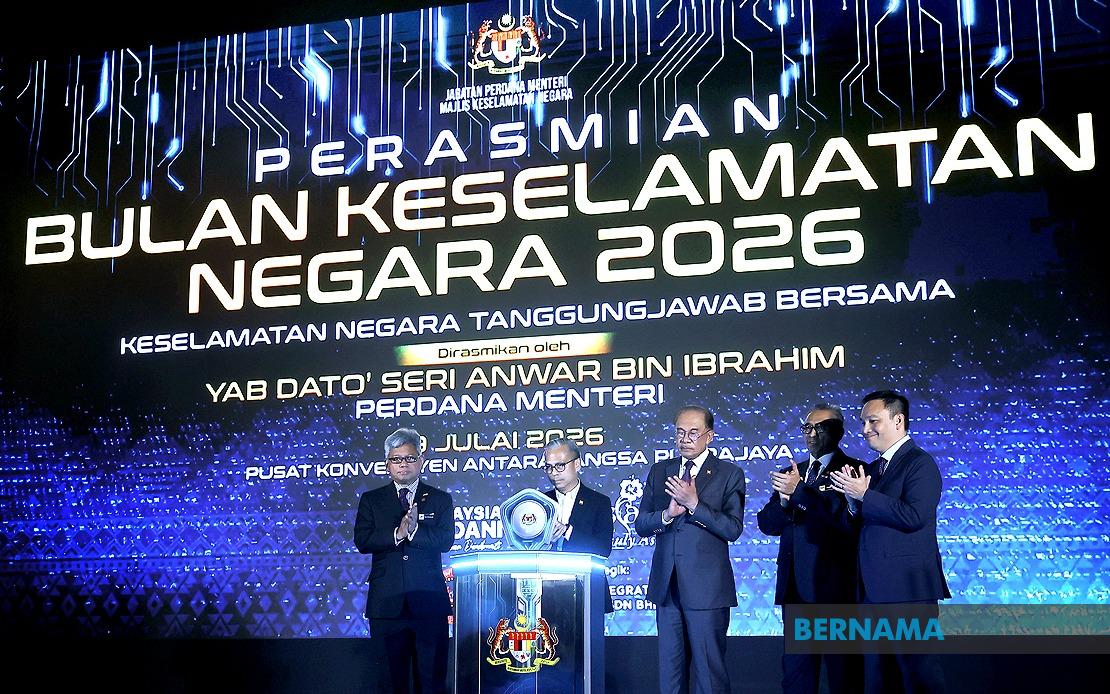
Prime Minister Datuk Seri Anwar Ibrahim has sounded a fresh alarm about the country's vulnerability to sophisticated security threats, attributing part of the problem to Malaysia's continued preoccupation with traditional divisions along racial, religious and state lines. Addressing officials at the National Security Month 2026 programme in Putrajaya on July 9, Anwar cautioned that these longstanding identity-based grievances, though historically significant, now threaten to divert critical attention and resources away from genuinely existential challenges confronting the nation.
The Prime Minister's intervention reflects growing frustration within the cabinet that parliamentary discourse and broader political commentary remain tethered to familiar controversies rather than engaging with the rapidly evolving threat landscape. During parliamentary proceedings, Anwar noted, colleagues continue to relitigate entrenched positions on communal and regional matters. While acknowledging the emotional weight these issues carry within Malaysian society, he argued forcefully that the nation cannot afford to allow such conversations to dominate the national security agenda when far more consequential dangers are materialising.
Among the emerging threats Anwar specifically identified are technological vulnerabilities and digital security breaches. These encompass not only traditional cyber attacks on critical infrastructure but also sophisticated disinformation campaigns, data theft, and the weaponisation of artificial intelligence—domains in which Malaysia remains insufficiently prepared. The Prime Minister underscored that these threats operate across state and community boundaries, making them fundamentally different from the localised identity conflicts that have historically preoccupied Malaysian politics.
Anwar's appeal for a strategic reorientation was not merely rhetorical. He positioned security consciousness as a leadership responsibility spanning the entire government apparatus, from cabinet ministers down through agency directors and departmental heads. This bureaucratic hierarchy, he insisted, cannot treat security merely as another procedural matter to be handled through routine channels. Instead, leaders must cultivate genuine understanding of emerging technologies and novel threat vectors, necessitating continuous learning and institutional adaptation rather than reliance on familiar frameworks.
The gathering included several senior figures from Malaysia's security and administrative establishment, including Communications Minister Datuk Fahmi Fadzil and Chief Secretary to the Government Tan Sri Shamsul Azri Abu Bakar, along with National Security director-general Datuk Raja Nurshirwan Zainal Abidin. Their presence signalled that Anwar's concerns resonate across multiple power centres within government. The participation of these officials suggests emerging consensus that institutional change is necessary to meet contemporary threats.
For Malaysian readers, Anwar's warning carries particular resonance given Southeast Asia's position as a hub for both technological innovation and organised cybercriminal networks. Regional economies increasingly depend on digital infrastructure, from financial systems to telecommunications networks, creating substantial vulnerability. When domestic political energies remain focused on historical grievances, resources—particularly skilled personnel, research funding, and strategic attention—become unavailable for addressing these vulnerabilities.
The Prime Minister's dual role as Finance Minister amplifies the significance of his intervention. Budget allocation decisions will likely reflect his security priorities, potentially redirecting funds from conventional spending categories towards cybersecurity infrastructure, digital forensics capability, and inter-agency coordination mechanisms. This signals that security concerns are not merely rhetorical positioning but may drive material changes in government spending and institutional development.
Anwar's framing also reveals calculation about how Malaysia should position itself within regional and global security architectures. As Southeast Asian nations compete for international investment and assert geopolitical influence, a reputation for political instability and divisiveness undermines standing. Conversely, demonstrating sophisticated capacity to manage emerging security threats enhances both security partnerships and economic credibility. By anchoring his appeal in national interest rather than partisan advantage, Anwar attempts to transcend traditional Malaysian political divisions.
However, the practical challenge of translating such appeals into sustained institutional change remains substantial. Identity-based politics in Malaysia derives from deep historical roots and continues to mobilise significant portions of the electorate. Political actors who have invested careers in mobilising communal sentiment are unlikely to voluntarily abandon such strategies. Moreover, genuine security reform requires sustained investment, technical expertise, and institutional patience—commodities in short supply amid Malaysia's fragmented political landscape.
The implicit tension in Anwar's message deserves note: he asks Malaysians to deprioritise longstanding sources of political mobilisation without explicitly addressing whether substantive grievances underlying these divisions have been adequately resolved. Security threats may demand strategic refocus, but political communities typically expect underlying issues to receive continued attention. Anwar's formulation risks appearing to dismiss legitimate historical concerns rather than genuinely transcend them.
Nevertheless, his intervention marks a significant rhetorical shift in Malaysian political discourse. By positioning security modernisation as a national imperative that transcends sectional interest, Anwar establishes grounds for bipartisan cooperation and for redefining what constitutes responsible political leadership. Whether this framing gains traction will depend substantially on whether subsequent government actions demonstrate that security modernisation receives genuine priority and resources.
For regional observers, Anwar's security focus also suggests Malaysia's evolving strategic priorities amid broader Indo-Pacific competition. Investment in cybersecurity, digital resilience, and technological capacity aligns with regional powers' efforts to enhance sovereignty and technological self-sufficiency. By framing these investments as essential to national harmony, Anwar positions security modernisation not as threatening to traditional communities but as potentially unifying across them.

