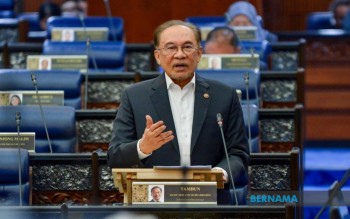
Prime Minister Datuk Seri Anwar Ibrahim has declared that the government will not tolerate any form of corruption or fraud connected to the Retirement Fund (Incorporated) (KWAP)'s significant investment in eFishery, an aquaculture technology start-up, even as initial assessments suggest no impropriety has occurred. The firm commitment reflects growing scrutiny over how Malaysia's institutional investor funds deploy workers' retirement savings into emerging technology ventures. Speaking during parliamentary proceedings in the Dewan Negara, Anwar underscored that transparency and rigorous oversight remain paramount when billions of ringgit in retirement contributions are at stake.
The Prime Minister's remarks came in response to legislative questions about safeguarding national retirement funds amid volatile global economic conditions. Malaysia's retirement savings ecosystem depends on two principal institutional vehicles: the Employees Provident Fund (KWSP), which serves private sector workers, and KWAP, which manages benefits for civil servants and other public sector employees. Both funds operate under mandates to generate competitive returns that sustain pensions and lump-sum benefits for millions of Malaysian households. The eFishery investment exemplifies the strategic pivot toward technology-driven ventures intended to boost long-term portfolio performance, yet it has simultaneously drawn parliamentary and public attention regarding due diligence standards.
Although preliminary investigations have not revealed corrupt conduct, Anwar directed the Malaysian Anti-Corruption Commission (MACC) to conduct a comprehensive examination of every stage of the investment decision-making process. This comprehensive approach extends beyond surface-level scrutiny to encompass the evaluation methodologies employed by KWAP's investment panel and the subsequent endorsement procedures followed by the fund's board of directors. Such systematic review reflects acknowledgment that institutional corruption often operates through subtle procedural lapses rather than overt bribery or embezzlement. By mandating investigation of investment governance protocols, the government signals commitment to identifying systemic weaknesses that might enable misconduct.
During parliamentary exchanges, Anwar confirmed he had convened meetings with senior KWAP management to emphasize their obligation to extend complete cooperation with the MACC investigation. The quality of institutional collaboration during anti-corruption probes significantly influences investigation outcomes and remedial effectiveness. When fund managers and board members engage transparently, investigators can access internal communications, investment analysis documents, and decision-making records that illuminate how investment choices emerged. Conversely, institutional resistance or selective transparency can obstruct investigation progress and create perception of accountability deficits among contributing workers.
The eFishery case carries particular relevance for Malaysian retirement security because aquaculture sector investments represent a strategic economic priority aligned with government diversification ambitions. Technology-enhanced fish farming promises improved productivity, reduced environmental impact, and enhanced export competitiveness for Malaysian aquaculture enterprises. Yet concentrating retirement fund capital into nascent technology companies operating within emerging sectors introduces amplified risk profiles compared to established blue-chip equities or fixed-income instruments. This tension between growth objectives and capital preservation requires robust governance frameworks ensuring investment decisions reflect genuine commercial merit rather than political favoritism or undisclosed conflicts of interest.
The parliamentary inquiry also addressed Senator Wan Martina Wan Yusoff's concerns regarding government transformation initiatives affecting investment destination selection and safeguards protecting citizen retirement contributions. This line of questioning reflects broader anxiety about whether institutional investment decisions remain insulated from political influence or informal patronage networks. Effective retirement fund governance demands clear separation between political authority and investment management independence, supported by transparent selection criteria for portfolio companies and robust conflict-of-interest policies. When workers perceive their retirement savings might be deployed through politically motivated channels, confidence in institutional stewardship deteriorates.
Malaysia's retirement security framework faces mounting pressure from demographic trends and economic volatility. Increasing life expectancy extends pension payout periods while subdued wage growth limits contribution accumulation for younger cohorts. Simultaneously, chronically low interest rate environments reduce returns from conservative bond portfolios, compelling institutional fund managers toward equity investments and alternative assets carrying higher risk profiles. Within this constrained landscape, investment governance quality becomes absolutely critical—suboptimal allocation decisions or capital losses stemming from inadequate due diligence can permanently diminish retirement income security for hundreds of thousands of Malaysian households.
Anwar's emphasis on MACC investigation coordination sends signal to fund management professionals across Malaysia's institutional investment sector regarding government expectations regarding accountability standards. The MACC possesses specialized investigative capabilities and statutory authority to examine complex financial transactions, trace suspicious fund flows, and interview relevant stakeholders under oath. By explicitly directing the MACC toward eFishery investment processes, the Prime Minister operationalized his anti-corruption rhetoric through concrete institutional mechanisms. Whether subsequent investigation findings substantiate preliminary assessments or reveal compliance deficiencies will significantly influence public confidence in retirement fund governance.
The eFishery situation moreover illustrates how Malaysian institutional investors balance social-economic policy objectives against fiduciary responsibilities toward fund members. Aquaculture modernization contributes toward rural economic development and employment creation, aligning with broader government inclusion objectives. Yet KWAP managers cannot justify underperforming investments by referencing broader policy alignment—contributing workers have prioritized retirement security, not industrial policy advancement. This fundamental tension requires governance frameworks explicitly reconciling development mandates with capital preservation obligations, ensuring decision-making frameworks transparently weigh tradeoffs rather than subordinating fund performance to unstated policy considerations.
Moving forward, the investigation's outcomes will probably generate institutional reforms affecting how Malaysian retirement funds evaluate technology sector investments and establish investment committee procedures. Potential reforms might encompass enhanced external independent review of significant venture investments, strengthened disclosure requirements regarding investment rationale and risk assessments, or modified governance structures insulating investment professionals from political influence. These procedural enhancements, if implemented systematically across Malaysia's retirement fund sector, could strengthen institutional legitimacy while preserving fund managers' capacity to pursue growth-oriented strategies addressing demographic and economic headwinds.
For Malaysian workers and their families depending on KWAP and KWSP benefits, Anwar's unambiguous commitment to investigating the eFishery investment offers reassurance that institutional accountability mechanisms remain operational. Yet sustained confidence requires transparent investigation processes, clear communication regarding findings, and demonstrable implementation of governance improvements preventing similar situations. The test of government commitment lies not merely in rhetorical stances but in systematic institutional reform ensuring retirement security remains protected against corrupt practices and mismanagement.

