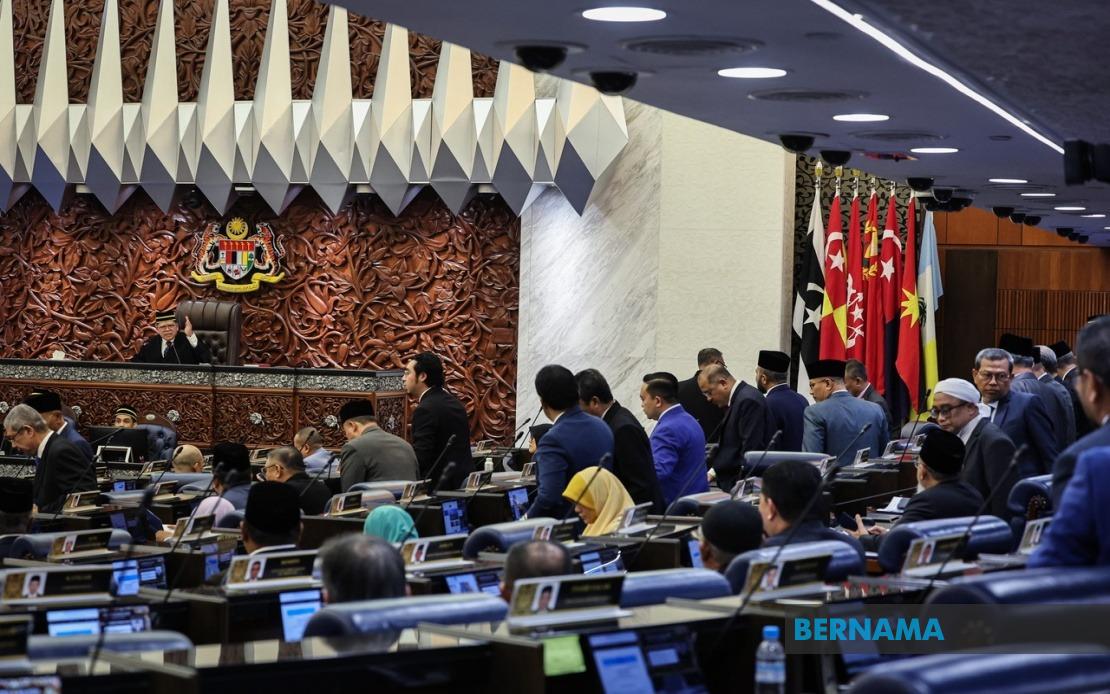
The Prime Minister's absence from a special parliamentary sitting should not become a convenient justification for lawmakers to abandon their responsibilities to scrutinise a matter affecting millions of ordinary Malaysians, according to Tengku Datuk Seri Zafrul Tengku Abdul Aziz, Senior Political Adviser to the Prime Minister. His pointed remarks came after several opposition Members of Parliament staged a walkout during the Dewan Rakyat debate on the Royal Commission of Inquiry report into Lembaga Tabung Haji on August 11, choosing to boycott proceedings rather than engage with the findings despite the head of government's non-attendance at the sitting.
The walkout, which included Opposition Leader Datuk Seri Hamzah Zainudin and other senior Perikatan Nasional figures such as chief whip Datuk Seri Takiyuddin Hassan and chairman Datuk Seri Dr Samsuri Mokhtar, drew swift criticism from the government camp. Tengku Zafrul seized on the incident to highlight what he characterised as a fundamental misunderstanding of parliamentary duty, framing the matter not as a political contest centred on the Prime Minister but as a substantive issue demanding full legislative attention regardless of who occupies the top office.
The Tabung Haji issue represents one of the most consequential crises affecting the Muslim and Malay economic sector in Malaysia's modern history, with profound implications for millions of account holders whose retirement savings have been entrusted to the institution over decades. The special sitting examined a 211-page RCI report covering the management and operations of Tabung Haji between 2014 and 2020, a period marked by mounting concerns over financial mismanagement and governance failures. The government had made the report public on July 29, deciding that transparency and democratic scrutiny took precedence over political convenience, and the parliamentary debate represented a crucial opportunity for all lawmakers to grapple with these findings.
Tengku Zafrul's intervention underscores a growing frustration within government circles that opposition parties are allowing partisan considerations to override the legitimate interests of Muslim Malaysians whose savings remain at risk. His statement posed a direct challenge to the logic underlying the walkout, questioning whether the absence of a single individual—however senior—should excuse legislators from their fundamental obligation to listen, analyse, and debate matters of genuine national consequence. This tension reflects broader questions about parliamentary conduct and the expectations placed on opposition MPs to engage substantively with government initiatives even during periods of political tension.
The adviser explicitly articulated the government's position that MPs have both the right and the responsibility to pursue robust scrutiny within the chamber. If evidence suggests governmental wrongdoing, lawmakers should voice their objections forcefully, armed with factual counter-arguments and documented proof of malfeasance. Disagreement itself poses no inherent problem in a functioning democracy; indeed, vigorous debate and critical questioning are hallmarks of effective parliamentary systems. What Tengku Zafrul characterised as problematic was the apparent message conveyed by the boycott: that certain groups of MPs regarded the Tabung Haji matter as insufficiently important to warrant their participation, or that their political interests took precedence over the concerns of account holders awaiting clarity on their funds.
The Tabung Haji controversy has emerged as a defining test case for how Malaysian institutions respond to allegations of systemic failure within a key pillar of the Islamic financial ecosystem. For decades, the institution marketed itself as a reliable vehicle for Muslims to accumulate savings while fulfilling their religious obligations through pilgrimage to Mecca. Yet investigations documented by the RCI appear to have exposed serious lapses in oversight, questionable investment decisions, and governance structures that failed to protect account holders from substantial losses. These findings carry implications extending well beyond individual households; they touch on the credibility of Islamic financial institutions more broadly and the government's capacity to ensure proper stewardship of public trust.
For Malaysian investors and account holders across the country, the parliamentary debate represented a critical moment when elected representatives—regardless of their party affiliation—could publicly examine whether systemic reforms had been adequately addressed and whether accountability mechanisms now existed to prevent future recurrence of similar failures. The decision by opposition lawmakers to absent themselves from this debate carried an implicit message to their constituents who held Tabung Haji accounts: that partisan political considerations superseded concern for their financial security. This dynamic becomes particularly acute given that Tabung Haji's customer base spans the socioeconomic spectrum, including lower-income Malaysians for whom these savings often represent their primary retirement provision.
The incident also illuminates broader patterns in contemporary Malaysian politics regarding how opposition parties calibrate their engagement with government initiatives. While constructive opposition necessarily involves selective criticism and strategic deployment of parliamentary tactics, the wholesale boycott of a substantive policy debate invites questions about whether opposition parties risk being perceived as more concerned with scoring political points than with advocating for their constituents' material interests. Tengku Zafrul's comments were designed to press precisely this point, suggesting that voters would ultimately judge MPs by their willingness to fight for accountability on matters directly affecting household finances.
Regional observers of Malaysian politics have noted that governance crises within state-owned enterprises and financial institutions present recurring challenges across Southeast Asia, with issues of accountability and transparency often becoming entangled with partisan conflict. The Tabung Haji situation exemplifies this dynamic: a legitimate institutional failure becomes subject to political instrumentalisation, potentially undermining the effectiveness of genuine remedial measures. For Malaysia specifically, the integrity of Tabung Haji carries symbolic weight extending beyond mere financial considerations, touching on questions of how the state manages Islamic institutions and whether it can meet the expectations of Muslim citizens regarding prudent stewardship of their resources.
Looking ahead, the parliamentary record on this issue will inform public perception of whether the Dewan Rakyat treated the Tabung Haji matter with the seriousness it merits. Opposition parties face ongoing pressure to demonstrate that their engagement with such crises reflects constituent interests rather than purely tactical calculations. The government, meanwhile, must ensure that the RCI findings translate into substantive reforms rather than serving merely as a document for rhetorical purposes during parliamentary debates. For Malaysian Muslims with Tabung Haji accounts, the critical measure of success will be whether the airing of these issues in parliament ultimately produces meaningful changes to institutional governance and financial safeguards.

