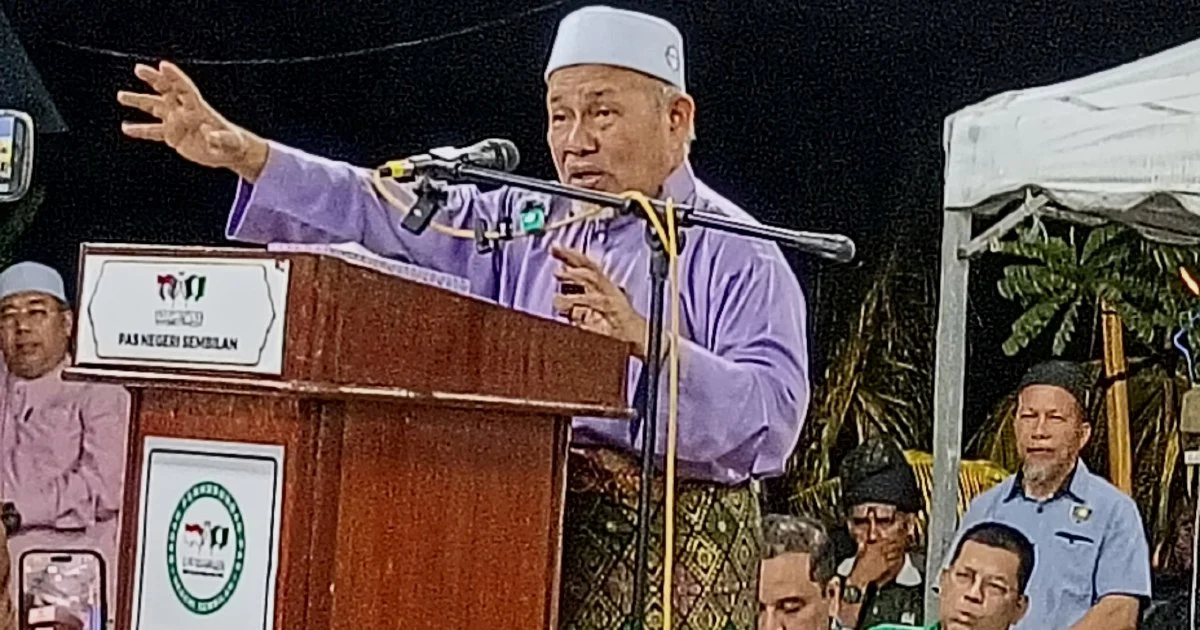
The question of who truly steers Perikatan Nasional intensified recently when Pas deputy president Datuk Seri Tuan Ibrahim Tuan Man delivered a sharp rebuttal to assertions that Bersatu dominates the coalition. His intervention underscores growing tensions within the opposition grouping, where rival factions compete for influence and control ahead of crucial political decisions. Tuan Ibrahim's comments reflect a broader anxiety among PN partners that one member may be consolidating disproportionate power at the expense of collective governance.
In articulating the coalition's foundational principle, Tuan Ibrahim stressed that Perikatan Nasional operates as a partnership among equals rather than a hierarchical structure dominated by any single party. This distinction matters substantially in Malaysian politics, where coalition dynamics often determine which alliance can command parliamentary support and claim legitimacy to govern. By asserting shared ownership, Tuan Ibrahim sought to reaffirm that strategic decisions affecting the entire bloc should reflect the interests and consent of multiple stakeholders, not the preferences of a dominant faction.
The tension reflects historical patterns within Malaysian coalition politics, where larger parties frequently attempt to assert control over smaller partners. Bersatu, despite being numerically smaller than Pas, has wielded considerable influence due to its previous stewardship of the federal government and its central role in assembling the PN coalition structure. This asymmetry has repeatedly sparked friction, particularly when Bersatu leadership makes pronouncements on coalition-wide matters without apparent consultation with other members.
Pas, as the coalition's most electorally substantial party by representation, possesses strong incentives to resist any arrangement that marginalizes its voice in PN decision-making. The party's dominance in several northern and eastern states gives it considerable leverage when negotiating coalition arrangements or determining electoral alliances. Tuan Ibrahim's intervention signals that Pas intends to maintain its position as a co-equal partner rather than accept subordinate status within the broader opposition framework.
The coalition ownership dispute carries implications extending beyond internal power negotiations. It touches on questions of legitimacy and democratic representation within opposition formations. If voters believe that coalition decisions reflect the genuine consensus of multiple parties with distinct constituencies, they may view such arrangements as more legitimate than arrangements where one party appears to dictate terms to junior partners. Conversely, perceived internal fractures and disputes over governance can undermine public confidence in the opposition's ability to function effectively should it return to power.
Bersatu's position within PN remains complex and somewhat contested. The party emerged as a splinter from the United Malays National Organisation and later achieved prominence through Tun Dr Mahathir Mohamad's leadership and his subsequent entry into government. When PN collapsed as a governing coalition and shifted into opposition, Bersatu retained significant organizational capacity and media prominence, positioning itself as a natural convenor for anti-government forces. This elevated status sometimes translates into expectation that Bersatu should lead coalition strategy, a presumption that other members actively contest.
The broader Southeast Asian context adds texture to these dynamics. Coalition politics in the region frequently struggle with questions of power distribution among partners with unequal capabilities and resources. Thailand, the Philippines, and Indonesia have all witnessed similar disputes where larger or more resourced coalition members attempt to dominate smaller ones. The way Malaysian opposition parties navigate these tensions may offer instructive lessons for democratic practitioners elsewhere in the region contending with complex multi-party formations.
From a governance perspective, Tuan Ibrahim's emphasis on collective ownership aligns with principles of inclusive decision-making that many analysts argue strengthen coalition resilience. When all partners believe their voices matter and their interests receive consideration, they remain more firmly committed to maintaining the alliance even during periods of stress or electoral setback. Conversely, arrangements where some members feel sidelined or disempowered often lead to defections, particularly when members perceive greater advantage in joining competing coalitions or acting independently.
The statements also hint at underlying disagreements over coalition strategy and electoral positioning. Different PN components may harbour distinct policy priorities or electoral calculus. Pas, with its religious conservative base, may emphasize different themes than Bersatu when addressing voters. Collective ownership arrangements theoretically require negotiation and compromise on such matters, ensuring that coalition messaging reflects multiple perspectives rather than one party's preferences imposed on others.
The dispute occurs at a critical juncture for Malaysian opposition politics. The political landscape remains fluid, with various alliances regularly shifting and reforming. How PN manages internal governance questions will significantly influence whether it can function as a stable opposition bloc capable of presenting voters with coherent alternatives. If unresolved tensions over coalition ownership fester and intensify, they may ultimately fragment the grouping entirely, scattering its components toward different political arrangements.
Tuan Ibrahim's intervention also carries implications for Pas's broader strategic positioning. By insisting on equal partnership status within PN, Pas establishes clear parameters for continued participation while simultaneously signalling that it retains the option to pursue different political arrangements should PN fail to respect the coalition's stated principle of collective governance. This negotiating stance reflects Pas's considerable electoral strength and its awareness that other opposition forces would eagerly welcome its participation in alternative configurations.
Moving forward, the resolution of PN's governance questions will likely shape the coalition's trajectory through the next electoral cycle. Whether Bersatu, Pas, and other members can establish genuinely collaborative decision-making structures will determine whether the opposition alliance hardens into a stable bloc or remains vulnerable to further fragmentation. For Malaysian voters assessing opposition credibility, clarity regarding internal coalition dynamics represents an important consideration in evaluating whether these parties can effectively govern should they return to power.