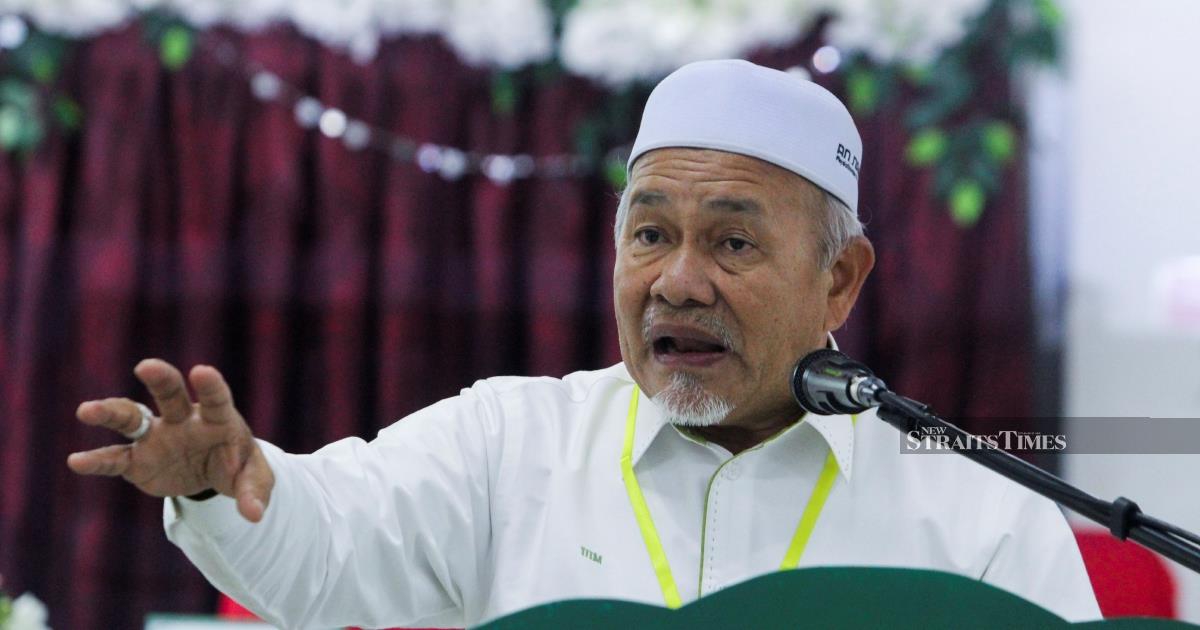
The political alliance between Perikatan Nasional and Barisan Nasional is delivering tangible results on the ground in Negri Sembilan, with campaign machinery functioning without major friction and community-level engagement proceeding constructively. Datuk Seri Tuan Ibrahim Tuan Man, deputy president of PAS, highlighted the smooth operational tempo during recent campaign activities in the state, signalling that the coalition partners are maintaining discipline and coordination across their respective organisational structures.
The remarks from Tuan Ibrahim come at a significant moment for Malaysia's coalition politics. The partnership between PN and BN represents one of the more complex political arrangements to emerge in recent Malaysian political history, bringing together two large coalitions that have competed fiercely in previous electoral contests. In Negri Sembilan specifically, the state has become a testing ground for whether this cooperation can translate into effective ground-level operations that benefit both partners without breeding internal resentment or organisational chaos.
Grassroots coordination stands as the crucial barometer for any sustained political alliance. Unlike high-level agreements struck between party presidents and senior leadership, the real measure of coalition stability lies in whether ordinary party workers, community coordinators, and state-level operatives can work together without friction. The fact that Tuan Ibrahim specifically mentioned positive grassroots feedback suggests that messaging and campaign direction are being transmitted effectively from party headquarters down through district and division structures.
For Perikatan Nasional, which comprises PAS, Bersatu, and smaller partners, the Negri Sembilan campaign represents an opportunity to demonstrate organisational coherence while working alongside BN's larger machinery. This cooperation is particularly noteworthy given that PN and BN have competed directly in numerous constituencies across the country. The willingness to set aside electoral competition in selected areas and coordinate campaign efforts requires discipline from party members who might otherwise view the other coalition as a rival to be defeated.
Barisan Nasional, anchored by UMNO, Sabah's Parti Bersatu Sabah, and other component parties, brings substantial organisational resources and decades of electoral experience to any joint campaign. The BN machinery is accustomed to coordinating across multiple parties and maintaining hierarchical discipline, though internal tensions within the coalition have emerged during previous elections. The smooth functioning that Tuan Ibrahim describes would indicate that both sides have established workable protocols for resolving potential conflicts and allocating campaign resources equitably.
Negri Sembilan holds particular significance within Malaysian politics as a swing state with strong independent political traditions and a history of competitive elections. The state has seen various coalitions rise and fall, and voters here tend to be pragmatic and responsive to ground-level campaigns. For PN and BN to demonstrate effective cooperation in this environment is strategically important, as success could provide a template for similar arrangements elsewhere and could influence voter perception of the alliances' viability.
The campaign coordination encompasses multiple levels: voter engagement activities, media messaging, candidate support structures, and dispute resolution mechanisms. When Tuan Ibrahim emphasises smoothness in operations, he is implicitly confirming that these various layers are functioning without creating bottlenecks or contradictions that would undermine campaign effectiveness. This suggests that decision-making processes have been established that allow both PN and BN to contribute meaningfully without either partner feeling marginalised or undervalued.
One practical benefit of such cooperation is the ability to concentrate campaign resources more efficiently. Rather than both coalitions running parallel operations in the same areas, coordinated campaigns can share venues, organise joint events, and distribute workload according to each partner's strengths. This efficiency gain becomes particularly important in resource-constrained environments or in areas where ground conditions are challenging. Malaysian campaign teams have grown increasingly sophisticated in deploying digital tools and data analytics, and coordination between allied parties enhances these capabilities.
However, the apparent smoothness should not be interpreted as eliminating all underlying tensions. Coalitional politics in Malaysia historically involves complex negotiations over seat allocations, ministerial portfolios, and policy positions. In Negri Sembilan, where PN and BN are cooperating, the question of how power and benefits would be distributed following electoral success remains unresolved. Campaign-period harmony does not necessarily guarantee seamless post-election governance arrangements, and parties often keep competing interests protected even while operating jointly.
The Southeast Asian context adds another dimension to PN-BN cooperation. Malaysia's regional standing and domestic political stability are monitored closely by investors, neighbouring governments, and international observers. Coalition arrangements that function smoothly contribute to an impression of stable governance, while those marked by visible friction can generate concerns about political reliability. Tuan Ibrahim's emphasis on positive operations thus carries implications beyond the immediate Negri Sembilan campaign.
For ordinary Negri Sembilan voters, effective PN-BN coordination could mean more focused, less confusing campaign messages and greater clarity about which candidates represent which coalitions in specific constituencies. This transparency benefits electoral choice and allows voters to make informed decisions about which direction they wish the state to move. Conversely, persistent confusion about the relationships between PN and BN at the ground level could alienate voters who struggle to understand the political alignments.
The coming weeks will prove whether this operational smoothness can be sustained through the intensity of late-campaign activity, when momentum builds and competition intensifies. Campaign machinery that functions well in the early stages sometimes experiences strain as voting day approaches and both grassroots workers and senior leadership operate under heightened pressure. The true test of PN-BN cooperation will emerge in this final stretch, where any underlying friction between the coalitions becomes more visible and potentially more consequential.

