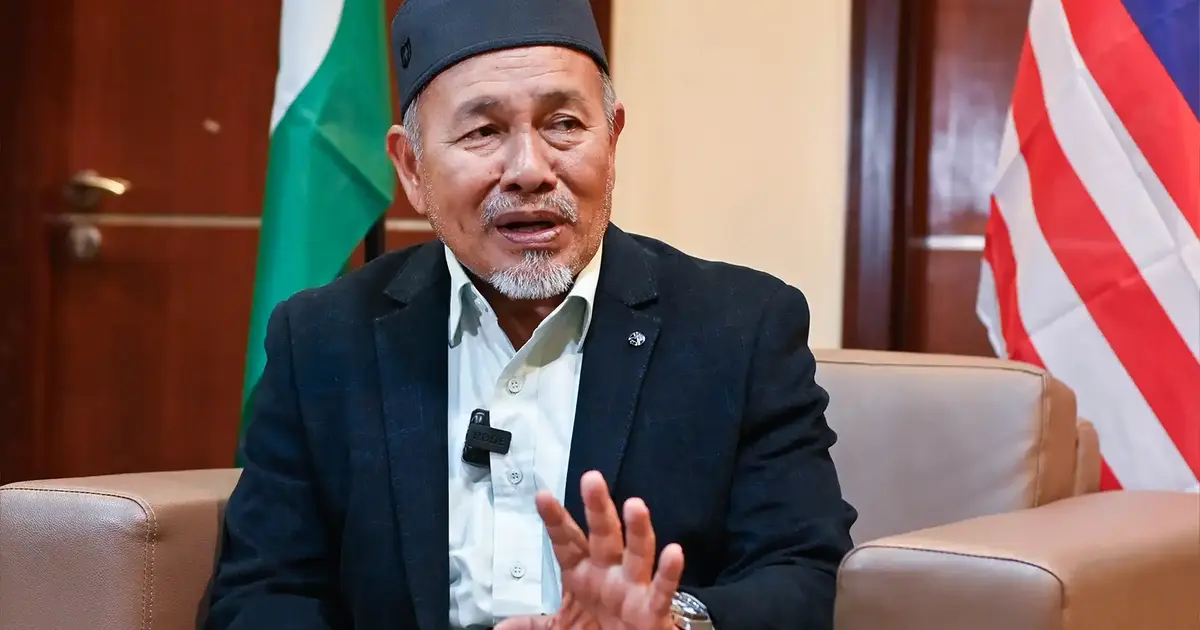
PAS deputy president Tuan Ibrahim Tuan Man has indicated that despite the absence of formal seat allocation negotiations between Perikatan Nasional and Barisan Nasional, the two major political coalitions are unlikely to face insurmountable difficulties over candidate placement in the forthcoming Melaka state elections. His remarks suggest a degree of optimism within PN circles that divergences over parliamentary seat distribution, should they arise, can be settled through dialogue and compromise.
The comments arrive at a pivotal moment for both coalitions as they prepare for state-level polling in Melaka, a constituency that has witnessed considerable political volatility in recent years. The state has become a significant battleground, with neither coalition able to take voter sentiment for granted. Understanding the dynamics between PN and BN thus becomes essential for observers seeking to predict electoral outcomes in this crucial southern region.
Melaka's political landscape has been marked by shifting allegiances and unexpected results that have confounded many predictions. The state returned to the spotlight following the 2022 general election, and subsequent developments have kept it firmly in the national consciousness. For PN, a coalition comprised primarily of PAS, Bersatu, and other smaller partners, gaining or retaining ground in Melaka represents a significant strategic objective. Similarly, BN, historically the dominant force in Malaysian politics, views Melaka as a state where its traditional support base remains relevant and contestable.
The apparent relaxation displayed by Tuan Ibrahim regarding potential seat-sharing tensions reflects broader calculations within PN leadership. Rather than viewing BN as an insurmountable obstacle to their electoral ambitions, the coalition appears to be adopting a pragmatic stance that accommodates the possibility of cooperation in selected constituencies. This approach contrasts sharply with the confrontational posturing that occasionally characterises Malaysian political discourse, suggesting that both coalitions recognise the mutual benefits of avoiding a three-cornered contest that could fragment votes and benefit third parties.
Seat allocation negotiations in Malaysian elections have historically proven contentious, with disagreements over candidate selections frequently spilling into public view and generating internal discord within coalitions. The fact that PN leadership is expressing confidence about resolving future differences before formal discussions have commenced indicates either strong backroom progress or a deliberate strategy to project unity and strength to voters. Either scenario suggests that both coalitions have incentives to avoid protracted disputes that could undermine their respective campaigns and give advantage to competing political forces.
For Malaysian voters and political observers, the PAS deputy president's reassurance carries implications extending beyond seat allocation mechanics. Coalition stability during electoral campaigns directly influences campaign effectiveness, fundraising capacity, and ultimately, electoral performance. Conversely, public discord within coalitions typically energises opposition movements and creates opportunities for parties positioned outside the dominant partnership frameworks to consolidate support among voters fatigued by coalition infighting.
The Melaka electorate, comprising diverse demographic groups with varying political preferences and concerns, has demonstrated its willingness to surprise political analysts and established power structures. The state's voting patterns cannot be simply extrapolated from national trends, making locally-attuned campaign strategies essential for both PN and BN. Any seat arrangement between the coalitions must therefore account for granular local considerations, incumbent performance records, and constituency-specific voter grievances that may not register prominently in state or national-level political discussions.
Tuan Ibrahim's confidence about amicable resolution of potential friction also reflects the broader context of PN's evolution as a significant political force. From its formation following the 2022 general election, PN has sought to establish itself as a credible alternative to BN while maintaining sufficient pragmatism to cooperate where mutual interests align. This balancing act becomes particularly delicate in states like Melaka, where both coalitions possess genuine electoral prospects and cannot afford to alienate potential supporters through visibly acrimonious internal disputes.
The absence of completed seat talks at the time of his statement is noteworthy rather than concerning, according to the PAS leader's framing. Malaysian electoral timelines frequently feature compressed negotiation periods immediately preceding nominations, with formal agreements often finalised only days before candidates must formally register. This compressed timeline, while potentially chaotic, also creates urgency that can expedite resolution of contentious issues and prevent prolonged public airing of disagreements.
For Malaysian businesses, investors, and ordinary citizens, political stability and predictable governance frameworks remain important considerations. State governments emerging from clear electoral mandates and unified coalitions typically prove more effective in implementing policies and attracting development investment. Conversely, states governed by fractious coalitions or deeply divided legislatures frequently experience governance difficulties that constrain economic development and resource allocation effectiveness. From this perspective, PN's apparent confidence about resolving Melaka seat issues constructively represents a positive signal about potential post-election stability.
The broader Southeast Asian context also warrants consideration. Regional investors and observers frequently view Malaysian state elections as indicators of national political direction and coalition stability. A smooth, relatively friction-free electoral process in Melaka could enhance investor confidence in Malaysia's political maturity and institutional functioning. Conversely, visible coalitional collapse or acrimonious public disputes might trigger concerns about broader political instability extending beyond the state level.
As the Melaka elections draw nearer, the actual progression of seat negotiations between PN and BN will test the optimism currently expressed by PAS leadership. The gap between expressed confidence and actual electoral outcomes has frequently proven substantial in Malaysian politics. Nevertheless, Tuan Ibrahim's measured and positive tone suggests that significant preparation work may already be underway behind closed doors, positioning both coalitions to navigate the technical challenges of seat allocation while preserving the unity necessary for effective campaigning and governing.

