Poland is poised to introduce a legal framework that would formally protect the right of dying patients to be visited by their pets in hospices and palliative care facilities. The proposed legislation, championed by Dr Tomasz Dzierzanowski of the Palliative Medicine Clinic at the Medical University of Warsaw and introduced to parliament by a member of Prime Minister Donald Tusk's centrist party, responds to a critical gap in end-of-life care that has been observed across Polish hospitals. While some facilities have already begun permitting such visits on an informal basis, the absence of unified legal protection means many terminally ill patients remain separated from their beloved animals during their final weeks and months.
The human story underlying this policy shift centres on Ewa Lutka-Krawczyk, a 70-year-old cancer patient admitted to the palliative ward of a Warsaw hospital following a diagnosis of gallbladder cancer. Her primary concern upon learning of her terminal condition was not for herself but for Gaja, a shelter dog she had adopted three years earlier and had grown profoundly attached to. Separated from her pet while confined to her hospital bed, Lutka-Krawczyk expressed her deep anxiety about Gaja's wellbeing, particularly noting that the dog had begun refusing food in her owner's absence. This poignant situation exemplifies the emotional toll that forced separation exerts not only on patients but on the animals who have become integral to their daily lives and emotional resilience.
Dr Dzierzanowski identifies a broader societal challenge that has intensified in recent years: what he characterises as an "epidemic of loneliness" affecting terminally ill patients across Poland. He observes that the modern hospital environment frequently encounters elderly patients who have outlived their social networks and younger patients who lack the deep friendships that previous generations routinely cultivated. The absence of consistent human companionship during the final chapter of life compounds the physical suffering inherent in terminal illness. Dzierzanowski's clinical experience has revealed that many patients face their mortality without the steady presence of family or close friends, leaving them vulnerable to profound psychological distress during periods of acute pain or existential crisis.
The impetus for Dzierzanowski's advocacy emerged from a particular case involving a cancer patient named Waldemar who expressed greater concern for the welfare of his two cats than for his own prognosis. When Dzierzanowski arranged for the cats to be brought into the ward, the emotional impact proved transformative. The patient's tears of joy upon reunification with his feline companions, combined with the visible emotional responses of the animals themselves and the reactions of other patients and staff who witnessed the encounter, crystallised for Dzierzanowski the therapeutic necessity of formalising pet visitation policies. This moment of witnessing mutual recognition and comfort between a dying man and his animals convinced him that the issue demanded serious legislative attention.
The proposed legislation is being advanced through parliament's health committee by Katarzyna Piekarska, a lawmaker who recognises that informal accommodation of pets already occurs in many Polish hospitals, yet without consistent standards or legal safeguards. Piekarska argues that the prevalence of animals in medical facilities already—even without official sanction—demonstrates both the practical feasibility and the clear demand for such arrangements. Formalising these practices through law would eliminate administrative barriers, establish consistent protocols for animal safety and hygiene, and protect the dignity of dying patients by guaranteeing their right to maintain bonds with their animal companions during hospitalisation.
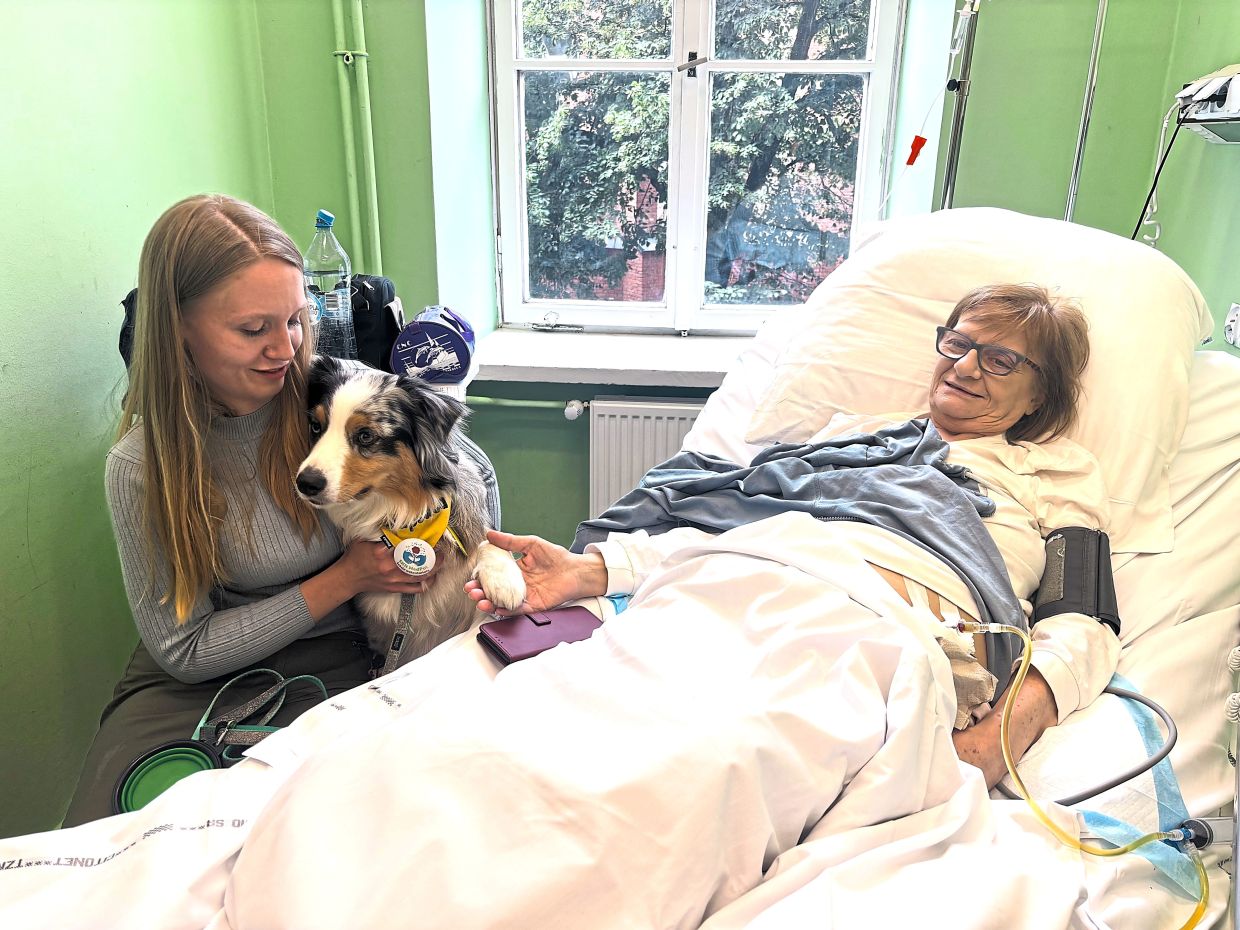
In Dr Dzierzanowski's own clinic, pet visitation is already permitted when circumstances allow, extending beyond patients' personal animals to include certified therapy dogs. During recent rounds, Kluska, an Australian shepherd, provided comfort to multiple patients, including Lutka-Krawczyk, who found solace in holding the dog's paw and stroking its fur. Another patient, 58-year-old Wojciech Zelik, admitted with a tumour, similarly experienced visible relief and distraction from his condition through interaction with the therapy animal. These encounters reveal that the therapeutic benefit operates across multiple dimensions of the hospital environment, not merely for patients but for the entire care ecosystem.
Malgorzata Brzozowska, a medical student and volunteer therapy dog handler, has observed that the presence of animals provides measurable psychological relief to nursing staff, kitchen workers, and other hospital personnel who routinely care for terminally ill patients. The stress inherent in working with dying individuals—witnessing suffering, managing grief, and confronting human mortality on a daily basis—takes a toll on healthcare workers. The presence of a calm, affectionate animal offers momentary reprieve from this emotional burden, with staff members crouching to pet Kluska in the hallway or even offering the animal scraps of food from the kitchen.
Brzozowska has noted a critical distinction between generic therapy animal visits and visits from patients' own pets. When a dying patient receives a visit from their own animal companion, the therapeutic impact intensifies substantially. The patient's anxiety decreases as they experience continuity with their previous life and reassurance that their beloved animal is safe. The patient's family members often experience similar relief, knowing that their loved one retains connection to a meaningful relationship. Importantly, the animal itself appears to sense the change in circumstances—what Brzozowska interprets as the animal understanding at some level that its owner has been hospitalised and recognising where the person who was previously always present has gone. This mutual recognition and the reduction in the animal's stress levels suggest a biological basis for the emotional bond between humans and their animal companions.
The implications of Poland's proposed legislation extend beyond individual patient comfort to encompass broader questions about how societies conceptualise end-of-life care and human dignity. The policy implicitly acknowledges that terminal illness does not diminish a person's right to maintain meaningful relationships, whether with human companions or with animals. In a cultural context where many individuals find themselves socially isolated—whether through the loss of friends, geographic distance from family, or the failure to develop deep social connections—animals often represent the most consistent source of unconditional affection and non-judgmental companionship. Recognising the legitimacy of these bonds in formal healthcare policy validates a dimension of human experience that medicine has often marginalised as sentimental rather than therapeutic.
For Malaysia and other Southeast Asian nations grappling with similar demographic and social trends, Poland's legislative approach offers valuable perspective. Ageing populations across the region are increasingly experiencing the isolation that Dr Dzierzanowski describes, with extended family networks fragmenting and urbanisation reducing multigenerational household arrangements. The growth of pet ownership in Malaysia and across Southeast Asia—both as working animals and as companions—suggests that policies formalising animal visitation in healthcare settings could address pressing gaps in palliative and end-of-life care infrastructure. Malaysian healthcare administrators and policymakers might consider whether similar legislative protections would enhance care quality and patient dignity within local hospital systems.
The proposal also reflects evolving understandings of therapeutic practice and healing that move beyond conventional pharmaceutical and surgical interventions. The recognition that companionship—whether human or animal—constitutes a legitimate healthcare intervention aligns with growing evidence from neuroscience and psychology regarding the physiological benefits of social connection and the damaging effects of isolation. As countries increasingly recognise palliative care as a healthcare priority distinct from curative medicine, the integration of animals into end-of-life facilities becomes not merely a quality-of-life amenity but a substantive component of evidence-based care.

