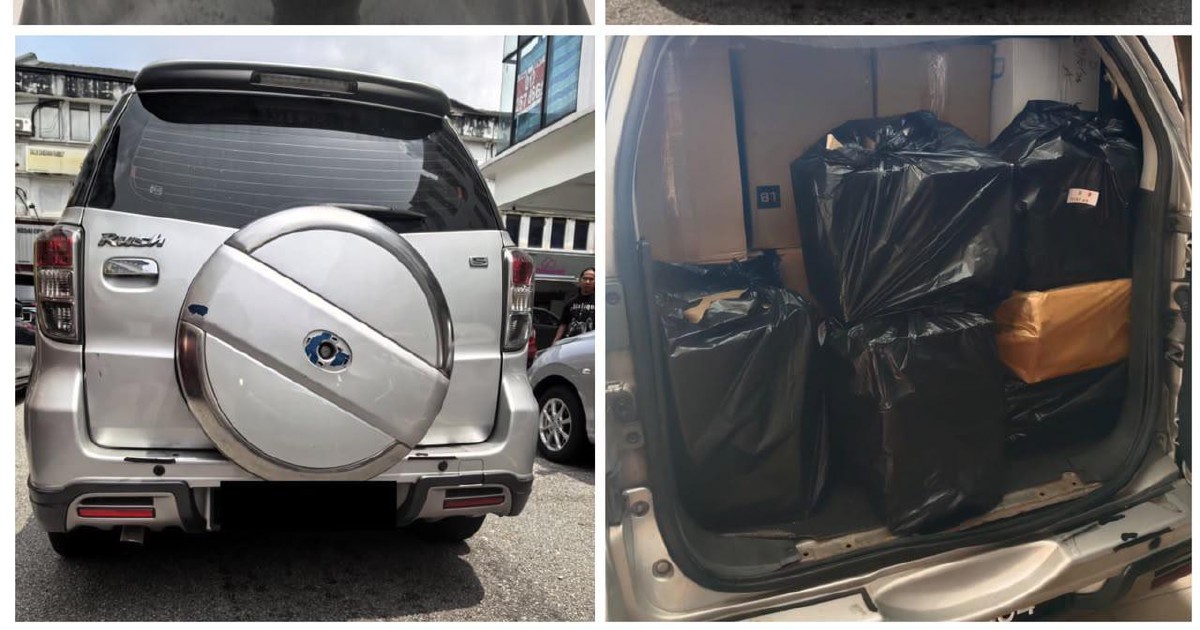
A coordinated law enforcement operation in the Klang Valley has resulted in the arrest of two individuals suspected of orchestrating a contraband cigarette smuggling network, with authorities confiscating tobacco stocks valued at RM1.66 million. The operation, designated Ops Taring Alpha 1, represents an ongoing crackdown by police on organised illicit tobacco trafficking that continues to flourish across Malaysia's commercial heartland.
The contraband seizure underscores the persistent challenge facing Malaysian authorities in combating the illegal cigarette trade, a lucrative criminal enterprise that undermines government tax revenue and distorts legitimate business operations. Contraband tobacco products, typically smuggled from neighbouring countries or sourced through illegal manufacturing channels, are distributed through parallel supply networks that operate with sophisticated coordination and substantial financial backing.
The two arrested suspects are believed to have operated as key figures within a larger smuggling syndicate responsible for warehousing and distributing large quantities of untaxed cigarettes throughout the densely populated Klang Valley region. This geographic focus reflects the strategic importance of the area as a distribution hub; proximity to port facilities, major road networks, and dense urban markets makes it an attractive operational base for smuggling organisations seeking to move products quickly and efficiently to retail outlets and street-level distributors.
During the police operation, authorities successfully located and confiscated the contraband inventory, denying the network immediate access to the stocks destined for regional markets. Such interventions, while significant individually, represent only periodic disruptions to an industry characterised by resilience and rapid adaptation. Smuggling groups typically maintain multiple stash points and supply chains, allowing operations to continue even when law enforcement successfully identifies and raids specific locations.
The RM1.66 million valuation attached to the seized cigarettes reflects the substantial profit margins inherent in contraband tobacco distribution. Illicit cigarettes typically retail at significantly lower prices than legitimate products due to the absence of excise taxes and import duties, creating powerful financial incentives for both consumers and criminal networks. This price differential has established contraband tobacco as a persistent feature of Malaysia's informal retail sector, particularly in lower-income areas and urban markets.
For the Malaysian government, losses stemming from contraband cigarette sales represent more than forgone tax revenue. The trade generates employment in smuggling operations, diverts resources to enforcement activities that might otherwise address other priorities, and creates downstream social costs through unregulated product distribution and the financing of criminal networks that extend into other illicit enterprises. The scale of the problem—evidenced by operations like Ops Taring Alpha 1—suggests that current enforcement capacity struggles to match the sophistication and resources deployed by smuggling syndicates.
The operation contributes to an expanding body of enforcement activity across Southeast Asia targeting transnational tobacco smuggling. Neighbouring countries including Thailand, Singapore, and Indonesia have implemented increasingly aggressive interdiction efforts as contraband cigarette trafficking networks have grown in complexity and international coordination. The Klang Valley operation reflects Malaysia's participation in this regional enforcement environment, though the persistent discovery of large contraband stockpiles suggests that smuggling continues to outpace official intervention capacity.
Investigators will likely focus on interrogating the detained suspects regarding the network's operational structure, supply sources, distribution channels, and financial arrangements. Such information frequently enables authorities to trace upstream smuggling routes and downstream retail networks, potentially leading to additional arrests and seizures. However, the compartmentalised nature of criminal organisations often limits the intelligence value of individual arrests, as suspects typically possess knowledge only of their immediate operational sphere.
The seizure raises questions about enforcement consistency across Malaysia's various regulatory agencies. While police focus on distribution and storage operations, other bodies including the Royal Malaysian Customs Department and the Ministry of Health maintain overlapping responsibilities for tobacco regulation and market surveillance. Coordination failures between agencies can create enforcement gaps that smuggling networks exploit, allowing contraband products to circulate despite multiple authorities possessing mandate to intervene.
Looking forward, the contraband cigarette challenge will likely persist as long as substantial price differentials exist between illicit and legitimate products. Addressing this problem requires not only enforcement resources but also examination of Malaysia's taxation and retail regulation frameworks. Some neighbouring jurisdictions have experimented with adjusted excise structures and expanded legal retail availability in lower-income areas, strategies designed to reduce the price advantage that drives consumer demand for smuggled goods.
The arrest of the two suspects represents a tactical success for law enforcement, but the broader operational environment suggests that smuggling networks retain sufficient organisational capacity and financial resources to absorb periodic disruptions. Until the underlying economic incentives shift—through either increased enforcement effectiveness, pricing policy adjustments, or reduced demand—contraband tobacco will remain a significant challenge to Malaysian regulatory authorities and legitimate business operators competing in the regulated market.

