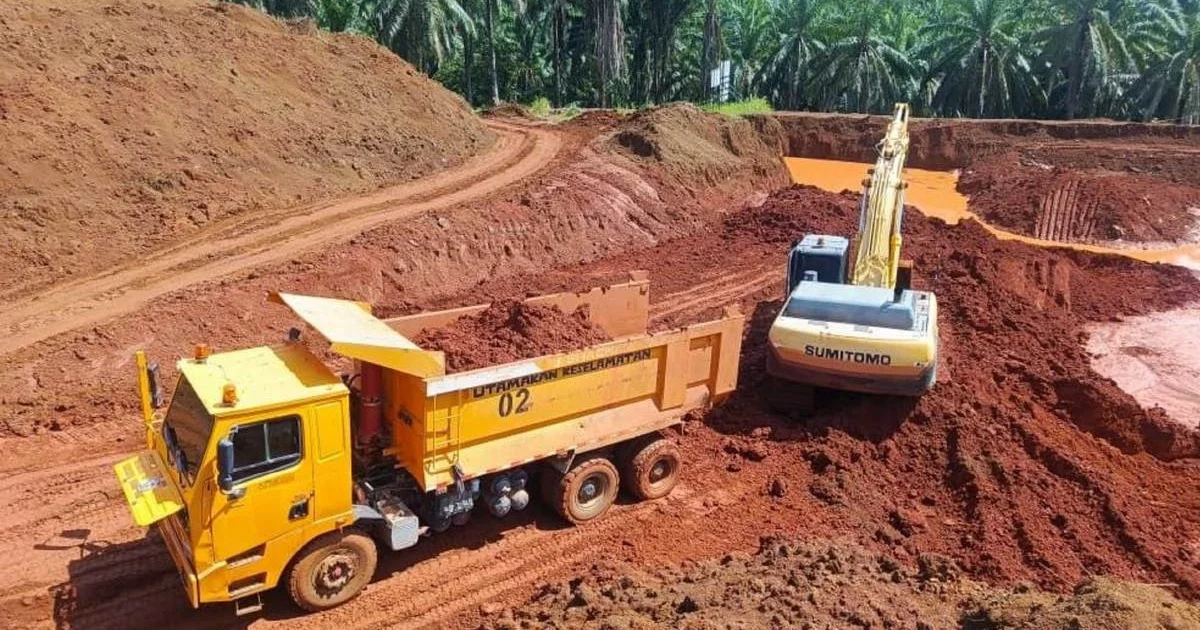
Law enforcement agencies in Pahang have dismantled a significant illegal bauxite mining operation, arresting nine suspects and confiscating materials and equipment worth RM3.75 million during a coordinated raid on a Felda plantation in the Bukit Goh area near Kuantan. The operation represents another blow against the illicit mining sector that has plagued the region for years, straining environmental resources and undermining legitimate economic activity.
The seized haul included approximately 10,000 tonnes of bauxite-bearing soil extracted from the plantation, alongside an array of heavy machinery and commercial transport vehicles used in the illegal extraction and movement of ore. The sheer volume of material recovered underscores the scale of the unauthorised operation, suggesting sustained and organised activity rather than opportunistic small-scale extraction. Officials have not disclosed the identities of the arrested individuals or their operational roles within the network.
Barauxit mining has become a persistent challenge across Malaysia, particularly in resource-rich states like Pahang where regulatory oversight faces constant pressure. The mineral is crucial to global aluminium production, making it economically attractive despite strict environmental and mining regulations. The illicit sector thrives on the gap between robust legal frameworks and the practical difficulties of enforcement across vast, sometimes remote areas where traditional oversight mechanisms struggle to maintain adequate surveillance.
The environmental consequences of unregulated bauxite extraction extend beyond immediate habitat disruption. Improper mining practices expose topsoil to erosion, contaminate water sources, and degrade agricultural lands, creating long-term ecosystem damage that often persists years after extraction ceases. For Felda communities, whose livelihoods depend on stable land productivity, such incursions represent not merely criminal activity but a threat to their economic sustainability and quality of life.
The Bukit Goh raid reflects intensifying enforcement efforts by Malaysian authorities to combat illegal mining, which generates significant unreported economic activity outside tax systems while degrading the investment environment for legitimate businesses operating under compliance standards. These operations create unfair competition, allowing unscrupulous actors to undercut lawful producers by avoiding environmental remediation costs, regulatory compliance fees, and proper labour standards. The seizure of equipment worth millions indicates that authorities are targeting not just small-time operators but organised networks with substantial capital investment in their illegal ventures.
Felda plantations, which collectively represent vast agricultural landholdings across Malaysia, have become focal points for such criminal activity due to their remote character and sometimes-challenged security resources. The federal land development authority faces ongoing challenges protecting its territories from encroachment and illicit extraction, particularly where enforcement agencies lack sufficient personnel to patrol comprehensively. This vulnerability highlights the interconnection between land management, security provision, and economic regulation in Malaysia's resource-dependent economy.
The timing of this operation aligns with broader regional trends in Southeast Asia, where illegal mining has accelerated amid global demand fluctuations and rising commodity prices. Myanmar, Cambodia, and Indonesia have all experienced significant expansion of unregulated extraction operations. International trafficking networks sometimes operate across borders, complicating enforcement and requiring regional coordination that remains inconsistently developed. For Malaysia, maintaining control over its resource extraction helps preserve environmental standards and tax revenue while preventing the nation from becoming a transit point for illegally-sourced minerals destined for international markets.
The nine arrested individuals now face investigation under Malaysia's mining legislation and related criminal statutes. Prosecution outcomes will likely depend on whether authorities can establish direct operational involvement versus mere employment within the network. Sentencing guidelines for mining-related offences allow substantial jail terms and substantial fines, providing legal tools for deterrence, though enforcement remains uneven across jurisdictions and frequently dependent on investigative resource allocation.
This seizure demonstrates that coordinated enforcement can generate meaningful results, yet the persistence of illegal mining suggests that sustainable solutions require addressing underlying economic incentives that make illicit extraction attractive to vulnerable populations. Legitimate alternative livelihoods, improved technology enabling more efficient detection, inter-agency intelligence sharing, and community engagement remain essential components of comprehensive strategies. The RM3.75 million haul, while significant, likely represents only a portion of ongoing illegal activity across Pahang and neighbouring states, indicating that enforcement pressure must intensify and remain consistent to effectively deter systematic operations and protect Malaysia's natural resources.

